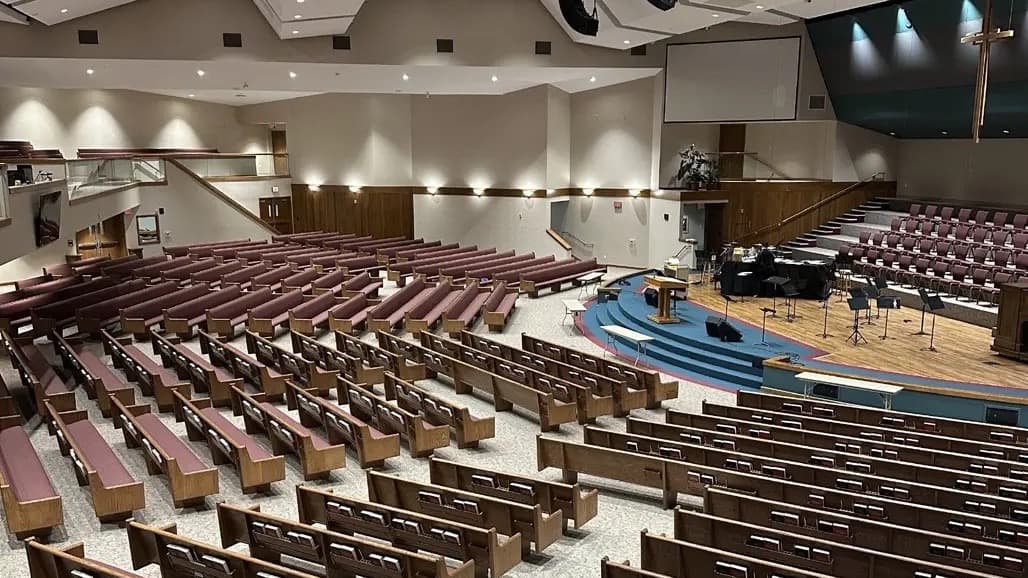
Why Sanctuary Lighting Is a Growing Priority for Cibolo-Area Churches
Cibolo is one of the fastest-growing communities in the Greater San Antonio region, and its faith community is growing right along with it. From established congregations along FM 1103 to newer church plants serving families in Schertz, Selma, and Universal City, houses of worship across this corridor are grappling with a common challenge: aging lighting infrastructure that simply wasn't designed for the demands of today's ministry.
Sanctuary lighting is no longer just a maintenance issue — it's a ministry issue. Poor illumination affects congregant experience, creates accessibility and safety concerns for older members, and increasingly undermines the video and livestream quality that modern churches depend on to reach their communities. As these needs evolve, facility managers and church administrators in the Cibolo area are taking a closer look at what a thoughtful lighting upgrade can actually deliver.
The Most Common Sanctuary Lighting Problems — and Why They Keep Coming Back
Church sanctuaries present a unique set of maintenance challenges that differ significantly from typical commercial buildings. Understanding why these problems occur is the first step toward solving them sustainably.
High-ceiling fixture access is one of the most persistent pain points. Many sanctuaries feature vaulted ceilings, architectural trusses, or elevated chandeliers that require scaffolding or lift equipment for routine bulb replacements. In a busy church environment — with services, rehearsals, and community events throughout the week — scheduling that kind of access is genuinely disruptive.
Aging ballasts and incompatible dimmer systems are another frequent culprit behind flickering and dimming complaints. Fluorescent and older halogen fixtures rely on ballasts that degrade over time, often producing inconsistent light output, annoying hum, and eventual failure. Many of these systems were never designed to integrate cleanly with modern dimming controls, which compounds the problem.
Uneven illumination affects more than aesthetics. Spotty light levels create visual fatigue for congregants during long services, reduce legibility for readers and worship teams, and — critically — produce the kind of inconsistent exposure that makes livestreamed or recorded services look amateurish regardless of camera quality.
Rising energy costs from legacy incandescent, halogen, or T8 fluorescent fixtures add up meaningfully over the course of a year. For a congregation managing a facilities budget that also covers HVAC, grounds, and building maintenance, lighting energy waste is an avoidable drain on resources that could otherwise support programming and outreach.
How LED Retrofits Are Changing the Equation for Church Facilities
The transition to LED technology in church sanctuaries has accelerated significantly over the past several years, driven by dramatic improvements in color quality, dimming performance, and fixture longevity. Today's LED solutions are engineered to replicate the warm, inviting ambiance that congregations associate with worship spaces — without the maintenance burden of legacy sources.
Dramatically extended fixture life is perhaps the most operationally significant benefit. Quality LED sources are rated for 50,000 hours or more of operation, compared to 1,000–2,000 hours for incandescent lamps and 10,000–15,000 hours for typical fluorescents. For a church that conducts multiple services, rehearsals, and events each week, that difference translates to years between replacement cycles rather than months.
Improved color rendering matters more in sanctuaries than in most commercial spaces. Worship environments depend on lighting that renders skin tones naturally, makes projected text and imagery readable, and supports the emotional and spiritual tone of a service. Modern LED fixtures with high Color Rendering Index (CRI) ratings — typically 90 or above — deliver a quality of light that older fluorescent systems simply cannot match.
Dimming compatibility and scene control have become practical realities rather than luxury features. Programmable lighting control systems allow facility teams to pre-set scenes for different service types — Sunday morning worship, midweek Bible study, special events, or livestreamed productions — and recall them with a single button press. This reduces setup time, eliminates human error, and ensures consistent results across every use of the space.
Energy efficiency gains from a full sanctuary LED retrofit are typically substantial. LED fixtures consume significantly less wattage than the incandescent or halogen sources they replace, and smart controls can further reduce consumption through automated dimming and scheduling. For churches in the Cibolo area served by CPS Energy, these efficiency improvements may also qualify for utility rebate programs that offset a portion of project costs — a meaningful consideration for congregations managing tight facilities budgets. The sibling article Maximize ROI with Commercial LED Lighting Rebates in Dallas, TX explores how rebate strategies work in practice, and many of the same principles apply to San Antonio-area utility programs.
Practical Considerations for Church Facility Managers
For facilities directors and maintenance supervisors overseeing church properties in Cibolo, Schertz, or the broader Converse and Live Oak corridor, a few practical factors tend to shape how lighting upgrade projects get planned and executed.
Minimizing disruption to the ministry calendar is almost always the top priority. Unlike a commercial office building that can schedule work during off-hours without major consequences, churches operate on a dense weekly schedule of services, rehearsals, youth programs, community meals, and rentals. Any lighting project needs to be phased and coordinated around that reality — which is why experience with church facilities specifically matters when selecting a contractor.
Historic and architectural constraints are a consideration for older sanctuaries in the region. Some congregations in the San Antonio metro area occupy buildings with significant architectural character — decorative ceilings, stained glass that affects ambient light, or historic fixtures that must be preserved or carefully matched. A lighting upgrade in these spaces requires both technical expertise and an understanding of how lighting interacts with the existing aesthetic.
Budget phasing is a legitimate planning tool. Not every congregation can fund a complete sanctuary lighting overhaul in a single fiscal year. A well-structured lighting assessment can identify which improvements deliver the greatest immediate impact — typically fixture replacements in the highest-traffic or highest-visibility areas — and establish a phased roadmap for completing the full upgrade over time.
Livestream and video production quality has become a genuine driver of lighting investment for many growing churches. Congregations that broadcast services to remote audiences or archive sermons for on-demand viewing understand that camera performance is directly dependent on lighting. Proper fixture placement, color temperature consistency, and dimming flexibility are all factors that affect how a service looks on screen — and therefore how effectively it reaches people who aren't in the room.
For public-sector or institutionally affiliated organizations — including church-operated schools, community centers, or social service facilities in the area — cooperative purchasing programs such as BuyBoard, TIPS, Sourcewell, Houston Church COOP, and AEPA may provide a streamlined procurement pathway that simplifies contracting and ensures competitive pricing.
What to Look for in a Church Lighting Partner
The stakes in a sanctuary lighting project are different from a standard commercial renovation. The space carries meaning for the people who use it, and the disruption tolerance is low. Facility managers evaluating lighting partners for a church project in the Cibolo or Greater San Antonio area should consider a few key factors.
- Demonstrated experience with faith-community facilities — not just commercial buildings generally. Church sanctuaries have specific acoustic, aesthetic, and operational requirements that demand relevant expertise.
- Familiarity with utility rebate programs in the CPS Energy service territory, including the documentation and application process that determines whether a project qualifies for incentives.
- Capacity for low-disruption installation, including after-hours and weekend scheduling to work around the ministry calendar.
- A consultative approach to controls and scene programming — the ability to configure a system that facility staff can actually manage day-to-day without specialized technical knowledge.
- National resources with local presence — the ability to draw on broad experience with similar projects across the country while maintaining a dedicated local team that understands this market.
For readers interested in related topics, the Energy Efficient Church Lighting Upgrades and Fluorescent Tube Bans and LED Lighting Rebates articles in this series provide additional context on the regulatory and incentive landscape shaping lighting decisions for faith communities right now.
Service Availability
While VOSS offers a comprehensive suite of national services, specific capabilities may vary by location. Please contact your local branch to confirm the current availability of specific services, technology solutions, or contracting capabilities in your immediate market.
Talk With a Lighting Specialist at Our San Antonio Branch
VOSS has served commercial and institutional clients across the Greater San Antonio region — including communities throughout Bexar, Guadalupe, and Comal counties — for decades. Our San Antonio team works regularly with churches, schools, and nonprofit facilities in Cibolo, Schertz, Converse, New Braunfels, and the surrounding area, and we understand the practical realities of planning lighting projects around an active ministry calendar.
If your congregation is navigating flickering fixtures, rising energy costs, or a sanctuary that simply doesn't look or perform the way it should, we'd welcome the opportunity to talk through what a thoughtful upgrade could mean for your facility.
VOSS — San Antonio Branch
(210) 967-8766
Reach out to schedule a no-obligation consultation with our local lighting specialists. We're here to help you find the right path forward — whether that's a phased retrofit, a full controls upgrade, or simply an honest assessment of where to start.