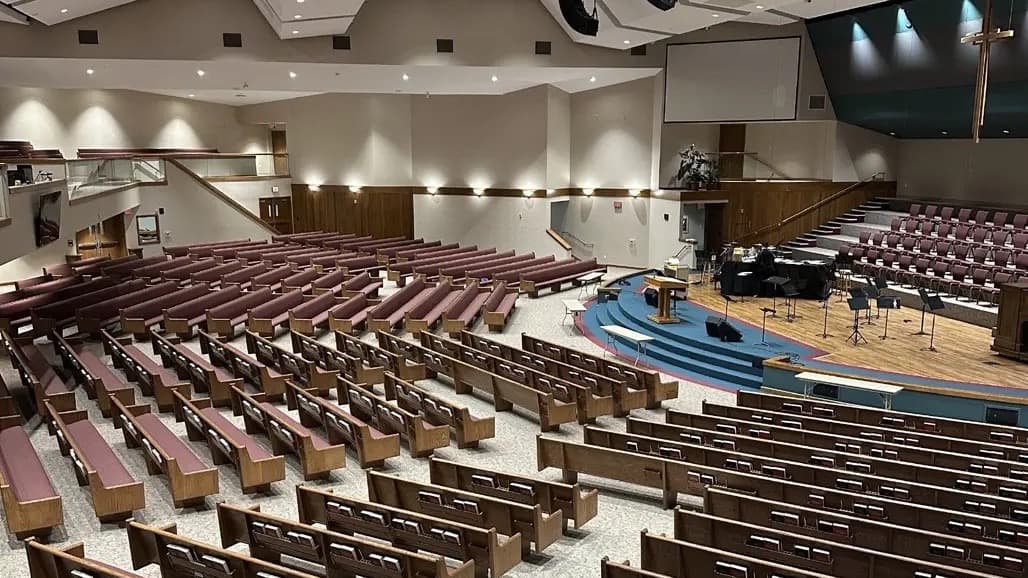
Why Sanctuary Lighting Is a Growing Priority for Greater Raleigh Churches
The Greater Raleigh region — spanning communities from Cary and Apex to Garner, Wake Forest, and Durham — is home to a remarkably vibrant and growing faith community. As one of the fastest-growing metro areas in the country, the Triangle continues to see new congregations forming and established churches expanding their campuses to serve larger memberships. With that growth comes a practical reality that many facility managers and church administrators are confronting head-on: aging lighting infrastructure is no longer keeping pace with the demands of modern worship.
Whether your sanctuary was built decades ago or underwent its last lighting renovation in the early 2000s, the fixtures powering your worship space were almost certainly designed around technologies — incandescent, halogen, metal halide, or fluorescent — that are increasingly difficult to maintain, expensive to operate, and mismatched with today's expectations for light quality. Across the Raleigh metro, from large multisite congregations near North Hills to historic downtown sanctuaries and suburban campus churches in Morrisville and Knightdale, facility leaders are asking the same questions: How do we reduce the burden of constant bulb replacement? How do we lower our energy bills? And how do we create a worship environment that truly serves our congregation?
This article explores the lighting challenges unique to church sanctuaries, the trends shaping how facilities are responding, and the practical considerations that should guide any upgrade decision.
The Hidden Operational Cost of Outdated Sanctuary Lighting
For most facility managers, the true cost of aging sanctuary lighting doesn't show up on a single line item — it accumulates quietly across multiple categories. It's the cost of renting a lift twice a year to replace bulbs in a 30-foot ceiling. It's the labor hours spent troubleshooting a flickering chandelier caused by an aging ballast. It's the energy bill that stays stubbornly high even as the rest of the building gets more efficient. And increasingly, it's the quality complaints — from congregants who can't read their hymnals, from pastors whose faces look washed out on camera, or from worship directors whose carefully planned lighting scenes don't execute reliably.
Some of the most common issues VOSS encounters when evaluating church sanctuaries in the Raleigh area include:
- High-ceiling maintenance burdens — Traditional light sources in vaulted sanctuaries burn out far more frequently than LED alternatives, requiring scaffolding or aerial lift rentals multiple times per year. This is disruptive, costly, and in some cases, a safety concern.
- Ballast and dimmer incompatibilities — Many sanctuaries still run fluorescent or older HID fixtures on ballasts that are nearing or past their rated lifespan. Flickering, delayed start-up, and color inconsistency are often symptoms of ballast degradation, not the bulbs themselves.
- Uneven illumination — Older fixture layouts frequently produce hot spots near the front of the sanctuary and dim zones toward the rear or balcony sections. This affects both the in-person worship experience and, critically, the quality of livestreamed or recorded services — a growing priority for congregations across the Triangle.
- Rising energy costs — Duke Energy Progress serves much of the Greater Raleigh area, and commercial customers have seen meaningful rate increases over recent years. Sanctuaries running older technology are often consuming two to three times the electricity of an equivalent LED installation for the same or lower light output.
- Historic preservation constraints — Several churches in downtown Raleigh and older communities like Fuquay-Varina and Zebulon occupy buildings with significant architectural character. These spaces require lighting solutions that preserve aesthetic integrity while delivering modern performance.
Understanding these challenges as interconnected — not isolated maintenance tickets — is the first step toward a sustainable solution.
What Modern LED Technology Makes Possible in Worship Spaces
The LED lighting landscape has matured dramatically over the last several years, and the options available to churches today are far more sophisticated than the early-generation retrofits that left some adopters disappointed with harsh color temperatures or poor dimming performance. Today's church-appropriate LED solutions address the full range of sanctuary lighting needs:
Light Quality and Color Rendering Modern LED sources can achieve Color Rendering Index (CRI) values above 90, meaning colors — including skin tones, fabric, floral arrangements, and stained glass — appear accurate and vibrant. Tunable white options allow facility teams to shift color temperature across services, from the warm intimacy of an early morning worship gathering to the brighter, more energized feel of a contemporary evening service.
Dimming and Scene Control One of the most transformative upgrades for worship spaces is the integration of scene-based lighting controls. Rather than manually adjusting individual fixtures, a well-designed control system allows a single button press to shift the entire sanctuary into a preset configuration — full illumination for congregational singing, focused downlighting for a pastoral message, or subdued ambient light for a candlelight service. These systems are increasingly accessible and can be implemented in phases as budget allows.
Extended Fixture Life and Reduced Maintenance Quality LED fixtures are rated for 50,000 hours or more of operation — compared to 1,000–2,000 hours for incandescent and 10,000–15,000 hours for fluorescent sources. For a sanctuary running services several times per week plus rehearsals, events, and community gatherings, this difference translates directly into years of reduced maintenance intervention and lift rentals.
Energy Efficiency LED technology typically reduces lighting energy consumption by 50–70% compared to older technologies. For Raleigh-area churches managing tight operating budgets while also investing in ministry programming and facility expansion, these ongoing savings can be substantial — and in some cases, sufficient to help offset the cost of the upgrade itself over time.
Navigating a Lighting Upgrade: What Church Facilities Teams Should Know
Deciding to upgrade sanctuary lighting is rarely a simple procurement decision. It involves balancing budget constraints, congregational aesthetics, scheduling around services and events, and in some cases, navigating the concerns of church leadership or building committees who may be unfamiliar with the technology. Here are several considerations that shape successful projects:
Phased Implementation Not every church needs to — or should — replace every fixture at once. A well-structured phased approach allows facilities teams to prioritize the highest-impact areas first (often the main sanctuary nave and chancel), demonstrate results to leadership, and plan subsequent phases around the operating budget. This is particularly relevant for multi-campus congregations in communities like Holly Springs, Clayton, or Wendell that may be managing upgrades across multiple buildings simultaneously.
Utility Rebate Opportunities Duke Energy Progress offers commercial energy efficiency rebates that may apply to qualifying LED retrofit projects. Understanding which fixtures, lamps, and control systems are eligible — and ensuring proper documentation — requires careful coordination. Working with a lighting contractor experienced in rebate navigation is essential to capturing the full financial benefit available to your facility.
Procurement Pathways for Eligible Organizations For churches affiliated with educational institutions, nonprofit networks, or other qualifying organizations, cooperative purchasing programs can provide a compliant and cost-effective procurement pathway. VOSS participates in several cooperative purchasing programs — including Houston Church COOP, Sourcewell, Omnia Partners, BuyBoard, TIPS, AEPA, PACE, and Nebraska ESU Co-Op — which may allow eligible church organizations to access competitively bid pricing and pre-vetted contractor relationships without a lengthy independent bid process. This is worth exploring early in your planning conversations.
Installation Scheduling and Congregation Sensitivity A sanctuary is not a warehouse or office building — it is the spiritual and communal center of a congregation's life. Any lighting installation must be planned around the worship calendar, avoiding major liturgical seasons, capital campaigns, or significant community events. Experienced church lighting contractors understand this and build installation schedules accordingly, minimizing disruption to the congregation's life together.
Livestream and Video Considerations An increasing number of Raleigh-area churches — from large evangelical congregations along the US-1 corridor to smaller historic churches in downtown Raleigh — now livestream their services regularly. Lighting for video is meaningfully different from lighting for in-person experience alone. Camera sensors respond to light differently than the human eye, and without adequate, evenly distributed, flicker-free illumination, even a high-quality camera will produce a poor image. Any serious sanctuary lighting upgrade should include a conversation about video production requirements.
Proof That Thoughtful Lighting Projects Deliver Results
The principles that guide successful sanctuary lighting upgrades aren't unique to houses of worship — they apply across facility types where lighting directly affects both the human experience and the operational budget. VOSS has seen this play out in diverse settings. At Lewis Central Community Schools in Council Bluffs, Iowa, a comprehensive LED retrofit was structured to fit within the district's existing operating budget, removing the need for additional bond financing and demonstrating responsible stewardship to the community — a dynamic that resonates strongly with church finance committees and congregational leadership facing similar budget scrutiny. The project also illustrated how cooperative purchasing programs like Omnia Partners can satisfy formal procurement requirements while streamlining the path to project approval.
The lessons are transferable: when a lighting upgrade is planned thoughtfully — with clear financial justification, a compliant procurement approach, and phased implementation aligned to the organization's budget cycle — it becomes a story of stewardship, not expenditure.
Service Availability
While VOSS offers a comprehensive suite of national services, specific capabilities may vary by location. Please contact your local branch to confirm the current availability of specific services, technology solutions, or contracting capabilities in your immediate market.
Continue Exploring: Related Topics from VOSS
If sanctuary lighting is on your radar, you may also find value in exploring related topics covered in our Latest Lighting series — including Energy Efficient Church Lighting Upgrades, Fluorescent Tube Bans and LED Lighting Rebates, Energy Audits, Incentives, and Rebate Navigation for Businesses, and Utility Lighting Rebates Raleigh NC. Each of these resources addresses a different dimension of the broader lighting modernization conversation that Raleigh-area facility managers are navigating today.
Let's Talk About What's Right for Your Sanctuary
Every church facility is different — different ceiling heights, different aesthetic priorities, different budget cycles, and different congregational expectations. The most valuable first step is a candid conversation with a lighting professional who understands the unique demands of worship spaces and has navigated projects like yours before.
VOSS's Raleigh branch serves churches and faith-based organizations throughout the Greater Raleigh area, including communities across Wake, Johnston, Chatham, and Franklin counties. We'd welcome the opportunity to learn about your facility's specific challenges and share what we've seen work well for congregations in similar situations.
VOSS Lighting — Raleigh Branch
Phone: (919) 779-8777 Toll-Free: (866) 292-0529
Reach out to start a no-pressure conversation about your sanctuary lighting goals. We're here to help you make informed decisions — on your timeline, and in keeping with your congregation's values and budget.