Why Durham's Houses of Worship Are Rethinking Sanctuary Lighting
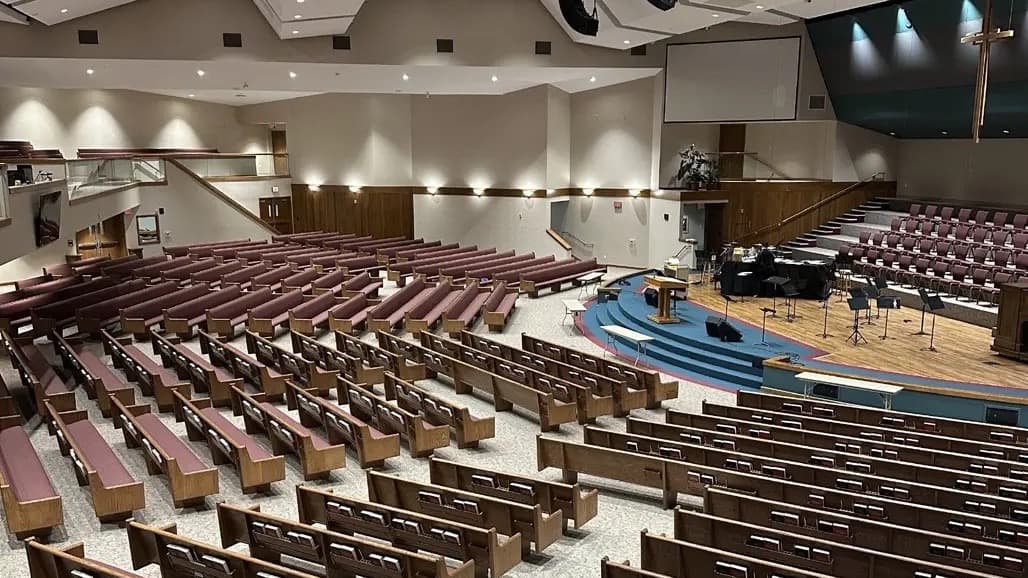
Durham, NC is home to a rich and deeply rooted faith community. From historic African American congregations near downtown to growing multi-site churches serving neighborhoods from Southpoint to Research Triangle Park, houses of worship here range from century-old sanctuaries with ornate architectural details to modern worship centers built to accommodate thousands. What many of these facilities share is a common operational challenge: aging lighting infrastructure that was never designed to keep pace with today's energy costs, programming demands, or the high expectations of both in-person attendees and livestream audiences.
Across the greater Raleigh-Durham region — including communities like Chapel Hill, Cary, Apex, Wake Forest, and Morrisville — church facility managers are increasingly asking the same question: how do we modernize our lighting without breaking the budget, disrupting services, or compromising the sacred character of our space?
The answer, more often than not, starts with a clear-eyed assessment of where current systems are failing and what a thoughtful LED retrofit can realistically deliver.
The Maintenance Burden That Quietly Drains Church Resources
For many church facility teams in Durham and across North Carolina, sanctuary lighting maintenance is one of the most time-consuming and costly recurring tasks on the calendar. The reasons are predictable but no less frustrating.
High ceilings create a persistent access problem. Traditional incandescent, halogen, and fluorescent sources have relatively short lifespans — and when those fixtures are mounted 25, 40, or even 60 feet overhead, every replacement requires scaffolding, a boom lift, and significant labor. Some congregations are budgeting for lift rentals multiple times per year just to keep their sanctuaries adequately lit.
Aging ballasts and dimmers introduce reliability issues. Flickering lights, buzzing fixtures, and inconsistent dimming are common symptoms of ballast degradation. These problems are more than aesthetic — they distract during worship, undermine the emotional tone of a service, and signal to leadership that deferred maintenance is catching up.
Uneven light levels affect safety and presentation. Many older sanctuary lighting plans weren't designed with today's livestreaming or video production in mind. Congregations across the Durham area that now broadcast services — whether to regional audiences or global diaspora communities — are finding that their existing lighting creates hotspots, shadows, and color inconsistencies that undermine production quality.
Understanding these pain points is step one. The more important question is what a modern LED system actually solves — and what it doesn't.
What LED Retrofits Realistically Deliver for Church Facilities
LED technology has matured significantly over the past decade, and the business case for upgrading sanctuary lighting is now well-established. But it's worth separating real outcomes from overpromised claims.
Dramatically reduced maintenance cycles. Quality LED fixtures designed for commercial and institutional use commonly achieve 50,000 hours or more of rated life. For a church sanctuary running services, rehearsals, and events 20–25 hours per week, that translates to decades of operation before lamp replacement is needed. For Durham congregations that have been renting lifts twice a year, this shift alone can justify a significant portion of the upgrade investment.
Meaningful energy savings, particularly in larger sanctuaries. LED sources consume a fraction of the wattage of the incandescent and halogen fixtures still found in many older sanctuaries. In high-ceiling spaces where fixture counts are high and wattages were historically large, the energy reduction can be substantial. North Carolina utility programs — including those administered through Duke Energy Progress, which serves much of the Durham and Raleigh metro area — have offered commercial lighting incentives that can offset a portion of project costs. Our Raleigh team works directly with facility managers to identify and navigate applicable rebate opportunities.
Improved controllability and scene flexibility. Modern LED systems paired with compatible control platforms give worship teams the ability to program and recall precise lighting scenes — shifting from a bright, even illumination for Sunday morning services to a more intimate, layered look for an evening candlelight program, all without manual fixture adjustments. For churches with active youth ministries, performing arts programs, or community event calendars, this flexibility has real programming value.
Better color rendering for livestreaming and photography. LED fixtures with high Color Rendering Index (CRI) ratings reproduce skin tones and architectural details more accurately than older sources. For Durham congregations broadcasting services, this improvement is often immediately visible to production teams.
It's also worth being honest about what retrofits require: a thoughtful assessment of existing wiring and dimming infrastructure, sensitivity to historic or architectural constraints, and a realistic project schedule that minimizes disruption to weekly programming. These aren't obstacles — they're reasons to work with a contractor who has done this work before.
Navigating Upgrades in Historically and Architecturally Significant Sanctuaries
Durham's faith community includes some of the region's most architecturally distinctive buildings. Sanctuaries with stained glass, ornate woodwork, vaulted plaster ceilings, and historic chandeliers require a more careful approach than a straightforward commercial retrofit. Fixture selection, beam angles, color temperature, and installation methodology all need to respect the character of the space while still achieving modern performance standards.
VOSS approaches these projects with a planning-first mindset. Before any work begins, our team conducts a thorough lighting assessment that accounts for the space's architectural context, existing electrical infrastructure, and the congregation's specific programming needs. For facilities with historic designation or preservation requirements, we coordinate closely with facility leadership to ensure the upgrade pathway is both compliant and appropriate.
Congregations in nearby communities — from historic churches in downtown Chapel Hill to growing worship centers in Morrisville and Garner — have navigated similar decisions. The common thread among successful projects is early, detailed planning rather than a rushed selection of off-the-shelf products.
Procurement Pathways for Eligible Organizations
While churches are not typically public-sector entities, some faith-based organizations — particularly those operating schools, community development programs, or other institutional facilities — may have access to cooperative purchasing programs that simplify the procurement process and ensure competitive pricing without the administrative burden of a full public bid.
VOSS holds active contracts through several nationally recognized cooperative purchasing programs, including Houston Church COOP, which is specifically designed for faith-based organizations. Additional programs such as TIPS, Sourcewell, Omnia Partners, BuyBoard, AEPA, PACE, and Nebraska ESU Co-Op are available to eligible public-sector and institutional clients.
Our experience working within cooperative frameworks has helped organizations across the country move projects forward more efficiently. In one notable example, Lewis Central Community Schools in Council Bluffs, Iowa, used the Omnia Partners cooperative contract to complete a district-wide LED retrofit entirely within their existing operating budget — demonstrating to their community that responsible stewardship and meaningful facility improvement aren't mutually exclusive goals. Church facility leaders navigating budget constraints and board-level scrutiny will recognize that dynamic immediately.
Our Raleigh team can help you determine whether your organization qualifies for cooperative purchasing and which program best fits your project scope.
Trends Shaping Church Lighting in the Greater Raleigh-Durham Region
The lighting decisions Durham congregations are making today reflect several broader trends worth understanding:
- Integrated controls adoption is accelerating. As worship spaces invest in audio-visual upgrades, lighting control systems that can be triggered by production consoles or programmed via tablet interfaces are becoming standard expectations rather than luxury additions.
- Energy benchmarking is influencing capital planning. More congregations are tracking utility costs with greater rigor, and lighting energy use — often one of the largest controllable electrical loads in a sanctuary — is becoming a line item that leadership actively wants to reduce.
- Deferred maintenance is compounding. Facilities that delayed lighting investments during or after the COVID-19 pandemic are now confronting accelerated ballast failures and fixture degradation. Proactive planning now is almost always less expensive than reactive replacement later.
- Livestream and hybrid worship is here to stay. Even congregations that did not prioritize streaming before 2020 have built audiences that now expect broadcast-quality production. Lighting quality is a foundational element of that experience.
For facility managers in Durham, Raleigh, and surrounding communities, staying ahead of these trends means approaching lighting not as a maintenance problem to be minimized, but as an infrastructure investment with measurable returns.
Service Availability
While VOSS offers a comprehensive suite of national services, specific capabilities may vary by location. Please contact your local branch to confirm the current availability of specific services, technology solutions, or contracting capabilities in your immediate market.
Connect with VOSS in Durham and the Greater Raleigh Area
If your congregation is dealing with flickering fixtures, escalating maintenance costs, or an aging sanctuary lighting system that no longer serves your programming needs, we'd welcome the opportunity to talk through what a practical upgrade path could look like for your facility.
Our Raleigh branch serves Durham and communities throughout the greater Raleigh-Durham-Chapel Hill region, including Cary, Apex, Morrisville, Wake Forest, Garner, and beyond. For church facility managers ready to have a consultative conversation — no obligation, no pressure — we're a phone call away.
VOSS Raleigh Branch Phone: (919) 779-8777 Toll-Free: (866) 292-0529
For further reading on related topics, explore our articles on Energy Efficient Church Lighting Upgrades, Utility Lighting Rebates in Raleigh, NC, and Energy Audits, Incentives, and Rebate Navigation for Businesses — all available in the Latest Lighting section of the VOSS website.