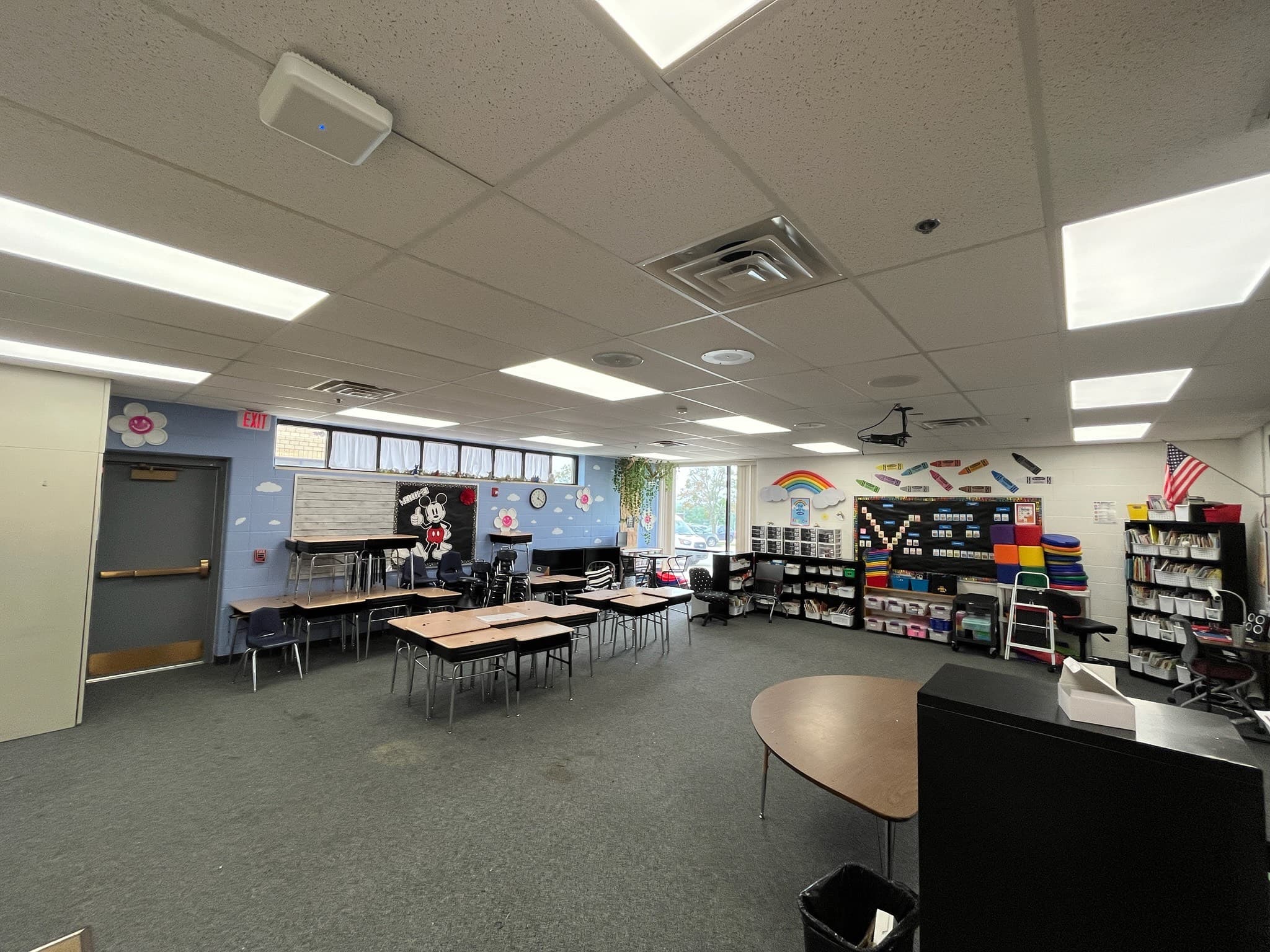
The Deferred Maintenance Dilemma Facing Greater Raleigh Facilities
Greater Raleigh is one of the fastest-growing metro areas in the United States. Wake County's population has surged past one million, and the communities surrounding the capital — Cary, Apex, Garner, Morrisville, Holly Springs, Fuquay-Varina, and Wake Forest — are adding residents, businesses, and public infrastructure at a pace that strains existing facilities. For the facilities directors, procurement managers, and finance leaders responsible for schools, municipal buildings, transit facilities, and institutional campuses across this region, that growth creates a familiar pressure: a growing backlog of deferred maintenance competing for limited capital and administrative bandwidth.
Aging lighting systems, outdated electrical infrastructure, and energy-inefficient controls don't just cost money in higher utility bills — they create safety concerns, reduce productivity, and complicate compliance with increasingly stringent energy codes. Yet addressing that backlog through traditional procurement channels — issuing an independent RFP, managing the solicitation process, evaluating bids, and negotiating scope — can consume months of staff time before a single project breaks ground. In a region where Wake County Public Schools alone manages over 200 facilities, and where institutions from NC State University to dozens of municipal governments in the Research Triangle area are navigating similar constraints, that administrative friction is a real and measurable cost.
Understanding the alternatives to traditional bidding isn't just a procurement nuance — it's a strategic advantage for any facilities or finance leader trying to move deferred projects forward without sacrificing compliance or budget control.
What Cooperative Purchasing Actually Means — and Why It Matters Here
Cooperative purchasing programs exist to solve a structural problem in public procurement: the tension between the legal requirement to demonstrate fair-market value and the practical need to execute projects efficiently. A cooperative contract — sometimes called a cooperative purchasing vehicle or pre-solicited contract — is awarded through a rigorous, publicly conducted competitive bidding process at the national or regional level. Once awarded, eligible organizations can access that contract directly, without conducting their own independent bid cycle.
For facilities managers in Wake, Johnston, Durham, Chatham, and Franklin counties, this means a compliant shortcut through the procurement process — not a workaround. The competitive process has already happened. The pricing has already been vetted. The contractor has already been qualified. What remains is project scoping, scheduling, and execution.
BuyFair is one of the cooperative purchasing vehicles through which VOSS Lighting operates as a Preferred Vendor. Through the BuyFair Preferred Vendor Program, VOSS offers transparent, legally compliant cooperative contracting that satisfies public procurement requirements from day one. Eligible organizations — including school districts, municipalities, county agencies, and higher education institutions — can access verified fair-market pricing, vetted equipment, and full procurement transparency, bypassing the administrative cost and delay of independent solicitation.
BuyFair is one of several cooperative programs available through VOSS. Related cooperative vehicles — including Sourcewell, OMNIA Partners, TIPS, BuyBoard, AEPA, PACE, and others — offer similar pathways depending on an organization's location, sector, and eligibility. For North Carolina public entities, the ability to choose among multiple compliant vehicles provides meaningful flexibility when navigating state and local purchasing policies.
From Procurement Compliance to Project Completion: How It Works in Practice
The value of a cooperative purchasing vehicle like BuyFair isn't just about paperwork — it's about what happens when the paperwork is resolved. When procurement friction is removed, projects move. When pricing is pre-negotiated and transparent, budgets hold. When a qualified contractor is already under contract, change orders stop being surprises and start being exceptions.
VOSS has seen this play out directly in the education sector. At Lewis Central Community Schools in Iowa, the district was navigating a failed bond issue and needed to demonstrate responsible stewardship of public funds before asking voters to approve new bond funding. VOSS helped the district understand that all of the lighting upgrades they needed could be funded from within the existing operating budget — a discovery that directly influenced the scope and public perception of the bond request. VOSS also worked with the district and their legal counsel to confirm that the OMNIA Partners cooperative contract legally satisfied Iowa's competitive bidding requirements, eliminating the need for a separate public solicitation. The result: a compliant, efficiently executed LED lighting retrofit that gave the district a concrete example of fiscal discipline to present to voters.
"My experience with Voss Lighting has been fantastic. Their team is attentive and more than competent." — Jim Ettleman, Operations Director, Lewis Central Community Schools
For school district administrators, finance officers, and procurement managers in the Raleigh metro — whether in the Wake County Public Schools system, Johnston County Schools, or the many charter and private institutions across the Triangle — this story reflects a recognizable challenge. BuyFair and its peer cooperative vehicles offer a similar path: convert deferred maintenance from a budget liability into a fundable, executable project with full audit trail and compliance documentation.
Results across BuyFair program participants nationally have shown strong performance benchmarks, including an 87% on-time project completion rate, 91% on-budget delivery, and up to 30% savings in administrative time and process overhead. These outcomes reflect what facilities and finance leaders in a high-growth market like Raleigh need most: predictability.
Why the Traditional Bid Process Often Fails Facilities Leaders
For those who haven't experienced a low-bid procurement failure firsthand, the risk can seem abstract. In practice, the traditional RFP cycle creates several well-documented vulnerabilities that cooperative purchasing is specifically designed to address.
The Low-Bid Trap is the most common failure mode. When price is the primary differentiator in a public solicitation, the winning contractor is often the one willing to cut the deepest — on materials quality, labor experience, or project scope definition. The result is a signed contract at an attractive number that expands through change orders as undiscoped conditions emerge and substituted materials fall short of specifications.
Scope ambiguity compounds this risk. Contractors who bid aggressively on a low-defined scope have every financial incentive to find change-order opportunities once work begins. A project that looked like a controlled retrofit becomes a negotiation — one that a facilities director or procurement manager must manage in real time, often without adequate leverage.
Timeline slippage is the third consequence. An elongated solicitation process delays project start. A contractor managing thin margins accelerates or defers labor based on their own schedule pressures, not the owner's operational calendar. For a school district trying to complete an electrical upgrade during summer break, or a municipality aiming to align a controls installation with a budget year, missed timelines have real downstream consequences.
Cooperative purchasing through BuyFair addresses all three failure modes: pricing is pre-negotiated and transparent, contractors are pre-vetted and qualified, and scope is established with a partner invested in delivering — not renegotiating — the original commitment.
VOSS in Greater Raleigh: National Experience, Local Presence
VOSS has served commercial, institutional, and public-sector clients for more than 85 years, with 14 branch locations across the United States. Our Raleigh branch serves the full Triangle region — including Durham, Chapel Hill, Cary, Morrisville, Apex, Garner, Knightdale, Wake Forest, Fuquay-Varina, Holly Springs, Zebulon, and surrounding communities in Wake, Durham, Johnston, Chatham, and Franklin counties.
The services VOSS delivers through cooperative contracts like BuyFair span the full range of electrical and lighting project needs:
- Lighting design, procurement, and installation — from LED retrofits in aging school facilities to full lighting system redesigns in municipal buildings and institutional campuses
- Electrical systems and infrastructure upgrades — panel work, wiring, circuitry, and power distribution for facilities addressing years of deferred maintenance
- Controls and smart systems — occupancy sensing, daylight harvesting, automated controls, and building management system integration
- Energy and technology solutions — utility rebate management, energy audits, and technology-forward strategies that reduce operating costs after project completion
- Turnkey project management — from initial scope development through permitting, installation, inspection, and closeout documentation
For procurement directors evaluating a cooperative contract vehicle, VOSS brings not just contract compliance but contractor depth: licensed electricians, certified lighting designers, project managers, and energy specialists working from a local branch with regional knowledge of permitting offices, utility rebate programs, and subcontractor ecosystems across the Triangle.
Service Availability
While VOSS offers a comprehensive suite of national services, specific capabilities may vary by location. Please contact your local branch to confirm the current availability of specific services, technology solutions, or contracting capabilities in your immediate market.
Talk to VOSS About Your Facility's Deferred Maintenance Backlog
If you're a facilities director, procurement manager, CFO, or school district administrator in the Greater Raleigh area trying to move deferred electrical or lighting projects forward — without the friction of a traditional bid cycle and without sacrificing compliance — BuyFair and VOSS may be exactly the conversation you need to have.
Our team can help you understand whether your organization qualifies for BuyFair or one of our other cooperative purchasing vehicles, walk you through how the contracting process works, and develop a realistic project scope and timeline for the improvements your facility needs most.
Reach your local VOSS Raleigh branch directly:
Phone: (919) 779-8777 Toll-Free: (866) 292-0529
We serve facilities throughout Wake, Durham, Johnston, Chatham, and Franklin counties — from downtown Raleigh to Cary, Apex, Morrisville, Garner, Knightdale, Wake Forest, Fuquay-Varina, Holly Springs, and beyond. Let's start with a conversation about what's on your deferred maintenance list and find the fastest compliant path to getting it done.