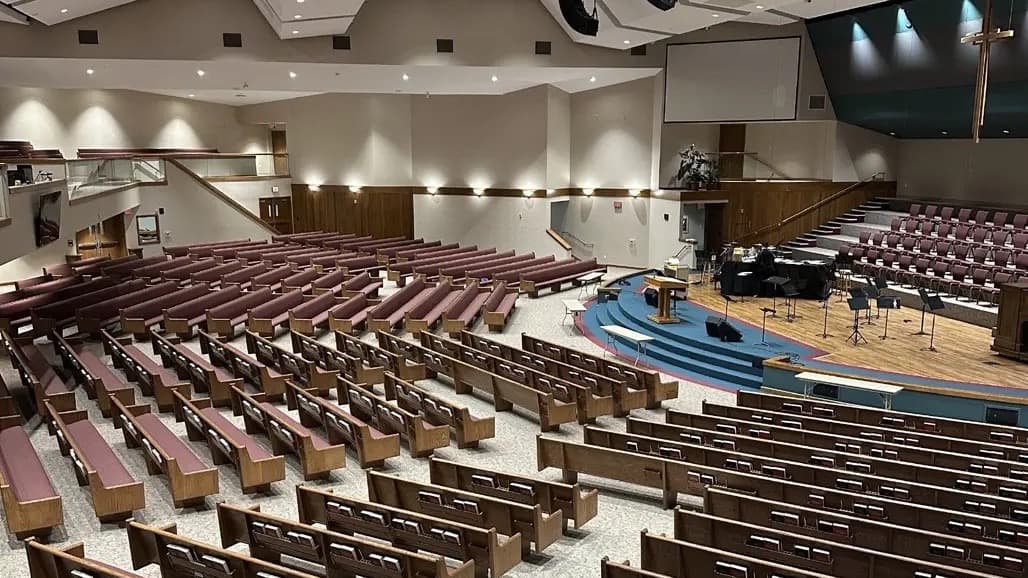
Why Sanctuary Lighting Has Become a Facility Management Priority for Cary-Area Churches
Cary, North Carolina has grown into one of the most dynamic communities in the Southeast — and its congregations have grown with it. From established houses of worship along Kildaire Farm Road and Cary's historic downtown to newer campuses along Morrisville Parkway and the communities of Apex, Morrisville, Holly Springs, and Fuquay-Varina, the Greater Raleigh region is home to a remarkably active and diverse faith community.
With that growth comes a familiar challenge: church facilities built or expanded decades ago are now struggling to keep pace with modern expectations. Sanctuary lighting systems designed for a traditional Sunday service are increasingly expected to support livestreamed services, multi-use event spaces, and energy budgets that can no longer absorb the hidden costs of aging infrastructure.
For facility managers and operations leaders at churches throughout Wake County and the surrounding Triangle region, sanctuary lighting has quietly moved from a maintenance footnote to a genuine strategic concern.
The Real Cost of Aging Sanctuary Lighting Systems
Understanding the full cost of outdated lighting is the first step toward making a sound decision — and it's an area where the numbers often surprise church leadership.
Traditional sanctuary fixtures — incandescent, halogen, and fluorescent — carry costs that go well beyond the price of a replacement bulb. Consider what facility teams in Cary and across the Greater Raleigh area are regularly navigating:
- Access and labor costs for high-ceiling fixture maintenance. Vaulted sanctuaries and cathedral ceilings — common in both historic and contemporary church architecture — require lifts, scaffolding, or specialized contractors to reach fixtures that may burn out multiple times per year.
- Ballast failures and flickering that interrupt services, create distraction during worship, and generate urgent maintenance calls at inconvenient times.
- Uneven light distribution that creates dim zones near the altar, choir, or platform — a growing concern for churches that broadcast services via livestream or record for online audiences.
- Rising utility costs as older fixtures run at significantly higher wattages than modern LED equivalents.
North Carolina's mild climate brings long summers with extended cooling loads, meaning inefficient lighting that generates excess heat doesn't just cost more to run — it works against your HVAC system during the months when energy bills are already climbing. For churches in Cary and Morrisville, where summer utility rates reflect real peak demand pressures, this interaction between lighting and cooling is a practical operational factor worth understanding.
What Modern LED Retrofits Actually Deliver in a Church Environment
The transition from legacy lighting to LED is well-documented in commercial settings, but church sanctuaries present a distinct set of design and operational requirements. The goal isn't simply brighter light — it's the right light, delivered reliably, with minimal disruption to the congregation and minimal ongoing burden on facility staff.
Modern LED retrofit programs designed for houses of worship typically address several dimensions at once:
Light quality and worship atmosphere. LED technology has advanced significantly in its ability to render warm, natural-feeling light that supports the aesthetic and emotional environment of a sanctuary. Color rendering index (CRI) and color temperature selection matter enormously in a worship space, and today's fixtures offer a range of options that can be tuned to complement wood finishes, stained glass, and architectural detail — elements common in many Cary-area and Raleigh churches.
Dimming and controls compatibility. Many older sanctuaries have dimming systems that are incompatible with LED drivers, leading to flickering or buzzing. A well-planned retrofit addresses the controls infrastructure alongside the fixtures themselves, ensuring that the lighting system behaves predictably and can be operated easily by volunteer or part-time staff — not just trained technicians.
Extended fixture life and reduced maintenance cycles. Quality LED fixtures rated for 50,000+ hours dramatically reduce the frequency of relamping. For a church with 40-foot nave ceilings, eliminating two or three lift rentals per year is a meaningful operational and budget win.
Improved consistency for video production. Churches in the Triangle region that broadcast services — whether via YouTube, church-specific platforms, or cable access — consistently report that uneven or color-inconsistent lighting creates technical challenges for their media teams. A properly designed LED system provides the uniform, high-CRI illumination that makes on-camera environments look professional without requiring post-production correction.
Cooperative Purchasing: A Practical Option for Nonprofit and Faith-Based Organizations
One of the most common questions church administrators ask is how to approach a lighting project in a way that's both financially responsible and straightforward to execute. For nonprofit and faith-based organizations in North Carolina, cooperative purchasing programs offer a compelling answer.
Programs such as Houston Church COOP, Sourcewell, BuyBoard, and TIPS provide pre-competitively bid contracts that allow eligible organizations — including churches and nonprofit entities — to procure lighting equipment and installation services without the complexity of a standalone public bid process. These programs have been vetted through rigorous national RFP processes and are widely used by institutions that want cost-effective access to quality contractors.
This is exactly the kind of procurement solution that has helped other mission-driven organizations navigate lighting upgrades responsibly. In a comparable project, VOSS worked with Lewis Central Community Schools in Council Bluffs, Iowa — an institution navigating tight budget constraints and strict state procurement requirements — to complete a full LED retrofit funded entirely within their existing operating budget, using the Omnia Partners cooperative contract to satisfy competitive bidding requirements. Operations Director Jim Ettleman noted: "My experience with Voss Lighting has been fantastic. Their team is attentive and more than competent."
While Lewis Central was a K-12 school district, the parallel to church facilities is direct: mission-driven organizations with limited capital budgets and public accountability can use cooperative purchasing to move forward on lighting upgrades that reduce long-term operating costs — without waiting for a capital campaign or a special budget cycle.
For churches in Cary, Apex, Fuquay-Varina, and across Wake and Chatham Counties, exploring these programs early in the planning process can meaningfully change what's financially possible.
Energy Incentives and Rebates in the Greater Raleigh Market
Utility rebate programs represent another practical lever for churches considering LED upgrades. Duke Energy Progress — the primary utility serving Cary and much of the Triangle — has historically offered commercial and nonprofit customers incentive programs tied to lighting efficiency improvements. The structure and availability of these programs can change, so engaging a lighting partner with active experience navigating North Carolina utility rebates is essential.
VOSS's Raleigh branch team has direct familiarity with the rebate landscape across the Greater Raleigh market. Our article on Utility Lighting Rebates Raleigh NC — part of our broader Latest Lighting resource series — covers this topic in greater depth and is worth reviewing alongside any sanctuary lighting planning process. Capturing available incentives upfront can meaningfully reduce project cost and accelerate return on investment.
Thinking About Your Sanctuary Lighting Project: Key Questions for Facility Leaders
Whether you're a facilities director managing a single-campus congregation or an operations leader overseeing multiple sites across the Triangle, here are the questions worth asking before a sanctuary lighting project begins:
- What is the current replacement cycle? How often are fixtures or lamps being replaced, and what does that cost in materials, labor, and access equipment?
- What are the current utility bills for sanctuary spaces? Establishing a pre-retrofit baseline makes post-project savings measurable and reportable to church leadership.
- What are the space's functional requirements? Does your sanctuary double as a concert venue, wedding facility, or community event space? Multi-use environments benefit from tunable, flexible lighting systems.
- Is your dimming and controls infrastructure compatible with LED? This is frequently overlooked and can become a source of post-installation problems if not addressed in planning.
- What procurement pathway best fits your organization? Understanding cooperative purchasing options early gives you more flexibility in vendor selection and timeline.
Service Availability
While VOSS offers a comprehensive suite of national services, specific capabilities may vary by location. Please contact your local branch to confirm the current availability of specific services, technology solutions, or contracting capabilities in your immediate market.
Connect with VOSS in Cary and the Greater Raleigh Area
VOSS's Raleigh branch serves houses of worship, nonprofit organizations, and commercial facilities throughout Wake County and the broader Triangle region — including Cary, Apex, Morrisville, Holly Springs, Fuquay-Varina, Durham, and Chapel Hill. With 85+ years of national experience and a local team that understands the Raleigh market's utility programs, regulatory environment, and community priorities, we're well-positioned to be a thoughtful partner for your sanctuary lighting project.
We invite you to reach out and have a conversation — not a sales call, but a working discussion about what your facility is dealing with and what approaches have proven effective for similar organizations in this region.
VOSS Raleigh Branch
Phone: (919) 779-8777 Toll-Free: (866) 292-0529