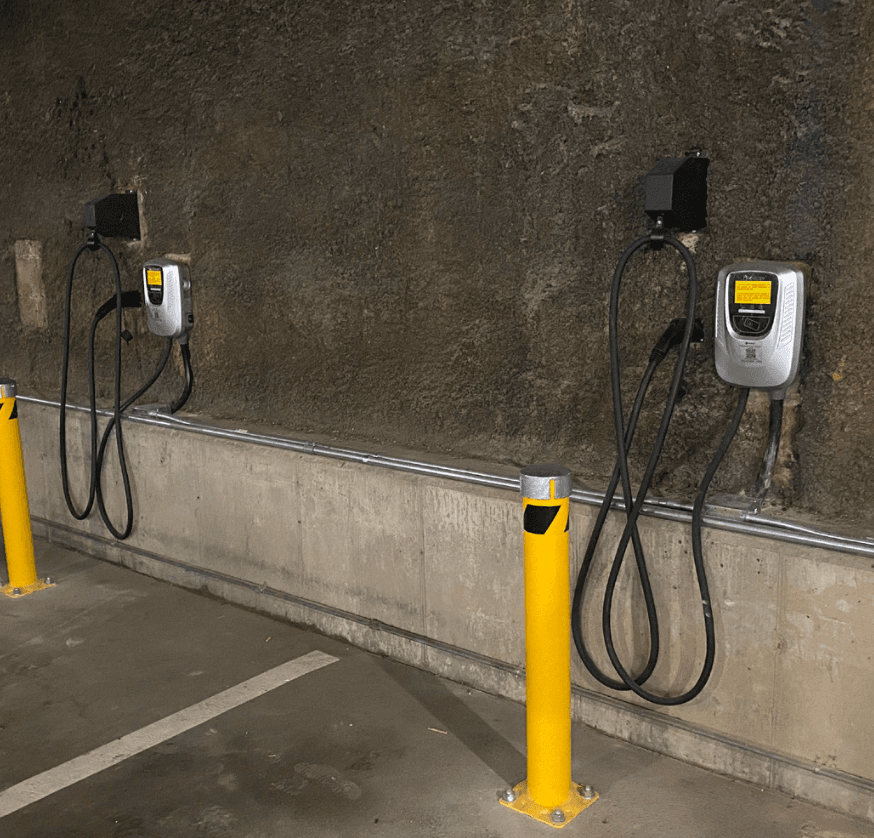
Why Tucson Businesses Are Moving on EV Charging Infrastructure Now
Tucson's commercial landscape is shifting. With a metro population of approximately 554,000 and a growing base of technology employers, healthcare institutions, higher education campuses, and government agencies, the demand for workplace and public EV charging is no longer a future consideration — it's a present-tense business decision.
Southern Arizona has seen steady growth in EV registrations, and businesses in the midtown corridor, Foothills commercial districts, Marana, Sahuarita, and Oro Valley are increasingly fielding requests from employees, tenants, and customers for convenient charging access. At the same time, a federal tax credit worth up to 30% of equipment and installation costs is set to expire mid-2026 — creating a concrete financial reason to act sooner rather than later.
For facility managers, CFOs, sustainability leaders, and commercial real estate stakeholders in the greater Tucson area, this article breaks down what you need to know: the incentive landscape, the infrastructure considerations, and how to approach a commercial EV charging installation the right way.
The Incentive Landscape: Federal, State, and Utility Programs Worth Knowing
One of the most frequently asked questions we hear from Tucson-area finance leaders is: How much of this can we offset? The answer, for those who plan strategically, is substantial.
Federal 30C Tax Credit The Alternative Fuel Vehicle Refueling Property Credit (30C) allows eligible businesses to claim 30% of qualified equipment and installation costs for commercial EV chargers, with per-item maximums reaching up to $100,000 — and higher thresholds in designated low-income or rural areas. Critically, property must be placed in service by June 30, 2026 to qualify under current law. Given permitting timelines, utility coordination requirements, and contractor scheduling, that window is closer than it appears.
Inflation Reduction Act (IRA) Provisions The IRA extended and expanded EV infrastructure tax incentives, and certain projects in qualifying census tracts — including portions of Pima County — may be eligible for enhanced credit tiers. Working with an experienced electrical contractor who understands how to document and structure installations for maximum credit eligibility is essential.
Tucson Electric Power (TEP) and APS Incentive Programs Tucson Electric Power, which serves much of the Tucson metro area, offers commercial demand management and electrification programs that can intersect with EV charging deployments. Arizona Public Service (APS) similarly maintains programs relevant to commercial customers in portions of the greater metro region. The specific rebate structures, application windows, and eligibility requirements change periodically — coordinating directly with your utility provider, or working with a contractor experienced in utility incentive navigation, is the most reliable path to capturing available funds.
NEVI and Arizona DOT Programs Arizona has been an active participant in the federal National Electric Vehicle Infrastructure (NEVI) Formula Program, with the Arizona Department of Transportation directing funds toward EV charging corridor development. While NEVI is primarily oriented toward public corridor charging, its presence in the state signals growing infrastructure investment that commercial property owners along key corridors — including I-10, I-19, and Tucson's major arterial routes — may benefit from tracking.
What Makes Commercial EV Charging Installation Complex (and How to Simplify It)
Facilities directors overseeing commercial properties in Tucson often underestimate the upstream complexity of EV charging projects. Installing a Level 2 charger or a bank of DC fast chargers is not simply a matter of mounting hardware — it involves a layered process that, when managed poorly, leads to delays, cost overruns, and installations that don't perform as expected.
Electrical Capacity Assessment Many commercial buildings in Tucson — particularly older industrial and retail properties in areas like downtown, South Tucson, and older strip centers along Oracle Road or Speedway Boulevard — were not designed with EV load in mind. Before any charger is specified, a thorough electrical capacity assessment is needed to determine whether existing service can support the anticipated load, or whether a service upgrade, transformer coordination, or load management strategy is required.
Smart Load Management and Energy Controls For facilities deploying multiple chargers, smart EVSE (Electric Vehicle Supply Equipment) solutions with load-balancing capabilities can prevent costly demand charge spikes on utility bills — a particularly important consideration for Arizona's hot climate, where HVAC loads during summer months can push facilities close to their demand thresholds. Integrating EV charging with broader energy management systems is a best practice that protects both uptime and operating costs.
Permitting and Utility Coordination Commercial EV charging installations in Pima County and the City of Tucson require proper permitting through local authorities having jurisdiction, as well as coordination with the serving utility for any service upgrades or new service connections. Managing this process requires experience with local code requirements, utility interconnection procedures, and inspection protocols — all areas where a licensed, full-service electrical contractor brings significant value over a hardware-only vendor.
Scalability and Future-Proofing One of the most common and costly mistakes in commercial EV charging deployment is under-designing for future demand. A parking lot in Marana or a corporate campus near the University of Arizona that installs two Level 2 chargers today may need twelve in three years. Conduit stub-outs, panel capacity reserves, and infrastructure designed with expansion in mind can dramatically reduce the cost of scaling — but only if the original installation accounts for it.
EV Charging as a Strategic Asset: Perspectives Across Your Organization
The business case for commercial EV charging looks different depending on who you ask — and a well-structured deployment addresses all of these perspectives simultaneously.
For Facilities Managers: The priority is a turnkey installation experience that minimizes disruption to daily operations, meets code requirements, and delivers reliable uptime. This means working with a contractor who manages the full project scope — site assessment, design, permitting, installation, utility coordination, and commissioning — rather than a fragmented approach that leaves coordination gaps.
For CFOs and Finance Leaders: The financial case centers on incentive capture, total cost of ownership, and potential revenue generation. Level 2 and DC fast chargers can be configured with billing and payment platforms that allow businesses to charge employees, tenants, or the public for energy used — converting a capital asset into a modest revenue stream. Combined with tax credit capture and utility rebates, the payback period on a well-structured commercial EV charging installation is often shorter than decision-makers initially expect.
For Sustainability and ESG Managers: EV charging infrastructure contributes directly to Scope 3 emissions reduction reporting by facilitating employee and fleet transitions to electric vehicles. For Tucson organizations pursuing LEED certification on new construction or major renovation projects, EV charging infrastructure supports LEED credit eligibility under the Transportation and Sustainable Sites categories. As ESG reporting standards tighten and stakeholder scrutiny of corporate sustainability claims increases, documented EV charging deployment provides a concrete, measurable data point.
For Commercial Real Estate Developers and Property Managers: Across Tucson's growing commercial corridors — from the Rillito River area to Midtown to the expanding mixed-use developments near Rita Ranch and Vail — EV charging is transitioning from a differentiator to a baseline tenant expectation. Arizona has adopted EV-ready building code provisions, and staying ahead of evolving municipal and state requirements is far less expensive than retrofitting unprepared buildings later. For multi-property portfolios, a consistent, scalable deployment strategy managed by a single contractor creates operational efficiency and reduces per-site costs.
A Note for Public Sector and Institutional Organizations in Tucson
Tucson's substantial public sector footprint — including Pima County government, the City of Tucson, Tucson Unified School District, Pima Community College, and the University of Arizona — represents a significant segment of the commercial EV charging opportunity in this market. State and municipal fleet electrification goals, combined with federal infrastructure funding, are driving EV charging installations at government facilities, transit hubs, and educational campuses across the region.
VOSS holds an approved state contract in Arizona, enabling Arizona state agencies and qualifying public entities to access our products and services through a streamlined procurement process — without the need for a separate competitive bid in many cases. Eligible organizations may also be able to leverage cooperative purchasing programs including Sourcewell, TIPS, BuyBoard, Omnia Partners, AEPA, and PACE, among others. These vehicles are designed to reduce procurement complexity, ensure contract compliance, and accelerate project timelines for public-sector buyers.
For Tucson Unified, Pima Community College, or Pima County facilities teams evaluating EV charging for fleet parking or public campus deployment, this is a meaningful pathway to move faster and more efficiently.
Connecting EV Charging to Your Broader Energy Strategy
Commercial EV charging doesn't exist in isolation. The most forward-thinking Tucson facilities operators are integrating EV infrastructure with LED lighting upgrades, lighting controls, solar-ready conduit planning, and energy management systems as part of a cohesive electrification strategy. Our Latest Lighting content series — which covers topics ranging from LED outdoor lighting and parking lot upgrades to energy audits, utility rebates, and LED lighting incentive programs — provides context for how EV charging fits within a broader approach to energy modernization.
If your organization has been evaluating LED retrofits, outdoor lighting upgrades, or utility rebate navigation alongside EV charging, these conversations are naturally connected. A coordinated approach across multiple project types often unlocks economies of scale in permitting, contractor mobilization, and incentive stacking.
Service Availability
While VOSS offers a comprehensive suite of national services, specific capabilities may vary by location. Please contact your local branch to confirm the current availability of specific services, technology solutions, or contracting capabilities in your immediate market.
Talk to VOSS About EV Charging for Your Tucson Facility
VOSS has been a trusted electrical contractor for more than 85 years, with deep experience managing commercial EV charging station installation projects for businesses, property owners, fleet operators, and public institutions across the country. Our Phoenix branch serves the greater Tucson market, including Marana, Oro Valley, Sahuarita, Vail, Green Valley, and surrounding communities throughout Pima and Santa Cruz counties.
If you're evaluating commercial EV charging infrastructure — whether you're in the early research phase or ready to move forward before the mid-2026 federal incentive deadline — we'd welcome the conversation. Our team can walk through your facility's electrical capacity, available rebate opportunities, and a project approach tailored to your operational and financial priorities.
VOSS Phoenix Branch Phone: (602) 340-9500 Toll-Free: (800) 788-8676