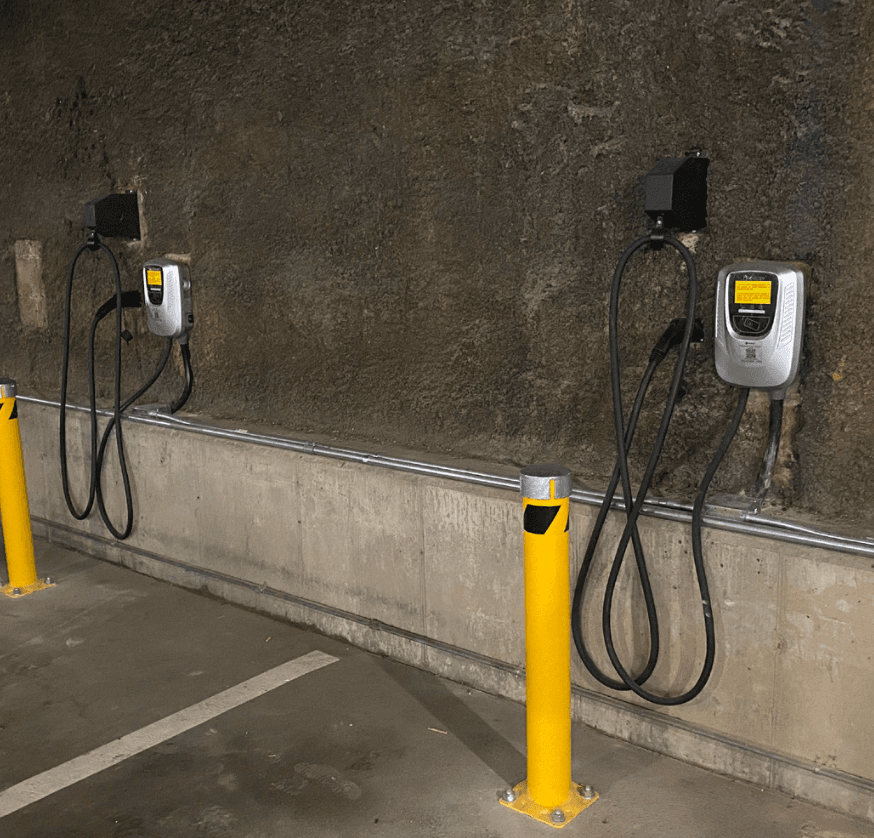
The EV Charging Moment Has Arrived in Surprise, AZ
Surprise is no longer a city on the outskirts of Phoenix — it's a thriving community of nearly 179,000 residents and a hub of commercial and industrial activity stretching across the West Valley. From the retail and hospitality corridors along Bell Road and Grand Avenue to the employers clustered near the Prasada and Marley Park developments, Surprise is experiencing sustained economic growth that is reshaping how businesses think about their facilities.
That growth is running headlong into a national trend that facility managers, finance leaders, and property developers can no longer afford to defer: the rapid adoption of electric vehicles. Arizona already ranks among the top states in EV registrations, driven by a combination of year-round driving conditions, state-level incentives, and an increasingly EV-conscious workforce and consumer base. For commercial properties across Surprise, El Mirage, Sun City West, and the broader West Valley corridor, the question is no longer whether to add EV charging infrastructure — it's when and how.
This article explores the key trends, available incentives, and practical considerations shaping commercial EV charging station adoption in Surprise and the Greater Phoenix market, and what decision-makers should understand before they move forward.
Why the Business Case for EV Charging Has Never Been Stronger
For years, commercial EV charging was treated as a niche amenity. That calculus has fundamentally changed. Several converging forces are now making workplace and commercial EV charging station installation a mainstream business priority.
EV adoption is accelerating faster than most projections anticipated. Arizona's transportation electrification goals, combined with federal investment through the Infrastructure Investment and Jobs Act and the Inflation Reduction Act (IRA), have created conditions where EV ownership is increasingly accessible to mainstream consumers and fleet operators. Businesses in Surprise that serve commuters traveling from Peoria, Glendale, and Goodyear, or that manage delivery and service fleets across the West Valley, are already feeling this shift.
The incentive window is time-sensitive. The federal 30C Alternative Fuel Vehicle Refueling Property Credit — which covers 30% of qualified equipment and installation costs for commercial EV chargers, with maximums reaching up to $100,000 per unit in eligible areas — applies to property placed in service by June 30, 2026. Installations must be fully operational before that deadline to qualify. For organizations evaluating this investment, the planning and permitting timeline means that decision-making needs to begin well before that date, not after.
Utility rebate programs add another layer of savings. Arizona Public Service (APS) and Salt River Project (SRP) both operate demand-side management and electrification programs that can include rebates and rate incentives for commercial EV charging installations. The availability and structure of these programs can change, making it critical to work with an electrical contractor who actively tracks and coordinates with utilities — not one who simply hands you a brochure.
Together, these factors mean that organizations willing to plan strategically can significantly compress the payback period on commercial EV charging infrastructure and position their properties for the decade ahead.
What Different Stakeholders Need to Understand
Commercial EV charging adoption looks different depending on where you sit in an organization. The concerns of a facilities director planning a multi-site rollout differ meaningfully from those of a CFO evaluating capital allocation or a sustainability manager building an ESG reporting framework.
For facilities managers and directors of operations, the primary concern is execution: Can this be done without disrupting daily operations? Who handles permitting and utility coordination? What happens when a charger goes down? The answer lies in working with a contractor who can manage the entire project as a single accountable partner — from the initial electrical capacity assessment and load study through design, permitting, installation, commissioning, and post-installation support. Surprise's commercial corridors along Litchfield Road and Reems Road include retail centers, office parks, and industrial facilities where installation complexity varies widely, and a disciplined project approach is essential.
For CFOs and finance leaders, the conversation centers on total cost of ownership and return on investment. The combination of the federal 30C tax credit, utility rebates, and — where applicable — revenue generated through tenant or public charging billing can substantially change the financial profile of an EV charging investment. Understanding which incentives stack, which require pre-approval, and how to document qualified expenses for tax purposes requires careful navigation. An experienced contractor with rebate and incentive expertise doesn't just install equipment — they help protect the financial case that justified the project in the first place.
For sustainability and ESG managers, commercial EV charging infrastructure is a visible, measurable commitment to carbon reduction. EV charging installations can contribute to LEED certification credit eligibility, support green fleet transition programs, and provide the kind of quantifiable environmental impact data that satisfies increasingly rigorous ESG reporting requirements. For organizations operating in Surprise with corporate sustainability commitments — whether in healthcare, education, commercial real estate, or light industrial — EV charging is increasingly a component of a broader energy and sustainability strategy that may also include LED lighting upgrades and energy audits. Our article on Energy Audits, Incentives, and Rebate Navigation for Businesses explores how these initiatives work together.
For commercial real estate developers and property managers, EV charging has crossed into mainstream tenant expectation territory. Multi-tenant office buildings, industrial parks, and retail centers across the West Valley are increasingly being evaluated by prospective tenants based on EV amenity availability. Arizona's evolving building codes are also moving toward EV-ready requirements, making proactive infrastructure investment a hedge against future mandate compliance costs. Scalable, future-proof infrastructure design — including conduit-only "EV-ready" rough-ins that allow future charger additions without major electrical rework — is a smart approach for developers managing multiple properties across Surprise, Peoria, Buckeye, and the wider Greater Phoenix metro.
Navigating Rebates and Incentives: What's Available in Arizona
The incentive landscape for commercial EV charging infrastructure is genuinely valuable — but it requires active navigation to capture fully. Here is a practical overview of the programs relevant to businesses in Surprise and the Greater Phoenix area:
- Federal 30C Tax Credit (IRA): Covers 30% of qualified equipment and installation costs for commercial EV Supply Equipment (EVSE), up to $100,000 per unit for businesses. Enhanced credits may be available for installations in designated low-income or rural census tracts. The credit applies to property placed in service on or before June 30, 2026 — timeline is critical.
- Federal Bonus Depreciation and Section 179 Expensing: Commercial EV charging equipment may qualify for accelerated depreciation treatment under current federal tax law, improving the near-term cash flow impact of the investment.
- NEVI Program Infrastructure: Arizona has received federal NEVI (National Electric Vehicle Infrastructure) funding to build out charging corridors along key transportation routes. While NEVI funding primarily targets public corridor charging, it signals the broader infrastructure buildout that will increase EV adoption and, in turn, demand for workplace and destination charging across communities like Surprise.
- APS and SRP Utility Programs: Both major utilities serving the West Valley operate programs that may include rebates, demand charge management rates, and technical assistance for commercial EV charging. Program terms change — direct coordination with the utility, ideally through your electrical contractor, is the most reliable way to capture available value.
- Arizona State Incentives: Arizona offers various state-level programs supporting electrification and clean energy investments. Organizations should consult with their tax advisor and electrical contractor to identify state-specific opportunities that apply to their project.
For public agencies, school districts, and municipal entities in Surprise and Maricopa County, an additional pathway is available: VOSS holds an approved state contract in Arizona, which means qualifying organizations can access VOSS' products and services through a compliant procurement vehicle without a separate competitive bid process. Eligible organizations may also use cooperative purchasing programs including Sourcewell, TIPS, BuyBoard, Omnia Partners, AEPA, and PACE, among others, to further streamline procurement.
Planning a Commercial EV Charging Installation: Key Considerations
Whether you're installing a handful of Level 2 chargers for employee parking at a Surprise office campus or designing a multi-port DC fast charging array for a retail destination near the Loop 303 corridor, a disciplined planning process is what separates successful deployments from costly surprises.
Electrical capacity assessment is the foundation. Many commercial properties — particularly those constructed before EV charging was a design consideration — do not have the available electrical capacity to support EV charging at scale without a service upgrade or load management strategy. A thorough assessment of existing electrical infrastructure, utility service capacity, and load profile is the first step in any responsible commercial EV charging project.
Site design matters for scalability. Installing conduit pathways, panel capacity, and switchgear with future expansion in mind is far more cost-effective than retrofitting later. Businesses that install for today's three or four vehicles but design for twenty are better positioned to grow into their infrastructure.
Permitting and utility coordination require expertise. Commercial EVSE installations in Arizona require building permits, electrical permits, and often coordination with APS or SRP on service upgrades or new service connections. Navigating these requirements in Maricopa County — whether in Surprise, Peoria, or Goodyear — demands an electrical contractor with established relationships and a track record of successful project closeouts.
Ongoing support and uptime management are underappreciated. A charger that is offline is a failed amenity, a fleet liability, and a compliance gap. Selecting a contractor who provides commissioning, monitoring integration, and post-installation support — rather than simply delivering equipment and walking away — is a meaningful differentiator.
VOSS and the Broader Energy Upgrade Picture
Commercial EV charging is often most impactful when it's planned as part of a broader facility energy strategy. Many of the electrical infrastructure improvements that support EV charging — service capacity upgrades, panel modernization, smart controls integration — also create a foundation for LED lighting upgrades, energy management systems, and solar-ready infrastructure.
If your organization in Surprise is already exploring LED outdoor lighting for parking areas, energy audits, or utility lighting rebate programs, those initiatives are natural complements to an EV charging rollout. Our articles on Parking Lot and Outdoor LED Lighting Upgrades and EV Chargers: Unlocking Profitability for Businesses offer additional perspective on how these investments connect.
Service Availability
While VOSS offers a comprehensive suite of national services, specific capabilities may vary by location. Please contact your local branch to confirm the current availability of specific services, technology solutions, or contracting capabilities in your immediate market.
Talk to VOSS About EV Charging in Surprise, AZ
If your organization in Surprise, the West Valley, or anywhere across the Greater Phoenix region is evaluating commercial EV charging infrastructure, we'd welcome the opportunity to discuss how the current incentive landscape, your facility's electrical capacity, and your business goals intersect. The most important step is starting the conversation early — the planning and permitting timeline is real, and the federal incentive window has a defined end date.
Our Phoenix branch team serves Surprise, Peoria, El Mirage, Goodyear, Avondale, Buckeye, and communities across Maricopa County.
VOSS Phoenix Branch Phone: (602) 340-9500 Toll-Free: (800) 788-8676