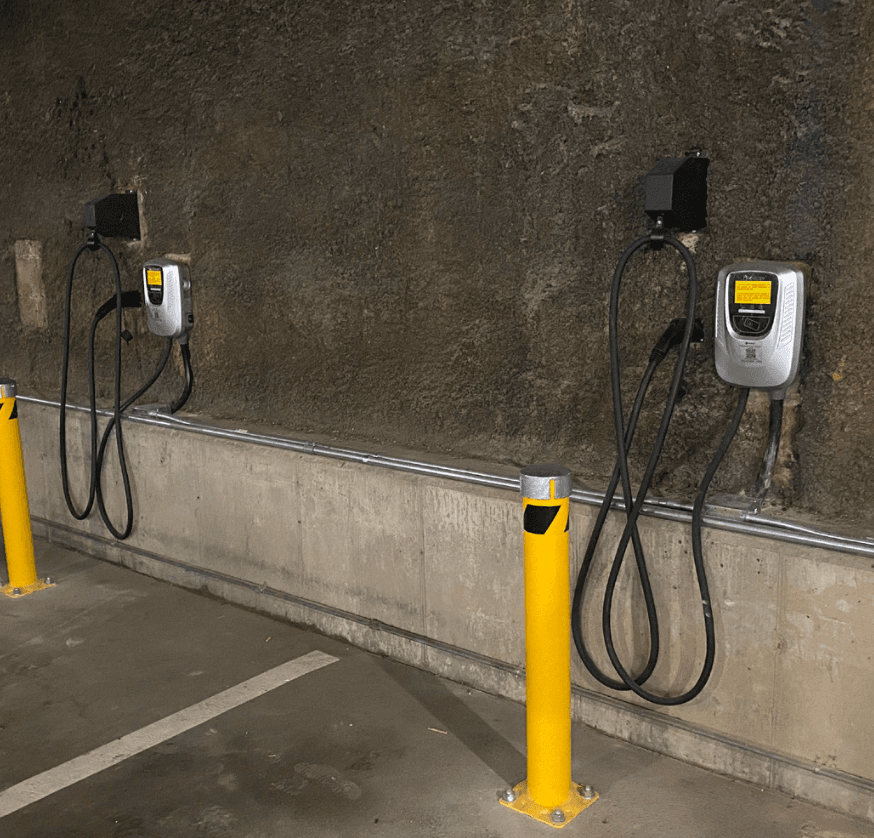
Why Scottsdale Is at the Center of Arizona's EV Infrastructure Moment
The Greater Phoenix metropolitan area — including Scottsdale, Tempe, Mesa, Chandler, Gilbert, and Peoria — is one of the fastest-growing EV adoption markets in the United States. Scottsdale's economy, anchored by healthcare, hospitality, financial services, corporate campuses, and a thriving commercial real estate sector, is home to a workforce and consumer base that is increasingly arriving in electric vehicles. That shift is no longer a future consideration — it is a present operational reality.
For facilities directors managing office parks along the Loop 101 corridor, property managers overseeing mixed-use developments near Old Town or the Scottsdale Quarter, and fleet operators serving the broader Phoenix metro, the question is no longer whether to install commercial EV charging infrastructure — it is how to do it strategically, cost-effectively, and in time to capture the incentives still on the table.
This article is designed to help Scottsdale-area business leaders, facility managers, CFOs, and sustainability professionals understand the current landscape of commercial EV charging station installation — including the rebate programs, electrical considerations, and strategic frameworks that determine whether a deployment succeeds or stalls.
The Incentive Window Is Open — But Not Indefinitely
One of the most consequential factors shaping commercial EV charging decisions right now is timing. Several major federal incentives are currently available but carry expiration risks that make near-term planning essential.
The Federal 30C Alternative Fuel Vehicle Refueling Property Credit allows businesses to claim 30% of qualified equipment and installation costs for commercial EV chargers, with maximums up to $100,000 per charging unit — and potentially higher amounts for installations in designated low-income or rural areas. Critically, this credit applies to property placed in service by June 30, 2026. Installations must be fully operational before that deadline to qualify. For organizations planning multi-site deployments or projects requiring significant electrical infrastructure upgrades, the lead time required to design, permit, and complete those projects means the planning window is effectively now.
Beyond the federal credit, Arizona businesses may have access to additional incentive layers:
- Utility rebate programs — Arizona Public Service (APS) and Salt River Project (SRP) have both offered commercial EV charging incentives for eligible customers. Program availability and structures change regularly, so confirming current offerings with a qualified contractor is essential.
- State and local programs — Arizona has maintained a policy environment generally supportive of EV infrastructure investment, and municipal programs in the greater Scottsdale and Phoenix area have periodically offered additional support for commercial charging deployment.
- NEVI and IRA-aligned funding — The federal National Electric Vehicle Infrastructure (NEVI) program and the broader Inflation Reduction Act (IRA) framework continue to shape how states and utilities deploy EV infrastructure funding. While NEVI primarily targets public corridor charging, the IRA's commercial incentive structure directly benefits private-sector property owners and businesses.
For CFOs and finance leaders evaluating total cost of ownership, layering these incentive sources — federal tax credits, utility rebates, and any applicable state programs — can meaningfully compress payback periods and improve the financial case for moving forward.
What "Turnkey" Really Means for a Commercial EV Charging Project
The phrase "turnkey EV charging installation" is used broadly in the market, but the depth of service behind it varies considerably. For a facilities manager or property owner in Scottsdale, understanding what a complete, accountable engagement actually involves is the difference between a smooth project and a costly, disruptive one.
A genuinely comprehensive commercial EV charging station installation process includes:
- Electrical capacity assessment — Before a single charger is specified, a qualified electrical contractor must evaluate your facility's existing service capacity. Many commercial properties — particularly older office buildings, retail centers, and multifamily developments — were not designed with EV load in mind. Upgrading electrical service, adding panel capacity, or designing load management systems to accommodate multiple simultaneous charging sessions requires licensed electrical expertise, not just a charging equipment vendor.
- Site design and equipment specification — The right mix of Level 2 commercial chargers and, where justified, DC fast charging (DCFC) equipment depends on your use case: employee parking, fleet depot charging, customer amenity, or public-access revenue generation each call for different approaches. Equipment selection also affects long-term maintenance costs and network compatibility.
- Permitting and utility coordination — In the City of Scottsdale and across Maricopa County, commercial electrical projects require permits, inspections, and in many cases utility-side coordination for service upgrades. This is where projects managed by non-electrical contractors frequently encounter delays. An experienced electrical contractor with established relationships with local utilities and municipal permitting offices navigates this process efficiently.
- Installation with minimal operational disruption — For active commercial properties, staging and scheduling installation work to minimize impact on tenants, employees, or customers is a project management discipline, not an afterthought.
- Ongoing support and network integration — Commercial EVSE (electric vehicle supply equipment) increasingly connects to networked management platforms that enable usage monitoring, billing for tenant or public charging, load balancing, and remote diagnostics. Ensuring that infrastructure is properly commissioned and supported after installation protects the investment.
The Strategic Case for Different Stakeholders in the Scottsdale Market
Commercial EV charging infrastructure intersects with the priorities of several distinct decision-makers within any organization. Understanding how the investment case differs by role helps clarify why cross-functional alignment is so important before a project begins.
For facilities and operations leaders, the core concern is execution: Can this be done without disrupting the building? Who is accountable if something goes wrong? Is the contractor licensed and experienced with commercial electrical systems at this scale? In Scottsdale's dense commercial corridors — from the Kierland area to the Scottsdale Airpark and South Scottsdale's growing mixed-use districts — properties often have complex existing infrastructure that requires careful assessment before any new electrical load is added.
For CFOs and finance executives, the conversation starts with numbers. What does the project cost net of incentives? What is the realistic payback period? Is there revenue potential through fee-based public or tenant charging? The 30C federal tax credit, combined with available utility rebates, can significantly change the financial calculus — but only if the project is structured and timed to qualify. Finance leaders should be asking their contractors to help document the incentive stack as part of the project scope.
For sustainability and ESG managers, commercial EV charging station installation is increasingly a reportable metric. Many Scottsdale-area corporations with national or global operations face growing pressure from investors, board members, and regulators to demonstrate measurable progress on carbon reduction and green fleet transition. EV charging infrastructure supports Scope 1 and Scope 2 emissions reporting, can contribute toward LEED certification credits, and signals commitment to environmental responsibility in ways that resonate with both employees and external stakeholders.
For commercial real estate developers and property managers, the market dynamics are clear: EV charging has moved from a premium differentiator to an expected tenant amenity in Class A office, retail, and multifamily properties. Scottsdale's competitive real estate market — where vacancy rates in premium office and mixed-use developments are closely watched — means that properties without EV charging infrastructure are increasingly at a disadvantage in lease negotiations. Arizona's evolving building codes and EV-ready mandates also mean that developers planning new construction or major renovations should be designing EV infrastructure into their projects from the start, not as a retrofit afterthought.
Planning for Scale: Portfolio-Wide and Multi-Site Deployments
For organizations with multiple properties across the Greater Phoenix area — including Scottsdale, Paradise Valley, Fountain Hills, Cave Creek, and communities stretching toward Tempe and Chandler — a portfolio-wide approach to commercial EV charging infrastructure typically yields better outcomes than a property-by-property, reactive deployment model.
A coordinated multi-site strategy allows for:
- Consistent equipment standards that simplify maintenance and network management across locations
- Consolidated rebate and incentive identification that ensures no eligible program is missed across the portfolio
- Phased deployment planning that sequences projects to align with lease renewals, capital planning cycles, and incentive deadlines
- Standardized permitting and utility coordination across jurisdictions, reducing delays and cost variability
Organizations managing large fleets — municipal or corporate — operating out of facilities in the Phoenix metro area face a distinct set of considerations around depot charging capacity, overnight load management, and integration with fleet management systems. These deployments are more complex than workplace or retail charging and benefit significantly from a contractor with deep experience in commercial electrical infrastructure.
For public sector organizations, municipalities, and educational institutions in the Scottsdale and broader Maricopa County area, cooperative purchasing programs offer a streamlined path to EV charging infrastructure procurement. VOSS holds an approved state contract in Arizona, meaning Arizona state agencies can access our services directly through an established, compliant contracting vehicle. Eligible organizations may also access VOSS through cooperative purchasing programs including Sourcewell, BuyBoard, TIPS, Omnia Partners, AEPA, PACE, and others — reducing procurement burden and ensuring competitive pricing without a formal bid process.
Further Reading in This Series
If your organization is also evaluating broader energy infrastructure and incentive strategies, several related topics in this content series may be useful. Our articles on Maximize ROI with Commercial LED Lighting Rebates in Dallas, TX, Energy Audits, Incentives, and Rebate Navigation for Businesses, and EV Chargers: Unlocking Profitability for Businesses address complementary dimensions of commercial energy investment. Fluorescent lamp bans, LED upgrade incentives, and outdoor lighting modernization — all covered in this series — often intersect with EV infrastructure projects when facilities are undertaking broader electrical modernization programs.
Service Availability
While VOSS offers a comprehensive suite of national services, specific capabilities may vary by location. Please contact your local branch to confirm the current availability of specific services, technology solutions, or contracting capabilities in your immediate market.
Talk With Our Scottsdale-Area Team
The commercial EV charging landscape in Scottsdale and Greater Phoenix is moving quickly — and the incentive environment is time-sensitive. Whether you are in early-stage planning, actively evaluating equipment and contractors, or ready to move forward on a specific project, we are available to provide a no-obligation consultation tailored to your facility, your goals, and your timeline.
Our Phoenix branch serves commercial clients throughout Scottsdale, Tempe, Mesa, Chandler, Gilbert, Peoria, Glendale, Paradise Valley, Fountain Hills, and the broader Maricopa County market.
VOSS — Phoenix Branch
Phone: (602) 340-9500 Toll-Free: (800) 788-8676
We look forward to helping your organization navigate the path to commercial EV charging infrastructure that is installed right, incentivized fully, and built to serve your facility for years to come.