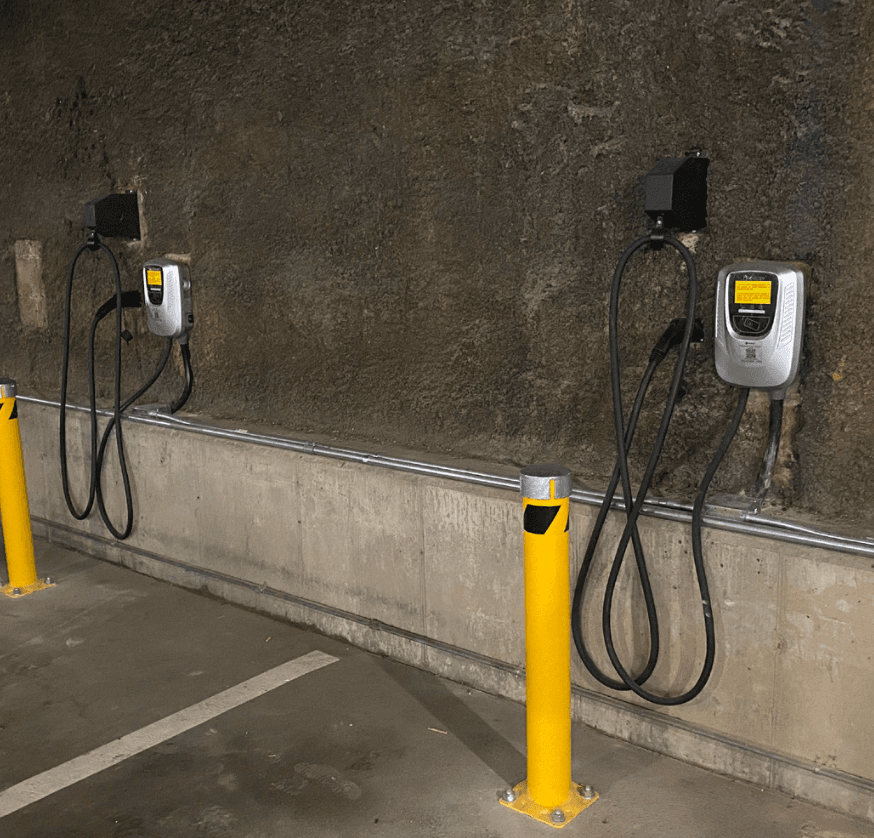
Why Peoria, AZ Businesses Are Investing in EV Charging Infrastructure Now
Peoria is one of the fastest-growing cities in the Greater Phoenix metro — a region of 5 million people where EV adoption is accelerating faster than nearly anywhere else in the country. Arizona consistently ranks among the top states for electric vehicle registrations, and Peoria's mix of corporate campuses, retail corridors, multifamily developments, and public facilities means demand for commercial EV charging is no longer a future concern — it's a present operational reality.
For businesses along Peoria's key commercial corridors — from the Loop 101 interchange and Happy Valley Road retail nodes to the industrial and office parks near Lake Pleasant Parkway — the question is no longer whether to install EV charging infrastructure, but how to do it cost-effectively and at the right scale. The window to capture the most generous available incentives is narrowing, which makes timing a genuine strategic consideration.
Nearby communities including Glendale, Surprise, Goodyear, Buckeye, and the broader Northwest Valley are seeing parallel investment in EV infrastructure, and employers and property owners across the region are beginning to view workplace and property EV charging as a baseline expectation — not a premium feature.
Understanding the EV Charging Landscape: Level 2 vs. DC Fast Charging for Commercial Use
Not all commercial EV charging needs are the same, and selecting the right equipment type is one of the first decisions organizations must make. Understanding the distinction helps facilities managers, finance leaders, and property developers align infrastructure investment with actual use patterns.
Level 2 Commercial EVSE (Electric Vehicle Supply Equipment) operates at 208–240V and typically delivers a full charge over several hours. This makes Level 2 the right choice for:
- Employee workplace charging — where vehicles park for 6–9 hours during a shift
- Multifamily residential parking — overnight charging for residents
- Retail and hospitality dwell-time charging — where customers spend 30 minutes to several hours on-site
- Fleet depot charging — overnight replenishment for commercial vehicles
DC Fast Charging (DCFC) delivers significantly higher power and can charge compatible vehicles to 80% in 20–45 minutes. This is appropriate for:
- Public-access commercial sites with high vehicle turnover
- Fleet operations requiring rapid mid-day turnaround
- Travel corridor locations such as fuel station replacements or highway-adjacent retail
For most Peoria commercial properties — office parks, retail centers, industrial facilities, healthcare campuses, and government buildings — Level 2 EVSE represents the most practical and cost-effective entry point, with electrical infrastructure designed to be scalable toward DC fast charging as demand grows.
Available Rebates and Incentives: What Peoria Businesses Can Capture Today
One of the most critical — and time-sensitive — aspects of commercial EV charging investment is accessing the full stack of available incentives. VOSS approaches rebate identification as a core part of every project, not an afterthought. Here is what Peoria-area businesses should know:
Federal 30C Alternative Fuel Vehicle Refueling Property Tax Credit
The federal 30C tax credit allows commercial property owners to claim 30% of qualified equipment and installation costs, with per-item maximums reaching up to $100,000. Properties located in qualifying low-income or rural census tracts may be eligible for enhanced credit levels. Critically, this credit applies only to equipment placed in service by June 30, 2026 — meaning installation must be fully operational before that deadline. For organizations planning multi-station or multi-property deployments, initiating the process now is essential.
IRA and NEVI Program Funding
The Inflation Reduction Act and the National Electric Vehicle Infrastructure (NEVI) program have directed significant federal capital toward EV charging deployment. While NEVI funding is primarily corridor-focused, its presence in the market has stimulated adjacent state and utility incentive programs that benefit commercial property owners and fleet operators in metro markets like Greater Phoenix.
Arizona Utility Incentive Programs
Arizona's major electric utilities have offered rebate and incentive programs for commercial EVSE installation, including support for make-ready electrical infrastructure — the panel upgrades, conduit runs, and service capacity work that often represents a significant share of total project cost. VOSS works directly with utility representatives to identify current program availability, submission requirements, and timing — because incentive stacking (combining federal tax credits with utility rebates) is where the most compelling financial returns are achieved.
LEED and Green Building Credits
For organizations pursuing LEED certification or maintaining existing certified facilities, EV charging infrastructure contributes to Transportation credits under LEED v4 and v4.1. For Peoria's growing inventory of Class A commercial office and mixed-use developments, this is an increasingly relevant consideration.
A note for public-sector and institutional organizations in Peoria: Arizona state agencies and eligible public-sector entities can access VOSS products and services through an approved Arizona state contract, simplifying procurement and ensuring compliance. Cooperative purchasing programs including Sourcewell, TIPS, BuyBoard, Omnia Partners, AEPA, PACE, and others are also available to qualifying government agencies, school districts, and municipalities across Maricopa County — streamlining the path from decision to installation.
What Facilities Managers, Finance Leaders, and Property Developers Should Each Consider
The decision to invest in commercial EV charging infrastructure touches multiple stakeholders within an organization, and each brings a distinct set of priorities. Experienced electrical contractors understand that a project only succeeds when all of those concerns are addressed.
For Facilities Directors and Operations Leaders: Installation complexity is a real concern, particularly for properties where electrical capacity was not originally designed with EV charging in mind. Older industrial and office buildings in Peoria's established commercial districts may require panel upgrades, new conduit infrastructure, or coordination with APS (Arizona Public Service) for service upgrades. A turnkey contractor who manages permitting, utility coordination, inspections, and compliance removes the burden from your team and ensures the project is delivered without disrupting normal operations.
For CFOs and Finance Leaders: The ROI case for commercial EV charging is increasingly well-documented. Beyond tax credits and utility rebates that reduce net capital cost, organizations can implement driver billing systems that allow tenants, employees, or the public to pay for charging — converting an infrastructure investment into a revenue-generating amenity. Total cost of ownership analysis should account for equipment, installation, electrical upgrades, maintenance, and software — offset against credits, rebates, and potential billing revenue.
For Sustainability and ESG Managers: EV charging infrastructure is one of the most visible and measurable elements of a corporate sustainability strategy. It directly supports Scope 3 emissions reduction by enabling cleaner employee and fleet commutes, contributes to LEED certification pathways, and provides quantifiable data for ESG reporting frameworks. In a market like Peoria — where major employers are increasingly held accountable by investors and stakeholders for environmental performance — this visibility matters.
For Commercial Real Estate Developers and Property Managers: Across the Greater Phoenix region, EV charging has transitioned from a differentiator to a baseline tenant expectation in Class A office, industrial, and multifamily assets. Arizona has also adopted EV-ready building code requirements that apply to new construction and certain renovation projects — meaning property developers need to understand both current mandates and future-proofing strategies. Scalable infrastructure design, installed today with conduit and panel capacity for tomorrow's expansion, protects asset value without over-investing in hardware.
VOSS's Approach: From Assessment to Ongoing Support
VOSS brings over 85 years of commercial electrical contracting experience to every EV charging engagement. Our Phoenix-area team works with Peoria businesses, property owners, and institutional clients across the Northwest Valley to deliver a structured, full-service process:
- Electrical Capacity Assessment — We evaluate your existing electrical infrastructure to determine what upgrades, if any, are needed to support your planned charging deployment, and design systems that are cost-efficient today and scalable for the future.
- Rebate and Incentive Identification — Our team researches and documents all applicable federal, state, and utility incentive programs before the project begins — not after — so your financial model reflects real-world net costs from day one.
- Design and Permitting — We manage all engineering, permitting, and utility coordination required for a compliant, code-conforming installation in the City of Peoria and surrounding Maricopa County jurisdictions.
- Professional Installation — Our licensed electricians perform the complete installation — from panel work and conduit to charger mounting, circuit connections, and network commissioning.
- Ongoing Maintenance and Support — Uptime reliability matters. We offer maintenance programs to keep your charging stations operational and your users satisfied.
This same comprehensive approach extends across VOSS's regional footprint — including Glendale, Surprise, Goodyear, Buckeye, Avondale, Chandler, Tempe, and the broader Phoenix metro — for organizations managing multi-site portfolios.
For readers exploring related energy and infrastructure topics, our articles on maximizing ROI with LED lighting rebates, energy audits and incentive navigation, and EV charger profitability strategies offer additional context on building a comprehensive energy investment roadmap.
Service Availability
While VOSS offers a comprehensive suite of national services, specific capabilities may vary by location. Please contact your local branch to confirm the current availability of specific services, technology solutions, or contracting capabilities in your immediate market.
Talk to Our Peoria, AZ Team About Your EV Charging Project
The combination of accelerating EV adoption in the Greater Phoenix market, a finite window on the most valuable federal tax credits, and growing tenant and employee expectations makes this an important moment for Peoria-area businesses to evaluate their EV charging readiness. VOSS is here to help you think through the options — without pressure and with full transparency on costs, incentives, and timelines.
We invite you to connect with our Phoenix branch team for a consultative conversation about your facility, your goals, and what a right-sized EV charging investment could look like for your organization.
VOSS — Phoenix Branch Phone: (602) 340-9500 Toll-Free: (800) 788-8676