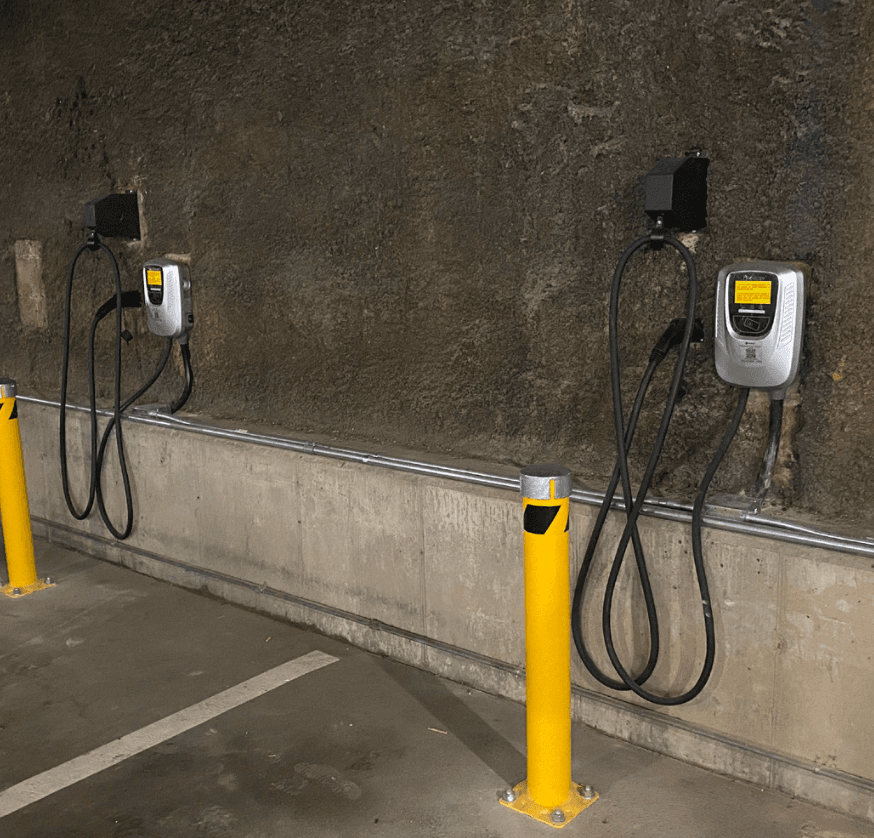
Why Goodyear, AZ Is Primed for Commercial EV Charging Infrastructure
Goodyear is no longer just a bedroom community on the western edge of the Phoenix metro — it's one of the most actively developed commercial and industrial corridors in Arizona. With a population surpassing 128,000 and sustained growth drawing logistics operators, healthcare campuses, retail centers, and light manufacturing to the area, the city's commercial real estate landscape is evolving rapidly. That growth creates both an opportunity and an obligation for property owners, employers, and fleet operators: the infrastructure decisions being made today will determine whether facilities remain competitive and compliant for the next decade.
EV adoption is accelerating across Arizona. The state benefits from year-round favorable driving conditions, significant in-migration from EV-friendly markets like California, and a growing number of residents and employees who drive — or are planning to drive — electric vehicles. In the West Valley communities of Goodyear, Avondale, Litchfield Park, Buckeye, and Tolleson, employers and property developers who install commercial EV charging infrastructure now are positioning themselves ahead of the curve rather than scrambling to catch up.
For facilities managers, sustainability leaders, finance teams, and commercial real estate developers across the Greater Phoenix area, the question is no longer whether to invest in commercial EV charging — it's how to do it right and what it will actually cost after incentives.
The Financial Case: Rebates, Tax Credits, and Payback Period
One of the most underappreciated aspects of commercial EV charging station installation is the depth of available financial incentives. Businesses that approach these projects with a clear understanding of the incentive landscape often find that the net cost of a well-scoped installation is substantially lower than initial estimates suggest.
Federal 30C Tax Credit The Alternative Fuel Vehicle Refueling Property Credit under Section 30C of the Internal Revenue Code currently offers commercial property owners a credit equal to 30% of qualified equipment and installation costs, with per-item maximums up to $100,000 — and potentially higher amounts for installations sited in designated low-income or rural areas. Critically, this credit applies to property placed in service by June 30, 2026. That deadline is closer than it appears: when accounting for site assessment, electrical capacity upgrades, equipment procurement lead times, permitting, and inspection, projects that begin planning in 2025 are well-positioned — but those that delay risk missing the window entirely.
Utility Incentives in Arizona Arizona's major utility providers have historically offered rebate programs for commercial EV supply equipment (EVSE). Goodyear businesses served by Arizona Public Service (APS) or Salt River Project (SRP) should engage a contractor familiar with navigating both utilities' program requirements, application timelines, and documentation standards — because utility rebate eligibility often hinges on equipment specifications and installation sequencing that must be coordinated before work begins, not after.
IRA-Connected Incentives and Fleet Programs For fleet operators and larger commercial properties, additional incentive layers may be available through the Inflation Reduction Act's clean energy and transportation provisions. These programs interact with federal tax treatment in ways that benefit organizations taking a portfolio-wide approach to EVSE deployment.
For CFOs and finance leaders evaluating total cost of ownership: the combination of federal tax credits, utility rebates, and potential ancillary revenue from tenant or public charging billing can meaningfully compress payback periods. The projects that achieve the strongest ROI outcomes are those that engage a contractor who identifies and structures all applicable incentives as part of the initial scope — not as an afterthought.
What Goodyear Facilities Managers Need to Know About Installation Complexity
Commercial EV charging installation is an electrical infrastructure project first — and that's where many property owners underestimate the planning required. Installing Level 2 commercial chargers or DC fast charging equipment isn't simply a matter of mounting hardware and running a circuit. It involves evaluating existing electrical service capacity, determining whether panel upgrades or service entrance work is needed, coordinating with the utility on load additions, pulling the appropriate permits through the City of Goodyear, and ensuring the installation meets NEC code requirements and ADA accessibility standards.
For facilities directors managing properties in Goodyear's commercial zones — from the retail corridors along Interstate 10 and Estrella Parkway to the industrial and logistics parks near the Goodyear Airport — the operational priorities are clear:
- Minimal disruption to ongoing business operations during installation
- Permitting and utility coordination handled by a single, accountable contractor
- Scalable infrastructure that supports future charger additions without requiring complete rework
- Uptime reliability with access to ongoing maintenance and support
A well-executed commercial EVSE installation begins with a thorough site assessment that maps existing electrical capacity against projected load requirements, identifies the optimal charger placement for both user convenience and electrical efficiency, and produces a design that accounts for future expansion. Cutting corners on this phase typically results in costly change orders, code compliance issues, or infrastructure that can't scale — all of which are more expensive to fix after the fact.
VOSS has delivered electrical contracting services across the Greater Phoenix market with 85+ years of industry experience, and our team understands both the technical requirements and the local permitting landscape that Goodyear and West Valley projects demand.
EV Charging as a Sustainability and ESG Asset
For sustainability managers and ESG-focused organizations operating in Goodyear and the broader Phoenix metro, commercial EV charging infrastructure represents one of the more measurable and reportable sustainability investments available. Unlike some ESG initiatives where impact is difficult to quantify, EVSE deployment generates concrete data: kilowatt-hours delivered, estimated vehicle miles of fossil fuel displaced, and carbon emissions avoided — all of which can be incorporated directly into sustainability reporting frameworks.
LEED Eligibility Commercial properties pursuing LEED certification or recertification can earn credits for EV charging infrastructure under the Transportation category. For new developments in Goodyear's active construction pipeline — whether office, mixed-use, retail, or industrial — incorporating EV-ready infrastructure or active EVSE during initial construction is substantially more cost-effective than retrofitting later.
Green Fleet Transition Organizations transitioning vehicle fleets to electric — a trend accelerating among logistics operators, public agencies, and corporate campuses throughout the West Valley — require dedicated fleet charging infrastructure that goes beyond what consumer-grade equipment can support. Fleet EV charging station installation involves load management, shift-based charging scheduling, and integration with energy management systems to control demand charges. These are technical requirements that demand an experienced commercial electrical contractor, not a general handyman or consumer-focused installer.
Commercial EV infrastructure also complements other energy efficiency investments. For organizations already working through LED lighting upgrades, energy audits, or smart controls projects — topics covered in related articles in this series — EV charging represents a natural next chapter in a comprehensive energy strategy.
Commercial Real Estate and EV-Ready Mandates: What Developers Need to Know
Commercial real estate developers and property managers active in Goodyear face a competitive market where tenant expectations are shifting. Corporate tenants increasingly evaluate parking infrastructure — including EV charging availability — as part of their site selection criteria. Multifamily developers across the Phoenix metro are responding to demand from residents who own or plan to own EVs. And retail and hospitality properties are discovering that publicly accessible EV charging can drive dwell time and customer loyalty.
Beyond tenant preference, the regulatory landscape is evolving. Arizona has adopted building codes informed by model energy codes that increasingly address EV-ready construction — meaning new commercial and multifamily buildings may be required to include conduit, panel capacity, or active charging equipment as a condition of occupancy. Developers who understand these requirements during the design phase avoid costly retrofits later.
For portfolio-wide EVSE deployment across multiple Goodyear or West Valley properties, a contractor with national reach and local execution capability is essential. Standardizing equipment specifications, rebate documentation processes, and installation practices across properties produces better outcomes than managing each site independently.
Public Sector and Cooperative Purchasing in Goodyear and Arizona
For Goodyear municipal facilities, school districts in the West Valley, and other public agencies evaluating EV charging infrastructure, procurement compliance is a practical priority. VOSS holds an approved state contract in Arizona, enabling state agencies to access our products and services through a compliant, pre-vetted contracting vehicle.
Public sector organizations may also be eligible to procure through cooperative purchasing programs including Sourcewell, TIPS, BuyBoard, Omnia Partners, AEPA, and PACE, among others. These programs streamline procurement, reduce administrative burden, and ensure that public dollars are deployed efficiently — without sacrificing access to quality installation and ongoing support.
Service Availability
While VOSS offers a comprehensive suite of national services, specific capabilities may vary by location. Please contact your local branch to confirm the current availability of specific services, technology solutions, or contracting capabilities in your immediate market.
Talk to VOSS About Your Goodyear EV Charging Project
The window to capture the strongest federal incentives for commercial EV charging station installation is open — but it has a closing date. For Goodyear businesses, property owners, fleet operators, and public agencies ready to explore what a commercial EVSE installation looks like for their specific facility, the best first step is a conversation with an experienced contractor who can assess your site, identify applicable rebates, and outline a realistic project scope.
VOSS serves Goodyear and the entire Greater Phoenix region from our local branch. Our team is ready to discuss your project, walk through the incentive landscape, and help you understand what commercial EV charging infrastructure could mean for your facility, your tenants, and your organization's long-term energy strategy.
VOSS — Phoenix Branch
Phone: (602) 340-9500
Toll-Free: (800) 788-8676