Why Sanctuary Lighting Is a Growing Priority for Goodyear's Faith Communities
Goodyear, Arizona has grown from a quiet agricultural community into one of the fastest-expanding cities in the entire country — reaching a population of approximately 128,000 residents and continuing its upward trajectory across the West Valley. That growth has brought with it a corresponding surge in faith communities: new congregation buildings rising alongside master-planned neighborhoods, and established churches in older areas like Litchfield Park and Avondale finding themselves managing aging facilities that were never designed for today's operational demands.
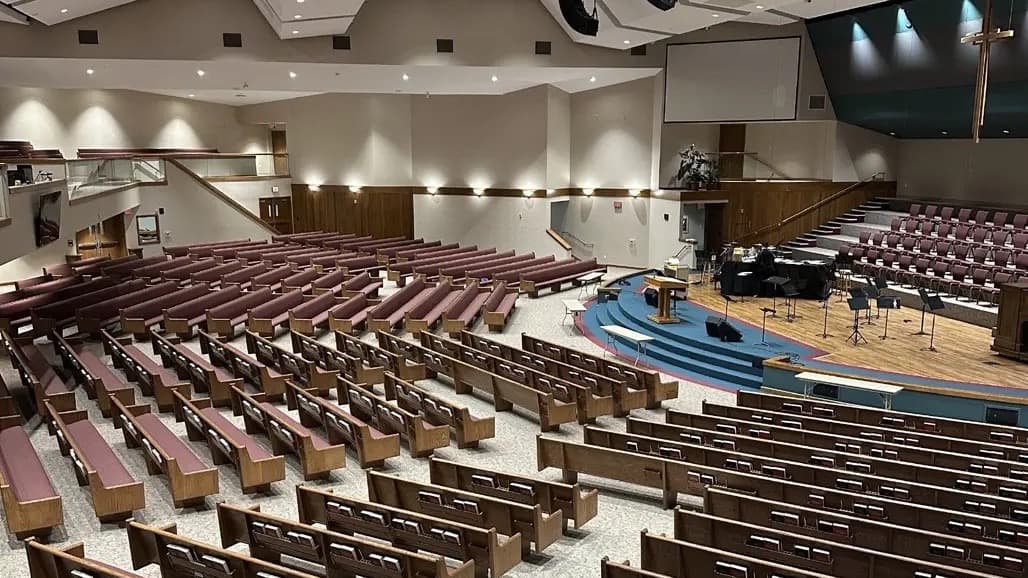
For facility managers and maintenance supervisors at these churches, the sanctuary is the heart of the building — and the most operationally demanding space to maintain. High ceilings, dramatic architectural features, and the need for consistent, high-quality illumination across multiple weekly services create a maintenance environment that is genuinely unlike any other commercial facility type. As the broader Phoenix metro continues to grow and energy costs remain top of mind, more church leadership teams across Goodyear, Buckeye, Surprise, and the surrounding West Valley are taking a hard look at what their lighting infrastructure is actually costing them — and what a modern approach could deliver.
The Real-World Challenges Inside a Church Sanctuary
Understanding the specific nature of sanctuary lighting challenges is the first step toward solving them effectively. Unlike an office building or retail space, a church sanctuary presents a unique combination of architectural, operational, and community factors that make lighting both more important and more complex.
Access is one of the most immediate issues. Many sanctuaries in the Greater Phoenix area feature vaulted or A-frame ceilings reaching 25 to 40 feet or higher. Replacing a single burned-out bulb in a fixture mounted at that height requires scaffolding, a scissor lift, or a specialty contractor — a disruption that is costly, time-consuming, and often scheduled around the church calendar. When traditional incandescent, halogen, or older fluorescent sources are in use, that replacement cycle can occur multiple times per year across dozens of fixtures.
Aging ballasts and incompatible dimming systems are another common pain point. Many church sanctuaries installed fluorescent or early-generation HID fixtures decades ago, and the ballasts that drive them are now at or well past their design life. The result is flickering, humming, slow warm-up times, and increasingly frequent failures — all of which are noticeable and distracting during services. Compounding this, many legacy dimming systems are incompatible with modern lamp types, creating a frustrating and often expensive guessing game when facilities attempt piecemeal upgrades.
Uneven illumination affects both the worship experience and the growing number of congregations that livestream or record their services. A sanctuary that looks beautiful to the human eye may be poorly suited to camera work — with hot spots at the altar, shadows in the pew sections, or inconsistent color temperature that makes video production difficult. As livestreaming has become a permanent part of ministry for many churches across Goodyear and the broader West Valley, this has elevated lighting quality from a maintenance issue to a communications and outreach priority.
Energy consumption is a thread running through all of these challenges. Older sanctuary lighting systems — particularly those relying on incandescent or metal halide fixtures for accent and spot lighting — consume significantly more electricity than modern LED equivalents. In Arizona's climate, where facilities are often air-conditioned for much of the year, heat-generating light sources also add an indirect cost by increasing cooling loads.
What Modern LED Retrofits Actually Deliver for Church Facilities
The lighting industry has evolved substantially over the past decade, and today's LED solutions are purpose-built to address the specific demands of sanctuary environments. This is not simply a matter of swapping one bulb type for another — a well-planned LED retrofit considers the entire lighting system: the fixture, the driver, the control strategy, and how all of these elements work together to serve the space and the people in it.
Extended lamp life is perhaps the most immediately appreciated benefit for facility managers dealing with high-ceiling access challenges. Quality LED sources rated for 50,000 hours or more can translate to a decade or longer of service life under typical church usage patterns — dramatically reducing the frequency of relamping events and the associated labor and access equipment costs.
Dimming compatibility and control flexibility have matured significantly in LED technology. Modern LED drivers are designed to work with a wide range of dimming protocols, and programmable scene control systems allow a church to preset lighting scenes for different service types — a Sunday morning worship service, a candlelight Christmas Eve gathering, a weekday memorial service, or a youth group event in the same space — and recall them with a single button press. This kind of operational flexibility is increasingly standard in church facilities across the Phoenix metro.
Color rendering and color temperature matter more in a sanctuary than in most commercial spaces. The quality of light affects how wood tones, fabric colors, stained glass, and floral arrangements appear to the congregation. Modern LED products offer high Color Rendering Index (CRI) ratings and a range of color temperature options, allowing lighting designers to preserve or enhance the aesthetic character of the space rather than simply meeting a footcandle target.
Reduced heat output is a meaningful benefit in the Goodyear and Phoenix climate. Fixtures that generate less heat contribute to a more comfortable sanctuary environment and reduce the load on HVAC systems — a practical operational benefit that compounds over time.
For churches in Goodyear interested in the sibling topic of broader energy efficiency strategy, the "Energy Efficient Church Lighting Upgrades" article in this series provides additional context on how a comprehensive approach — beyond the sanctuary alone — can maximize the return on a lighting investment.
Planning a Lighting Upgrade Without Disrupting Your Congregation
One of the most common concerns church leadership teams raise is the question of disruption. A sanctuary is not a warehouse that can be shut down for a week — it is a space in continuous use for services, rehearsals, funerals, weddings, and community events. A well-managed lighting upgrade project takes this reality seriously from the first conversation.
Phased project scheduling is a standard best practice for faith facility upgrades. Work is typically planned around the church calendar, with installation activity concentrated in low-use windows — weekday mornings, summer seasons when programming may be lighter, or multi-week segments between major liturgical events. For churches in the Goodyear area that host multiple weekly services or have active midweek programming, a detailed schedule developed in coordination with church leadership is essential.
Historic and architectural considerations are relevant for older congregations in the Greater Phoenix area, including those in communities like Litchfield Park, Avondale, and Peoria that may have sanctuary buildings with original architectural lighting features. Retrofit approaches that preserve existing fixture housings while upgrading the light source and driver are often the preferred path in these cases, maintaining the visual character of the space while achieving the performance and efficiency benefits of modern LED technology.
Documentation and system handoff matter at project close. A well-documented lighting system — with as-built drawings, scene programming records, and fixture specifications — gives facility staff and future service contractors the information they need to maintain the system efficiently. This is particularly valuable for churches that rely on volunteers or part-time facility staff.
For organizations in the public sector or affiliated with educational institutions in the Goodyear area, it is worth noting that VOSS holds an approved state contract in Arizona, allowing state agencies to access products and services through a compliant procurement vehicle. Additionally, cooperative purchasing programs including Houston Church COOP, Sourcewell, BuyBoard, TIPS, and others are available to eligible organizations — including some faith-based institutions — as a streamlined path to procurement.
Trends Shaping Church Lighting in the Greater Phoenix West Valley
Several broader trends are influencing how faith communities across Goodyear, Surprise, Buckeye, and the West Valley are approaching their lighting infrastructure.
Utility rebate programs remain an important financial consideration. Arizona utilities have historically offered rebate programs for commercial lighting upgrades that meet qualifying efficiency thresholds. While program availability and rebate amounts change over time, the general principle — that a meaningful portion of the upfront cost of an LED retrofit may be offset by utility incentives — continues to make the business case for upgrades more accessible. The "Maximize ROI with Commercial LED Lighting Rebates in Dallas, TX" and related rebate-focused articles in the Latest Lighting series offer useful frameworks for thinking about rebate strategy, even for facilities outside those specific markets.
Integrated audiovisual and lighting coordination is an emerging area of focus for churches that have invested in or are planning livestream and broadcast capabilities. Lighting systems that are designed and programmed in coordination with camera positions, stage areas, and video production requirements deliver substantially better on-screen results than systems planned in isolation. This is a topic of growing relevance for Goodyear-area congregations serving large and growing memberships.
Smart controls and remote monitoring represent the frontier of facility management efficiency for larger church campuses. Systems that allow facility managers to monitor fixture performance, receive alerts for failures, and adjust programming remotely reduce the reactive maintenance burden and give staff better visibility into their infrastructure — a meaningful benefit for multi-building campuses or churches with lean facilities teams.
Service Availability
While VOSS offers a comprehensive suite of national services, specific capabilities may vary by location. Please contact your local branch to confirm the current availability of specific services, technology solutions, or contracting capabilities in your immediate market.
Connect With VOSS in the Greater Phoenix Area
VOSS serves faith communities throughout Goodyear, Avondale, Litchfield Park, Surprise, Buckeye, Peoria, and the broader Greater Phoenix West Valley from our local Phoenix branch. Whether your team is dealing with immediate maintenance challenges — flickering fixtures, failed ballasts, or difficult-to-access high-bay lamps — or evaluating a comprehensive sanctuary lighting upgrade, we welcome the conversation.
We approach every engagement as a long-term partner, not a one-time contractor. That means taking the time to understand your facility, your calendar, your congregation's needs, and your budget priorities before recommending a path forward.
VOSS — Phoenix Branch
Phone: (602) 340-9500 Toll-Free: (800) 788-8676
Reach out to our Phoenix team to schedule a facility consultation and discuss how the right lighting strategy can serve your congregation for years to come.