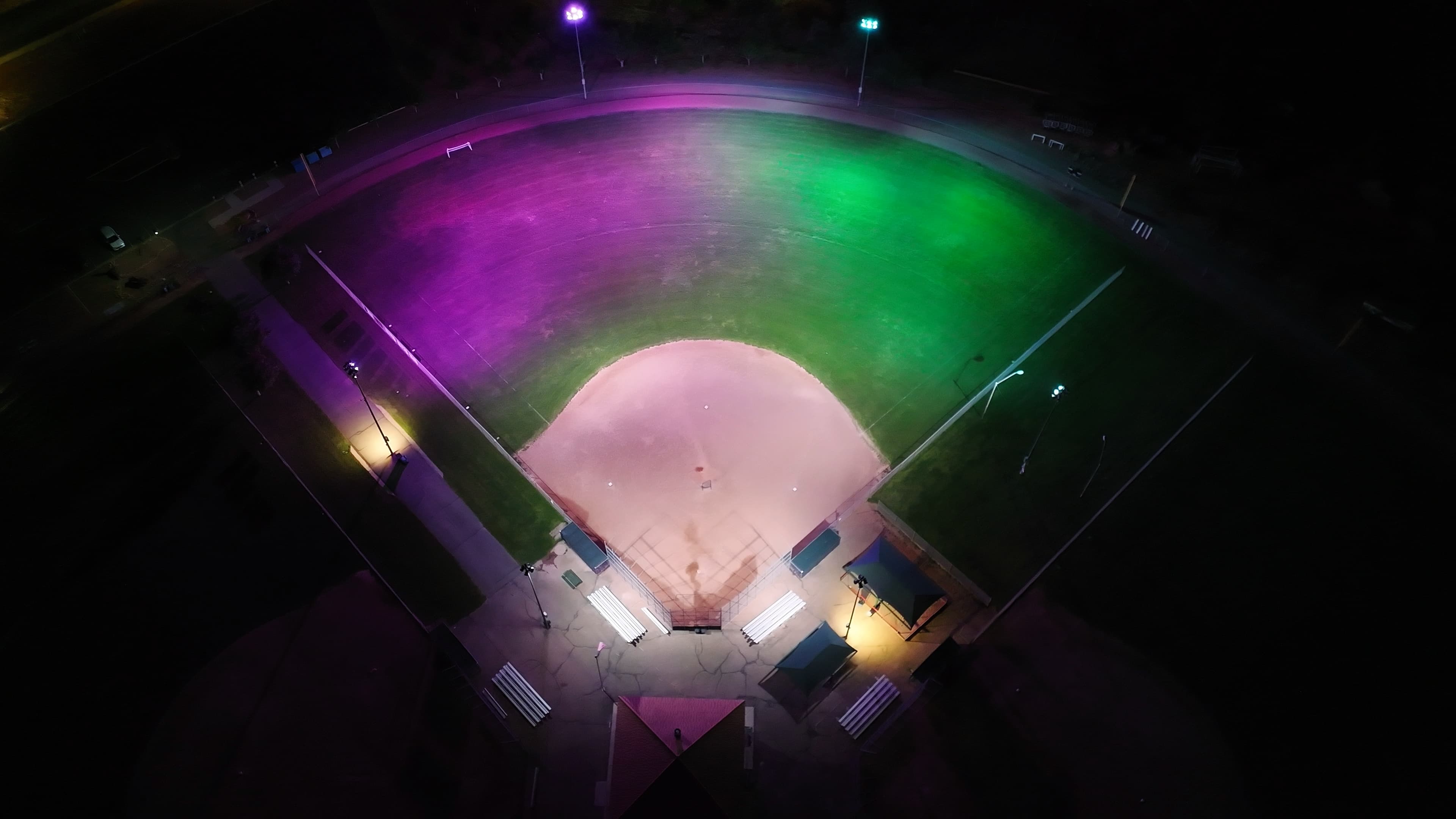
Why Baseball Lighting Deserves a Closer Look in Goodyear, AZ
Goodyear, Arizona has quietly become one of the most baseball-rich communities in the entire country. With a population approaching 128,000 and a reputation as a premier destination for spring training — anchored by Camelback Ranch, the shared home of the Los Angeles Dodgers and Chicago White Sox — the city's relationship with the game runs deep. That culture extends far beyond the professional level: Goodyear's parks and recreation programs, school athletic programs, and community leagues represent a dense network of fields that serve thousands of players and families every year.
Across the Greater Phoenix metro, from Peoria and Surprise to Avondale and Litchfield Park, the West Valley has seen remarkable population growth over the past decade — and athletic infrastructure is racing to keep pace. For facility managers, parks directors, school administrators, and stadium operators in Goodyear, that growth creates both an opportunity and an obligation: to deliver field environments that are safe, modern, and cost-effective to operate.
Lighting sits at the center of that conversation. Whether you're managing a community park with multiple softball diamonds, overseeing a high school varsity program, or running a premier training facility, the quality of your lighting directly shapes the player experience, the safety of the game, and the long-term economics of your operation. And across the Phoenix metro, where evening play is a necessity rather than a luxury given the region's intense daytime heat, lighting isn't optional — it's essential.
The LED Revolution Is Rewriting the Rulebook for Baseball Facilities
For decades, metal halide and high-pressure sodium (HPS) fixtures were the default choice for outdoor sports lighting. They were familiar, widely available, and — by the standards of their era — adequate. But the LED era has fundamentally changed what facility owners and operators should expect from their lighting systems, and those who haven't yet made the transition are leaving significant value on the table.
Energy Efficiency That Changes the Economics
Traditional metal halide systems are energy-intensive by nature, and in Arizona's climate — where evening leagues run from early spring through late fall — field lighting can account for a substantial portion of a facility's annual utility spend. LED technology consumes dramatically less energy for equivalent or superior light output. For a multi-field complex running lights several nights per week, the cumulative savings over a system's lifespan are significant and measurable.
Arizona's utility environment adds another dimension to the economics. Programs offered through providers serving the Greater Phoenix area create opportunities for qualifying projects to offset upfront capital costs through rebates and incentives. For public agencies and school districts, those dollars represent real budget relief — and for private operators, they improve the return on investment timeline. VOSS holds an approved state contract in Arizona, which means state agencies and public entities across Goodyear and the broader West Valley can access our products and services through a streamlined procurement path — eliminating redundant bidding processes and ensuring compliance.
Eligible organizations may also benefit from cooperative purchasing programs, including Sourcewell, BuyBoard, TIPS, AEPA, Omnia Partners, PACE, and others. These programs are designed to simplify procurement for government agencies, school districts, and public institutions — and VOSS' team can help eligible organizations navigate which program best fits their project.
Precision Engineering Built for Baseball
Baseball is not a forgiving sport when it comes to lighting. The geometry of the game — a 95-mph fastball traveling from mound to plate, a fly ball arcing against a dark outfield sky, a ground ball skipping across the warning track — demands lighting that is both powerful and precisely controlled. Glare, shadows, and uneven light distribution aren't just aesthetic problems; they are safety hazards.
Professional-grade LED systems designed for baseball and softball address these challenges through:
- Photometric design — Computer-modeled light placement that ensures consistent foot-candle levels across the infield, outfield, and foul territory, tailored to the specific dimensions and orientation of each field
- Glare control optics — Directional fixtures that keep intense light on the playing surface, not in the eyes of batters, outfielders tracking fly balls, or fans in the stands
- Pole placement engineering — Strategic positioning that eliminates dead zones and dark pockets while working within the physical constraints of existing infrastructure
- Instant-on performance — LED fixtures reach full brightness the moment the switch is thrown — no warm-up period, no half-lit field during rain delays, no waiting for the game to begin
These capabilities matter at every level of play, from youth recreational leagues to NCAA competition and professional spring training facilities.
Controls Integration: Smarter Fields for Smarter Operations
Modern LED sports lighting systems can be paired with advanced controls platforms that transform how facilities are managed. Wireless control systems allow operators to adjust light levels remotely, schedule automatic on/off times, create custom dimming scenes for different events, and monitor energy consumption in real time — all from a smartphone or centralized dashboard.
For a busy West Valley parks department managing multiple sites across Goodyear, Avondale, and Buckeye, that level of operational visibility is a game-changer. For a private training facility trying to maximize court time while minimizing utility overhead, smart controls deliver measurable value every season. This topic connects naturally to VOSS' broader work in sports lighting, including solutions explored in our Pickleball LED Lighting Solutions and Tennis Court Lighting and Energy Solutions articles, and complements the controls-focused thinking behind our LED Football Stadium Lights & Sports Field Lighting Solutions content.
From Page, AZ to the West Valley: LED Lighting in Action
VOSS has delivered LED sports lighting solutions across Arizona, including a notable project in Page, AZ — a community that, like Goodyear, depends heavily on its recreational and athletic facilities to serve a broad, active population. That project demonstrated the real-world impact of transitioning from legacy sports lighting to a professionally engineered LED system: improved uniformity across the playing surface, meaningful reductions in energy consumption, and a field environment that better serves both players and spectators.
The lessons from projects like Page are directly applicable to the Goodyear market. Athletic facilities here — whether managed by the City of Goodyear Parks and Recreation Department, the Agua Fría Union High School District, the Goodyear School District, or private operators — face the same core challenges: aging infrastructure, rising energy costs, and the expectation of a modern, safe playing environment.
The path from legacy lighting to LED isn't complicated when you work with an experienced partner who manages every phase of the project — from initial photometric analysis and system design through permitting, installation, commissioning, and post-project support.
What Facility Managers and Decision-Makers Should Know Before a Project
For facilities directors, parks administrators, school business managers, and CFOs evaluating a baseball or softball lighting upgrade, a few strategic considerations are worth understanding before a project moves forward:
League and governing body standards vary by level of play. Little League Baseball, NFHS (high school), NCAA, and professional organizations each publish lighting standards with specific foot-candle requirements for different zones of the field. A properly designed LED system must meet — or exceed — the applicable standard for your facility's primary use. Working with a contractor who understands these standards from the outset prevents costly redesigns later.
Existing pole infrastructure may be reusable. One of the most common misconceptions about LED retrofits is that new poles are always required. In many cases, existing steel poles can be evaluated, structurally assessed, and reused — with new LED fixtures and drivers mounted to the existing structure. This can significantly reduce project costs. VOSS evaluates existing infrastructure as part of the design process.
Lifecycle cost, not just purchase price, is the right metric. A higher-quality LED system with a longer rated lifespan and stronger manufacturer warranty typically delivers better total cost of ownership than a lower-cost alternative — especially when maintenance, relamping, and energy costs are factored in over a 15- to 20-year horizon.
Rebate and incentive timing matters. Utility rebate programs and cooperative purchasing vehicles can meaningfully affect project economics, but they operate on program cycles and funding availability. Early engagement with your contractor — and your utility provider — ensures you're positioned to capture available incentives.
Service Availability
While VOSS offers a comprehensive suite of national services, specific capabilities may vary by location. Please contact your local branch to confirm the current availability of specific services, technology solutions, or contracting capabilities in your immediate market.
Talk to VOSS About Your Goodyear Baseball Lighting Project
Goodyear's athletic community deserves lighting that matches the quality of the game being played. Whether you're planning a full LED retrofit at an existing complex, designing a new facility from the ground up, or simply trying to understand what a modern lighting upgrade would look like for your fields, VOSS is ready to be a resource — not just a contractor.
Our Phoenix branch serves Goodyear, Avondale, Litchfield Park, Surprise, Peoria, Buckeye, and communities throughout the West Valley. We bring 85+ years of commercial electrical expertise to every project, along with deep knowledge of Arizona's utility incentive landscape, state procurement programs, and the sport-specific standards that govern baseball and softball facility lighting.
VOSS — Phoenix Branch Phone: (602) 340-9500 Toll-Free: (800) 788-8676
Reach out to start a conversation about your facility's lighting goals. We're here to help you illuminate the game — the right way.