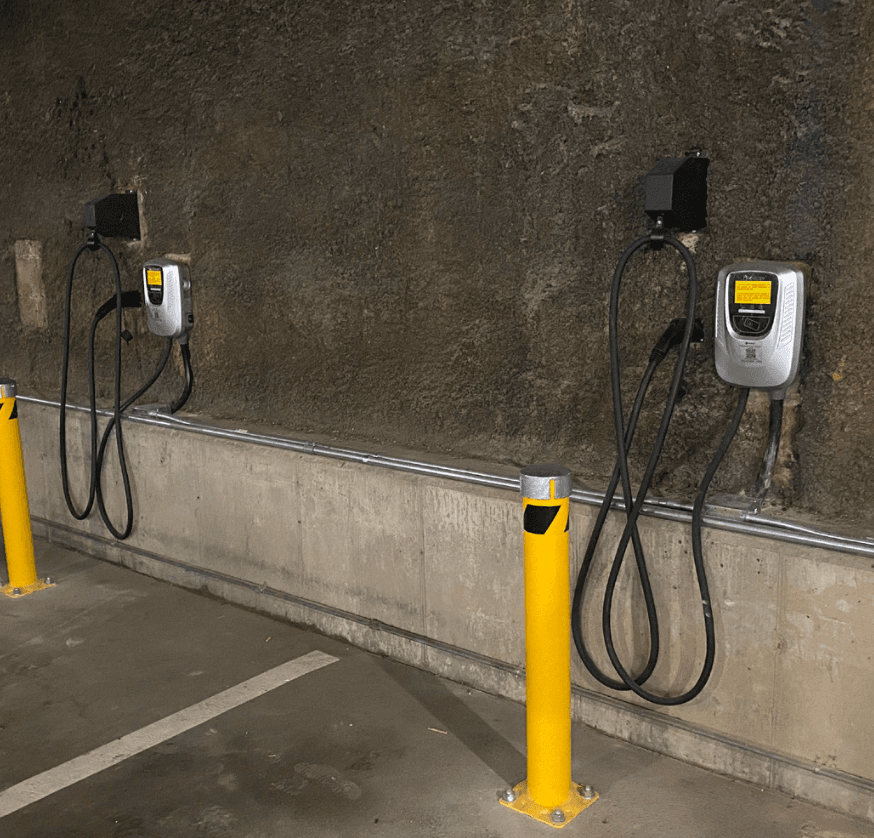
The EV Inflection Point Has Arrived in Greater Phoenix
Electric vehicle adoption across the Greater Phoenix metro — from Glendale and Peoria to Scottsdale, Tempe, and Chandler — is no longer a future trend. It is a present operational reality. Arizona ranks among the top states for EV registrations, driven by a combination of year-round driving conditions, strong state-level clean energy commitments, and a rapidly growing suburban workforce that commutes to major employment corridors in the West Valley and downtown Phoenix.
For Glendale's commercial property owners, fleet operators, corporate campuses, and public facilities, the question is no longer whether to invest in EV charging infrastructure — it's when, how, and at what scale. Getting that answer right requires more than purchasing a charger. It requires a thorough understanding of electrical capacity, available incentives, utility coordination, and long-term scalability.
The stakes are real: key federal incentive programs have defined expiration windows, and organizations that delay planning risk missing out on substantial cost offsets that fundamentally change the economics of these projects.
What Commercial EV Charging Infrastructure Actually Involves
One of the most common misconceptions among facilities directors and property managers is that installing commercial EV chargers is a straightforward plug-and-play process. In practice, a well-executed commercial EV charging installation involves several interdependent disciplines — and the complexity scales quickly with the size of the deployment.
Electrical Capacity Assessment Before a single charger is specified, the facility's existing electrical infrastructure must be evaluated. Many commercial buildings in Glendale and across the West Valley were designed and built before EV charging was a consideration. Adding multiple Level 2 chargers — or even a single DC fast charger — can significantly increase demand on a building's electrical service. A qualified electrical contractor will evaluate the existing panel capacity, utility service entrance, transformer capacity, and load profile to determine what upgrades, if any, are required before installation begins.
Equipment Selection and Site Design Not all charging equipment is created equal. Level 2 commercial EV chargers (typically 208–240V, 30–80A) are well-suited for employee parking, multifamily residents, and retail destinations where vehicles dwell for extended periods. DC fast chargers operate at much higher voltages and are better suited for fleet depot charging or high-traffic public access points. The right answer depends on the use case, the mix of vehicle types, peak demand windows, and how the charging system will be managed and billed.
Permitting, Utility Coordination, and Compliance Commercial EV charging installations in Glendale require building permits, electrical permits, and in many cases coordination with Arizona Public Service (APS) or other utilities serving the area. Utility interconnection requirements, demand charge implications, and time-of-use rate structures can all affect how a charging system is designed and operated. Working with a contractor who understands these regulatory and utility-side dynamics from the outset prevents costly rework and delays.
Smart Energy Management Integration Modern commercial EV charging systems are not isolated pieces of equipment — they are networked, software-managed systems capable of load balancing, user authentication, billing, remote monitoring, and integration with building energy management platforms. For organizations pursuing LEED certification or ESG reporting goals, this data layer is increasingly essential.
Rebates, Incentives, and the Case for Acting Now
For CFOs and finance leaders evaluating the total cost of ownership of EV charging infrastructure, the current incentive landscape is arguably the most favorable it has ever been — and it won't remain this way indefinitely.
Federal 30C Alternative Fuel Vehicle Refueling Property Credit The federal 30C tax credit allows businesses to claim 30% of qualified equipment and installation costs for commercial EV chargers, with maximums up to $100,000 per charging unit. In designated low-income or rural census tracts, the credit ceiling is higher. Critically, this credit applies to property placed in service by June 30, 2026 — meaning installations must be fully operational before that date to qualify. Organizations that begin the planning process in late 2025 or early 2026 are cutting the timeline close, particularly given the lead time required for electrical upgrades, permitting, and equipment procurement.
IRA and NEVI-Aligned Incentives The Inflation Reduction Act (IRA) and the National Electric Vehicle Infrastructure (NEVI) program have created a broader ecosystem of funding opportunities for qualifying EV infrastructure projects, particularly those serving public access, underserved communities, or fleet electrification goals. While NEVI funding is primarily administered through state DOT programs, its downstream effects — including utility investment in charging corridors and grid infrastructure — benefit commercial operators throughout the Phoenix metro.
Utility Rebate Programs Arizona Public Service and other utilities serving the Greater Phoenix area have offered demand-side management and EV infrastructure incentive programs for commercial customers. Rebate availability, structures, and deadlines shift frequently, which is why ongoing monitoring and proactive rebate identification are a critical part of any responsible EV charging project strategy — not an afterthought.
Depreciation and Deduction Opportunities Beyond tax credits, commercial EV charging equipment may qualify for accelerated depreciation under Section 168(k) bonus depreciation provisions, further improving the near-term economics of an investment that already carries long-term strategic value.
The compounding effect of these incentives — federal credits, utility rebates, and depreciation benefits — can meaningfully reduce net project costs and accelerate payback periods. But capturing them requires coordinated planning, proper documentation, and installations completed within defined program windows.
EV Charging as a Strategic Asset Across Property Types
Beyond the financial mechanics, commercial EV charging infrastructure is increasingly a competitive differentiator across a range of property types in Glendale and the broader West Valley market.
Corporate and Office Properties As Glendale continues to attract employers along the Loop 101 and US-60 corridors, workplace EV charging has become a tangible employee benefit — particularly as the workforce driving EVs skews toward higher-income, high-retention talent segments. Companies offering workplace charging report measurable improvements in employee satisfaction and commute flexibility.
Retail and Mixed-Use Destinations Retail centers, dining destinations, and entertainment venues near areas like Westgate Entertainment District and along 75th Avenue and Bell Road corridors can use EV charging to drive dwell time and differentiate from competing properties. Shoppers who charge while they visit stay longer and spend more — a dynamic that is well-documented in retail behavior research.
Multifamily and Residential Communities Glendale's residential growth — including newer multifamily developments near downtown Glendale and along the Camelback corridor — is increasingly subject to EV-ready building requirements under Arizona's adopted energy codes. Developers who plan EV infrastructure into projects at the design stage dramatically reduce the cost compared to retrofitting conduit and electrical capacity after construction is complete.
Fleet and Municipal Operations The City of Glendale and surrounding municipalities, including Peoria, Surprise, El Mirage, and Youngtown, are actively evaluating fleet electrification pathways to meet sustainability commitments and reduce long-term fuel and maintenance costs. Fleet depot charging — particularly for light-duty vehicles, service trucks, and transit — requires specialized electrical design and load management to prevent demand charge spikes. Arizona state agencies and public-sector organizations may also access EV charging solutions through VOSS's approved Arizona state contract, as well as cooperative purchasing programs including Sourcewell, TIPS, BuyBoard, Omnia Partners, AEPA, and PACE — offering a compliant, streamlined procurement path for eligible entities.
Hospitality and Healthcare Glendale's growing hospitality sector and its major healthcare campuses represent two additional property categories where EV charging is transitioning from a premium amenity to a baseline expectation. Hotel guests arriving in EVs need overnight charging access. Healthcare systems with large employee parking structures face increasing pressure to accommodate a workforce that is rapidly adopting electric vehicles.
Sustainability, ESG, and the Measurable Impact of EV Infrastructure
For sustainability directors and ESG managers at Glendale-area organizations, EV charging infrastructure is not a standalone project — it is a component of a broader decarbonization and reporting strategy. Commercial EV chargers contribute to Scope 1 and Scope 2 emissions reduction goals by enabling the transition away from internal combustion vehicles. They can support LEED for New Construction, LEED for Existing Buildings, and LEED for Neighborhood Development credit pathways. And they generate quantifiable data — charging sessions, kilowatt-hours delivered, vehicle miles electrified — that can be incorporated directly into sustainability reports and third-party ESG disclosures.
As Greater Phoenix organizations face increasing stakeholder and investor scrutiny around sustainability commitments, the ability to point to concrete, operational infrastructure investments — rather than aspirational pledges — carries growing weight. EV charging infrastructure is visible, measurable, and permanent.
For organizations also exploring broader energy efficiency strategies, VOSS's related work on energy audits, incentive navigation, LED lighting upgrades, and utility rebate programs — covered in companion articles within this content series — reflects how these initiatives reinforce one another when coordinated as a portfolio rather than pursued in isolation.
Service Availability
While VOSS offers a comprehensive suite of national services, specific capabilities may vary by location. Please contact your local branch to confirm the current availability of specific services, technology solutions, or contracting capabilities in your immediate market.
Connect With VOSS in Phoenix
VOSS has served commercial, industrial, and institutional clients across the Greater Phoenix metro — including Glendale, Peoria, Surprise, Avondale, Goodyear, Buckeye, and the broader West Valley — for decades. Our Phoenix branch brings the full depth of VOSS's 85+ years of electrical expertise to bear on EV charging projects of every scale, from single-site Level 2 installations to multi-property fleet depot programs.
If your organization is evaluating commercial EV charging infrastructure, the best first step is a conversation about your facility's specific conditions, goals, and timeline. Our team can help you understand what's involved, what incentives apply to your situation, and what a realistic path from planning to energized installation looks like.
VOSS — Phoenix Branch
Phone: (602) 340-9500 Toll-Free: (800) 788-8676
We welcome the opportunity to serve as a knowledgeable resource as your organization navigates this important infrastructure decision.