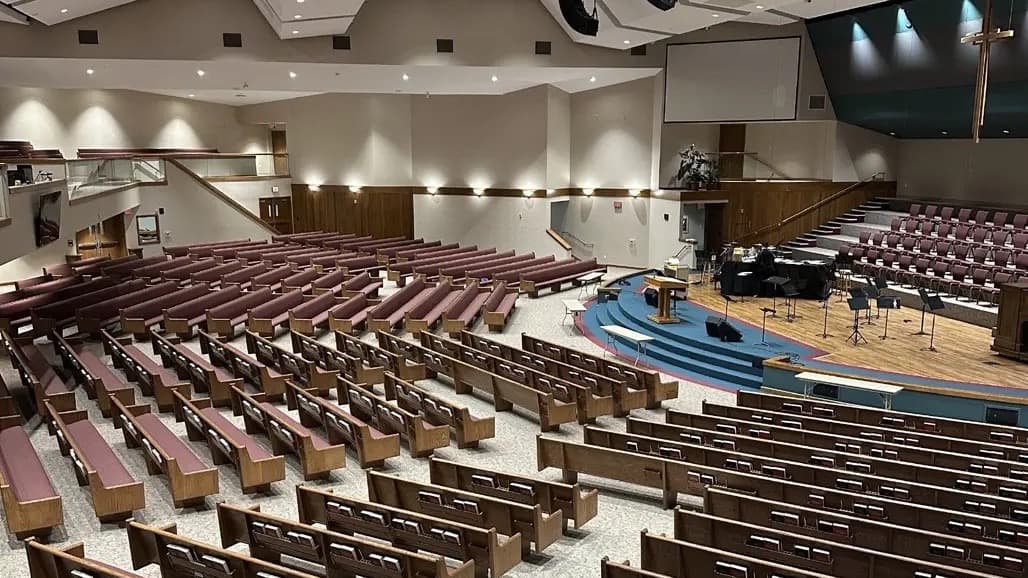
Why Sanctuary Lighting Is a Growing Priority for Glendale-Area Churches
Glendale, Arizona is home to a vibrant and diverse faith community. With a population of more than 258,000 residents spanning the city's historic downtown, Arrowhead Ranch, Westgate, and surrounding neighborhoods, the Greater Phoenix area supports hundreds of active congregations — from neighborhood chapels to large multi-campus ministries. Across the region, from Peoria and Sun City to Surprise and Avondale, church facility managers are grappling with the same persistent challenge: aging sanctuary lighting systems that were never designed for the demands of modern worship.
Sanctuary lighting is not just a maintenance issue — it is a ministry issue. Poor illumination affects congregant comfort, creates safety concerns in high-traffic worship spaces, undermines the quality of live-streamed services, and quietly erodes operational budgets through rising energy bills and repeated emergency repairs. Understanding the landscape of modern church lighting — and the best practices emerging across the industry — can help facility managers and operations leaders make smarter, longer-lasting decisions for their communities.
The Hidden Cost of "Keeping the Lights On" in Traditional Sanctuaries
Many Glendale and Greater Phoenix churches are still operating incandescent, halogen, or fluorescent lighting systems installed decades ago. On the surface, these systems appear functional — but they carry a compounding cost that facility managers know all too well.
Frequent relamping in high-ceiling spaces is one of the most disruptive and expensive maintenance realities in church facilities. Sanctuaries with vaulted ceilings, ornate architectural details, or historic construction often require scaffolding or aerial lifts every time a bulb fails — a process that can take hours, disrupt programming schedules, and create safety exposures for maintenance staff. In the hot Arizona climate, where intense summer heat accelerates bulb degradation, this cycle repeats more often than facility managers would like.
Aging ballasts and incompatible dimmers compound the problem. Fluorescent fixtures with end-of-life ballasts flicker, hum, and deliver inconsistent light levels — exactly the wrong environment for a sermon, a wedding, or a Christmas Eve service. Ballast failures also tend to cascade, meaning one aging system puts pressure on adjacent circuits and fixtures throughout the worship space.
Uneven illumination is an issue that affects both the in-person experience and the growing number of churches broadcasting services online. In a Greater Phoenix region where livestreaming and hybrid worship have become standard expectations for many congregations, poor light levels or inconsistent color rendering can undermine a ministry's digital reach as directly as any technology gap.
What Modern Sanctuary Lighting Looks Like — and Why It Matters Now
The good news for Glendale-area churches is that the lighting industry has evolved dramatically, and the business case for upgrading has never been stronger. LED technology, smart controls, and purpose-built church fixture solutions now deliver results that simply were not available a decade ago.
LED retrofit and replacement is the most impactful single step most church facilities can take. LED fixtures purpose-built for sanctuary applications offer dramatically longer service lives — measured in years rather than months — which directly reduces the frequency of high-ceiling access events. In Arizona's climate, LEDs also perform more reliably under thermal stress than their incandescent and halogen predecessors.
Dimming and scene control systems have transformed what a worship space can do with light. Modern LED-compatible dimmers and preset scene controllers allow a sanctuary to shift seamlessly from a bright, welcoming environment for Sunday morning services to an intimate setting for an evening prayer service or a dramatic atmosphere for a theatrical production. These systems are designed to be operated by non-technical staff, reducing the burden on facility teams.
Color temperature and rendering are increasingly important considerations for churches that value the aesthetic quality of their worship environment or that host livestreamed programming. High-CRI (Color Rendering Index) LED fixtures reproduce skin tones, fabric colors, and architectural details more faithfully — a meaningful upgrade for congregations that have invested in projection systems, video cameras, or scenic elements.
Preventive maintenance programs represent a shift in how leading church facility managers are thinking about lighting. Rather than reacting to failures, proactive maintenance schedules — supported by lighting contractors with nationwide church experience — help facilities avoid the disruption and emergency cost of unplanned outages.
Procurement Options for Houses of Worship and Public-Sector Organizations in Arizona
For eligible organizations across Glendale and the Greater Phoenix region, access to VOSS services can be simplified through established procurement vehicles. VOSS holds an approved state contract in Arizona, allowing state agencies and qualifying entities to access products and services through a streamlined, compliant process.
Faith communities and nonprofit organizations may also find value in the Houston Church COOP, a cooperative purchasing program specifically designed for houses of worship. Additional cooperative programs available to qualifying organizations include Sourcewell, BuyBoard, TIPS, AEPA, Omnia Partners, and PACE — each offering pre-negotiated pricing and procurement efficiencies that can accelerate project timelines and simplify budget approvals.
For church business administrators and finance committees navigating upgrade decisions, these programs can represent a meaningful path to professional-grade solutions without a lengthy competitive bidding process.
Trends Shaping Church Lighting Decisions Across the Greater Phoenix Region
The Greater Phoenix area is one of the fastest-growing metropolitan regions in the United States, and its faith communities are expanding alongside it. New construction and campus expansion projects in communities like Goodyear, Buckeye, and Chandler are incorporating modern lighting infrastructure from the ground up. Meanwhile, established congregations in Glendale, Tempe, and Scottsdale are increasingly prioritizing capital reinvestment in their existing facilities to remain competitive as worship destinations and community anchors.
Several trends are shaping church lighting decisions across the region right now:
- Energy efficiency as stewardship. Many faith communities are reframing energy reduction not just as a financial goal, but as an expression of environmental stewardship. LED upgrades that reduce kilowatt-hour consumption align naturally with sustainability values held by congregations of many traditions.
- Utility incentives and rebates. Arizona utility programs have historically supported commercial LED upgrades, and church facilities may qualify depending on their utility provider and project scope. Understanding the current incentive landscape — a topic explored more fully in the Energy Audits, Incentives, and Rebate Navigation for Businesses article in this series — is an important step before finalizing any upgrade budget.
- Multi-use space flexibility. Glendale churches increasingly use their sanctuaries for community events, concerts, theater productions, and rental programming. Flexible lighting systems that support a wide range of uses — and can be operated intuitively by volunteers or outside event staff — are becoming a baseline expectation rather than a premium upgrade.
- Historic preservation constraints. Some of Glendale's older congregations occupy architecturally significant buildings where fixture replacement must be managed carefully to preserve the character of the space. Experienced lighting contractors understand how to achieve modern performance within historic or aesthetically sensitive environments.
Service Availability
While VOSS offers a comprehensive suite of national services, specific capabilities may vary by location. Please contact your local branch to confirm the current availability of specific services, technology solutions, or contracting capabilities in your immediate market.
Talk to VOSS About Your Sanctuary Lighting Challenges
If your Glendale or Greater Phoenix church is dealing with frequent bulb replacements, flickering fixtures, rising energy costs, or lighting that simply is not serving your congregation well, the first step is a conversation — not a commitment. Our Phoenix team brings decades of experience working with faith communities across Arizona and the broader Southwest, and we understand the real-world constraints that church facility managers navigate every day: limited budgets, minimal disruption windows, historic building sensitivities, and the need for solutions that non-technical staff can manage confidently.
We invite you to connect with our local team to discuss how current LED technology, smart control systems, and preventive maintenance programs might apply to your specific facility. Whether you are managing a single-campus sanctuary or overseeing multiple sites across the Phoenix metropolitan area, we are here to help you think through the options.
VOSS — Phoenix Branch
Phone: (602) 340-9500 Toll-Free: (800) 788-8676
For additional insights on related topics, explore other articles in the Latest Lighting series — including Energy Efficient Church Lighting Upgrades, Fluorescent Tube Bans and LED Lighting Rebates, and Energy Audits, Incentives, and Rebate Navigation for Businesses — for a broader look at the lighting trends and opportunities relevant to your facility.