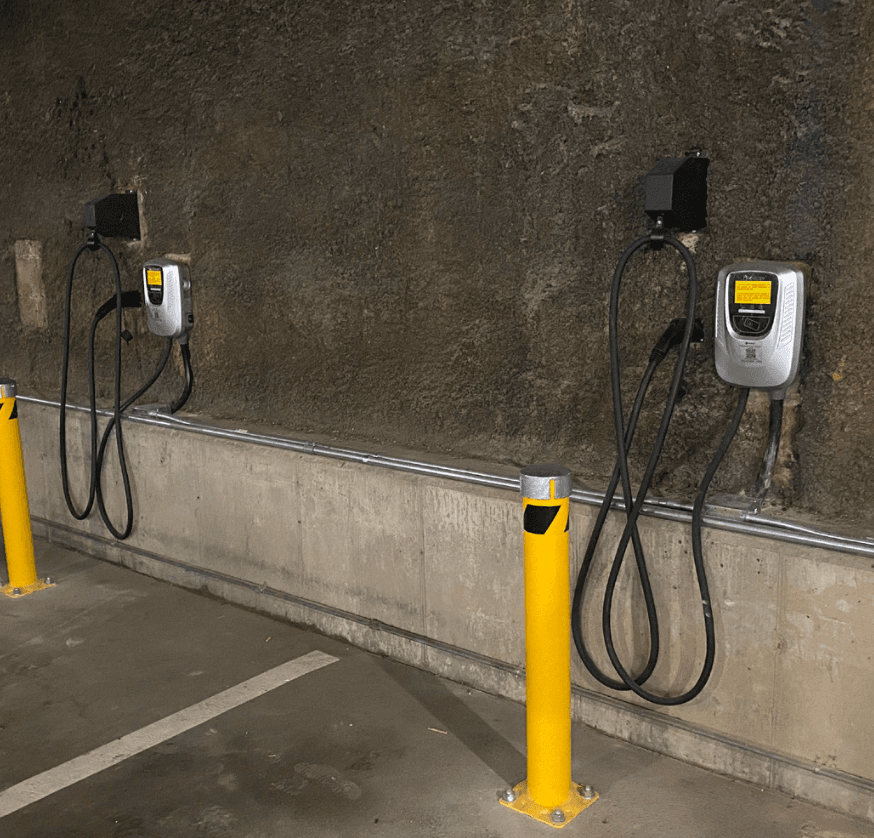
Why Gilbert, AZ Is Primed for Commercial EV Charging Investment
Gilbert has transformed from a small agricultural town into one of the fastest-growing municipalities in the United States — a community of nearly 289,000 residents with a booming commercial corridor, diverse industry base, and a workforce that increasingly arrives in or is transitioning to electric vehicles. Across the Greater Phoenix metro, EV adoption is accelerating rapidly, driven by Arizona's year-round driving climate, rising fuel costs, and employer sustainability commitments.
For businesses in Gilbert, Chandler, Mesa, Queen Creek, and the broader East Valley, the question is no longer whether to invest in commercial EV charging infrastructure — it's when and how to do it strategically. Property owners and facilities teams that move now stand to capture the most favorable incentive landscape in the program's history, while those who delay risk missing expiring federal credits and falling behind tenant and employee expectations.
VOSS has spent 85+ years serving commercial and institutional clients across the country. Through our Phoenix branch, we bring that same depth of electrical expertise to Gilbert-area businesses navigating the complexity of commercial EV charging station installation.
The Incentive Window Is Open — But Not Forever
One of the most compelling reasons to evaluate commercial EV charging infrastructure now is the current overlap of federal, state, and utility incentive programs. Understanding how these stack together is critical for finance leaders modeling total cost of ownership and payback period.
Federal 30C Alternative Fuel Vehicle Refueling Property Credit The federal 30C tax credit allows qualifying businesses to claim 30% of eligible equipment and installation costs for commercial EV chargers — with maximums up to $100,000 per charger in many cases. Higher credit amounts may apply for properties located in designated low-income or rural census tracts. Importantly, this credit applies to equipment placed in service by June 30, 2026 — meaning systems must be operational, not merely ordered or permitted, before that deadline. For larger multi-unit deployments, the planning and construction timeline makes starting now essential.
IRA and NEVI-Linked Incentive Ecosystem The Inflation Reduction Act (IRA) created a broader clean energy incentive ecosystem that can intersect with EV infrastructure investments, particularly for organizations making coordinated electrification upgrades. Meanwhile, the National Electric Vehicle Infrastructure (NEVI) program has directed significant federal funding into Arizona's charging network, signaling long-term state-level commitment to EV infrastructure development that benefits the commercial sector as well.
Utility Programs in the APS and SRP Service Territory Gilbert falls within the service territories of both Arizona Public Service (APS) and Salt River Project (SRP), two of Arizona's major electric utilities — each of which has maintained demand-side management and electrification programs that can reduce the cost of electrical capacity upgrades and equipment. Program availability and terms change periodically; a qualified electrical contractor can help identify and apply for currently active programs before starting design work.
LEED and ESG Reporting Value For sustainability managers and ESG-focused organizations, commercial EV charging stations contribute to LEED certification credits and provide quantifiable metrics for carbon reduction reporting. In a market like Greater Phoenix — where corporate relocations, mixed-use developments, and institutional campuses are expanding rapidly — the ability to demonstrate measurable environmental progress matters to investors, tenants, and community stakeholders alike.
What Commercial EV Charging Installation Actually Involves
Many businesses underestimate the scope of a properly executed commercial EV charging deployment — and that knowledge gap leads to costly surprises when working with contractors who specialize in chargers but lack deep electrical expertise. A reliable installation starts well before a single conduit is run.
Electrical Capacity Assessment Before any equipment is specified, your existing electrical infrastructure must be evaluated. Many commercial properties — particularly older industrial, retail, and office buildings across Gilbert and the East Valley — were not designed with EV load in mind. Adding Level 2 chargers for employee parking or DC fast chargers for public access may require panel upgrades, transformer coordination with the utility, or load management system integration. Skipping this step leads to undersized systems and expensive rework.
Site Design and Equipment Specification The right charger type, quantity, and placement depend on your use case:
- Level 2 commercial chargers (typically 7–19 kW) are the standard for employee parking, workplace amenities, multifamily residential common areas, and retail destinations where vehicles dwell for one or more hours
- DC fast chargers (50 kW and above) are better suited for fleet depot charging, high-traffic public access locations, and highway-adjacent commercial sites
- Smart energy management integration — including load balancing and demand charge management — is essential for multi-port deployments to control utility costs
Permitting, Utility Coordination, and Compliance Gilbert, like other East Valley municipalities, requires electrical permits for EVSE installation. Coordinating with APS or SRP for service upgrades adds another layer of project management. A full-service electrical contractor handles all of this as a single accountable point of contact — removing the coordination burden from in-house facilities teams.
Ongoing Support and Uptime Management Charging infrastructure that sits idle due to technical failures undermines the business case and frustrates users. Selecting a contractor with ongoing service capabilities — not just an equipment installer — ensures your investment performs reliably over its full lifecycle.
Who's Driving EV Charging Adoption in Gilbert's Commercial Market
Gilbert's commercial landscape spans healthcare campuses, technology employers, manufacturing and logistics facilities, retail and mixed-use developments, and a growing multifamily residential market. Each sector approaches EV charging with different priorities.
Employers and Corporate Campuses As Gilbert and the broader Chandler–Gilbert technology corridor continues to attract corporate tenants and regional headquarters, workplace EV charging has become a measurable recruitment and retention benefit. Human resources teams increasingly field questions from prospective employees about charging availability — and a well-designed charging amenity communicates that an employer is invested in its workforce's future.
Commercial Real Estate and Property Management Gilbert's retail corridors along San Tan Village, Val Vista Drive, and the rapidly developing southeast Phoenix metro are experiencing consistent demand for tenant amenities that reduce vacancy and support premium lease rates. EV-ready building codes are expanding across Arizona municipalities, and proactive landlords are getting ahead of these mandates rather than reacting to them. Portfolio-wide EVSE deployment strategies — designed to scale as tenant demand grows — protect long-term asset value.
Fleet Operators and Logistics Businesses maintaining commercial vehicle fleets — service companies, delivery operations, and facilities-intensive organizations throughout the East Valley — face increasing pressure to begin electrifying. Fleet EV charging station installation at a home base or depot requires careful electrical planning, but enables significant reduction in fuel and maintenance costs over time.
Government and Institutional Facilities Gilbert's municipal facilities, school districts, and public-serving institutions are well-positioned to leverage cooperative purchasing programs for compliant, cost-effective EVSE procurement. VOSS holds an approved state contract in Arizona, meaning Arizona state agencies can access our products and services through established procurement channels — streamlining the acquisition process and ensuring compliance. Eligible organizations may also access VOSS through cooperative purchasing programs including Sourcewell, TIPS, BuyBoard, AEPA, Omnia Partners, PACE, and others.
VOSS and the Greater Phoenix Market: A Local Partner with National Depth
VOSS has operated in the Phoenix metro for years, bringing our national electrical contracting expertise to a market that demands it. From the urban core to fast-growing communities like Gilbert, Queen Creek, Maricopa, and Peoria, we understand the permitting environments, utility relationships, and infrastructure realities that affect commercial electrical projects in Arizona.
Our EV charging practice sits within a broader capability set that includes commercial LED lighting upgrades, energy audits and rebate navigation, and smart building controls — all of which connect naturally to EV infrastructure planning. If your organization is already exploring LED retrofits, utility rebate programs, or energy efficiency upgrades (topics covered in our related articles on commercial LED lighting rebates and energy audits and rebate navigation for businesses), EV charging infrastructure is a logical and financially complementary next step in a coordinated electrification strategy.
Service Availability
While VOSS offers a comprehensive suite of national services, specific capabilities may vary by location. Please contact your local branch to confirm the current availability of specific services, technology solutions, or contracting capabilities in your immediate market.
Talk to Our Phoenix Team About Your Gilbert-Area Facility
The most effective EV charging deployments begin with a conversation — not a quote. Our Phoenix team works with facility managers, property owners, finance leaders, and sustainability professionals across Gilbert, Chandler, Mesa, Tempe, Scottsdale, and the surrounding East Valley communities to assess site conditions, identify applicable incentives, and develop an installation strategy that fits your timeline and budget goals.
To schedule a site assessment or discuss how commercial EV charging fits your broader facility strategy, contact our Phoenix branch:
VOSS — Phoenix Branch Phone: (602) 340-9500 Toll-Free: (800) 788-8676