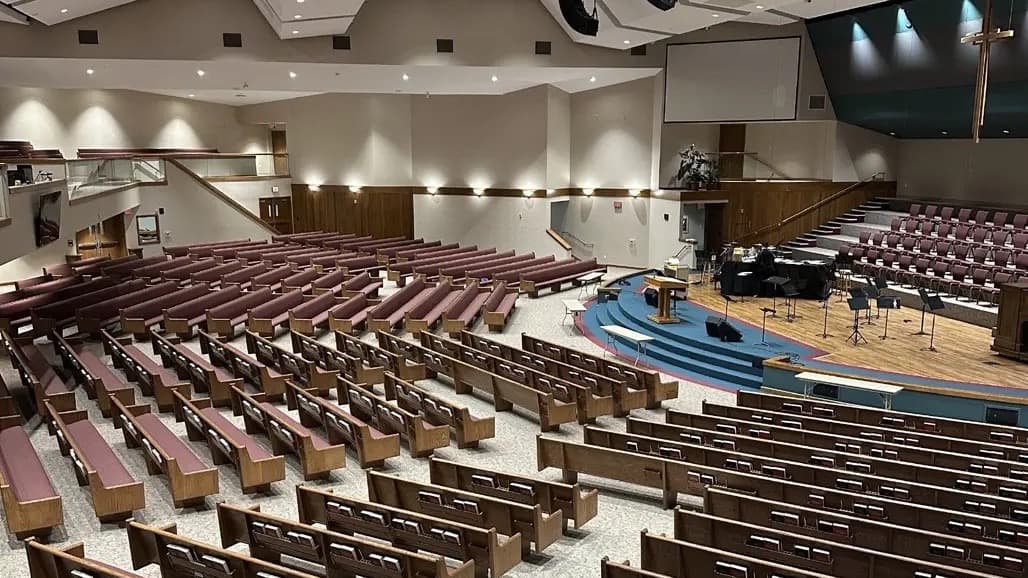
Why Church Lighting Deserves a Closer Look in Council Bluffs
Faith communities throughout Council Bluffs, Carter Lake, and the surrounding Pottawattamie County area face a challenge that rarely makes it to the top of the budget conversation — until it becomes unavoidable. Sanctuary lighting systems, often installed decades ago, are quietly becoming one of the most operationally burdensome and energy-inefficient assets a church facility manages.
Whether your congregation meets in a historic building near downtown Council Bluffs, a mid-century structure along the Iowa-Nebraska border, or a modern worship campus west of the Missouri River, the story tends to be the same: fixtures mounted 30 or 40 feet overhead, traditional bulbs burning out on unpredictable schedules, aging ballasts causing flickering during Sunday services, and energy bills that seem impossible to control. These aren't minor inconveniences — they directly affect the worship experience, the safety of the space, and the workload of already stretched facility and maintenance teams.
At VOSS, we work with faith communities across the country, and we understand that a church isn't just another commercial building. The lighting solutions that work in a warehouse or retail store don't automatically translate to a sanctuary. This article explores what modern church lighting management looks like, what trends are reshaping how congregations approach this challenge, and what Council Bluffs facilities managers and church administrators should know before planning their next upgrade.
The Real Cost of Outdated Sanctuary Lighting
For facility directors and operations leaders at churches in the Council Bluffs area, the costs of aging lighting systems fall into two categories: the ones that appear on invoices and the ones that don't.
The visible costs are familiar: replacement bulbs purchased multiple times a year, lift or scaffolding rentals to reach high-ceiling fixtures, contracted labor for routine re-lamping, and climbing utility bills from inefficient incandescent or fluorescent systems. These line items add up, and over a five-to-seven-year horizon, they often exceed what a well-planned LED retrofit would have cost.
The invisible costs are harder to quantify but no less real:
- Worship disruption caused by flickering lights or sudden fixture failures mid-service
- Uneven illumination that creates visibility challenges for congregants, particularly older members, and undermines the visual quality of livestreamed or recorded services
- Safety concerns in poorly lit aisles, steps, or platform areas
- Staff time diverted to reactive maintenance rather than proactive facility management
The Greater Omaha metro — including Council Bluffs and communities like Bellevue, Papillion, and La Vista just across the river — is home to a diverse and active faith community landscape. Many of these congregations are navigating the same tension: aging infrastructure, growing ministry needs, and budgets that require careful stewardship. Understanding the full cost picture is the first step toward making a credible case for modernization.
What LED Retrofits Actually Look Like in a Church Setting
The term "LED upgrade" can sound straightforward, but sanctuary environments introduce complexities that require expertise beyond standard commercial lighting work. High ceilings, ornate architectural features, acoustic tile systems, existing dimmer infrastructure, and the aesthetic character of a worship space all shape what a successful retrofit looks like in practice.
Access and installation logistics are among the most significant considerations. Fixtures mounted 25 to 50 feet overhead require specialized lift equipment and careful scheduling to avoid disrupting worship schedules, midweek programming, or community events. Experienced contractors plan installations around a congregation's calendar — not the other way around.
Dimmer and control compatibility is another area where churches frequently encounter problems when working with less experienced contractors. Many existing dimmer systems are not compatible with LED drivers, and a poorly matched installation can result in flickering, buzzing, or limited dimming range — the exact problems the upgrade was meant to solve. Modern LED systems designed for sanctuary applications include compatible drivers and can integrate with programmable scene controls, allowing staff to shift from a bright full-congregation setting to a more intimate small-group environment at the touch of a button.
Color rendering and color temperature matter more in sanctuaries than almost any other commercial space. The warmth of a candlelit Christmas Eve service, the clarity needed for a weekday Bible study, and the visual demands of a live-streamed weekend service all call for thoughtful lighting design — not just a like-for-like swap of old bulbs for new ones.
Historic and architectural constraints affect many older congregations in Council Bluffs and throughout the region. Preserving the visual character of a sanctuary while improving its functionality requires a contractor who understands how to work within those parameters — and how to advise facility teams when flexibility exists.
Lessons from the Region: Responsible Stewardship Drives Smarter Upgrades
One of the most instructive examples of thoughtful, budget-conscious lighting modernization in this region comes from a project VOSS completed with Lewis Central Community Schools, located right here in Council Bluffs. The district faced a failed bond issue and significant pressure to demonstrate financial responsibility to voters. Rather than defer critical infrastructure improvements, the district worked with VOSS to show that LED lighting upgrades across their facilities could be funded entirely from within the existing operating budget — reducing the total bond amount the district needed to ask voters to approve.
The result: voters approved the bond, the district completed its upgrades, and Operations Director Jim Ettleman described the experience this way: "My experience with Voss Lighting has been fantastic. Their team is attentive and more than competent."
The parallel for Council Bluffs faith communities is clear. Church boards and administrators who are navigating budget conversations — weighing facility needs against ministry priorities — benefit from the same kind of transparent, stewardship-centered analysis. When a lighting upgrade pays for itself through energy savings and reduced maintenance costs over a defined period, the conversation shifts from "can we afford this?" to "can we afford not to?"
It's also worth noting that eligible organizations — including some faith-based nonprofits — may have access to cooperative purchasing programs such as Houston Church COOP, Sourcewell, Omnia Partners, TIPS, and others, which can simplify procurement and ensure competitive pricing without the burden of a full public bid process. The Lewis Central project illustrated how programs like Omnia Partners can satisfy state competitive bidding requirements while streamlining the process for the organization. Church administrators in Iowa should ask whether similar programs apply to their situation.
Trends Shaping Church Lighting in 2024 and Beyond
Several broader industry trends are making this a particularly timely moment for churches in the Council Bluffs area to revisit their lighting infrastructure:
The livestreaming imperative. Congregations that broadcast services online — a practice that expanded dramatically in recent years and has become a permanent part of ministry for many churches — have discovered that poor lighting quality directly undermines production value. LED systems with high color rendering index (CRI) ratings and consistent, controllable output make a meaningful difference in how a service appears on screen.
Fluorescent phase-outs. Regulatory changes at both the federal and state level are accelerating the retirement of certain fluorescent lamp types. Churches still operating T12 or older T8 fluorescent systems in fellowship halls, classrooms, and narthex areas are already encountering supply challenges as these products become harder to source. Proactive upgrades avoid the scramble of reactive replacement. Our sibling article on Fluorescent Tube Bans and LED Lighting Rebates covers this topic in greater detail for organizations planning ahead.
Smart controls and energy management. Churches are among the most operationally complex buildings in any community — spaces that may sit largely empty on Tuesday afternoon and overflow with activity on Sunday morning. Occupancy sensors, daylight harvesting, and programmable scene controls can dramatically reduce energy consumption during low-use periods while ensuring the space is always ready when the congregation arrives.
Utility rebate programs. Energy efficiency incentives available through utility providers in Iowa and Nebraska can meaningfully offset the upfront cost of LED retrofits. Navigating rebate applications, documentation requirements, and eligibility rules is a real administrative burden — one that experienced contractors can manage on behalf of the facility. Our related article on Energy Audits, Incentives, and Rebate Navigation for Businesses is a useful starting point for understanding the landscape.
Service Availability
While VOSS offers a comprehensive suite of national services, specific capabilities may vary by location. Please contact your local branch to confirm the current availability of specific services, technology solutions, or contracting capabilities in your immediate market.
Start the Conversation with Our Omaha Team
Churches in Council Bluffs, Carter Lake, and throughout the greater Omaha metro area are welcome to connect with our local VOSS branch to discuss how modern lighting strategies apply to their specific facility — whether that means a full sanctuary LED retrofit, a maintenance assessment, controls integration, or simply a conversation about what a realistic upgrade path looks like for your budget and timeline.
Our Omaha team brings regional familiarity and national resources to every engagement. We understand the facilities, the faith community landscape, and the operational realities that shape decisions in this market.
VOSS Omaha Branch Phone: (402) 328-2283
We'd welcome the opportunity to learn about your facility and share what we've seen work for congregations like yours.