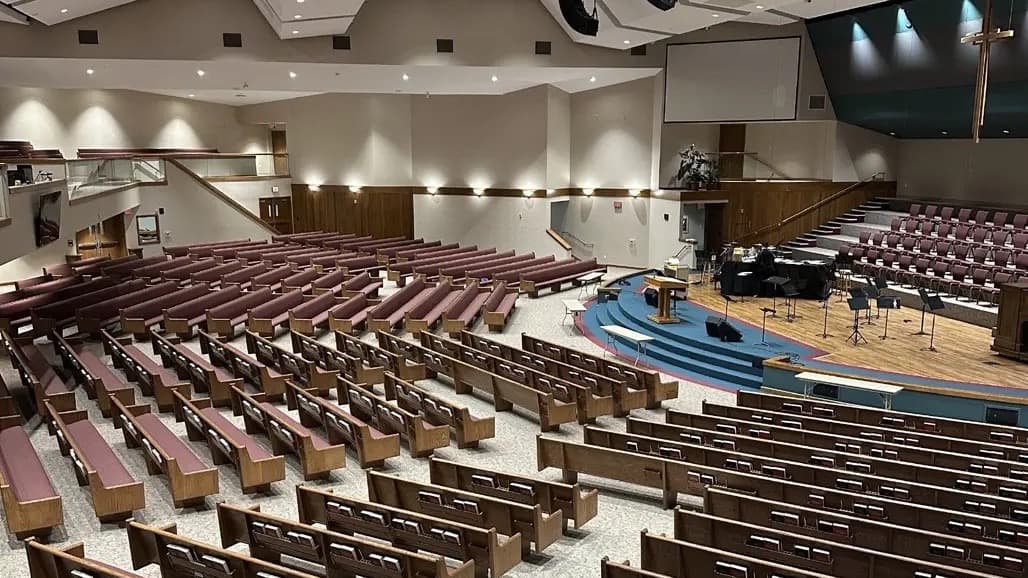
Why Sanctuary Lighting Deserves More Attention Than It Gets
Walk into almost any church sanctuary in the greater Minneapolis–Saint Paul metro and you'll find the same quiet tension: beautiful, purpose-built spaces that demand a lot from their lighting systems. Whether it's a modern megachurch in Woodbury, a historic congregation in nearby Maplewood, or a community church in Cottage Grove or Oakdale, facility managers across Washington County are wrestling with the same set of problems — and quietly losing hours every month to a maintenance cycle that doesn't have to be so difficult.
Sanctuary lighting isn't just about aesthetics. It shapes how a congregation experiences worship, how well a livestream captures a service, and whether a space feels safe and welcoming to visitors. And yet, because lighting failures tend to happen gradually — a flicker here, a dimmer that stops cooperating there — they often go unaddressed until they become genuinely disruptive. Understanding why these systems fail, and what today's technology can do differently, is the first step toward a smarter approach.
The Hidden Cost of Traditional Church Lighting Systems
Most church sanctuaries in the Twin Cities region were built or renovated during an era when incandescent, halogen, or fluorescent lighting was the only practical option. These systems were designed for a world where energy was cheap, maintenance labor was readily available, and the demands on a sanctuary's lighting were far simpler than they are today.
That world has changed — and the gap between legacy systems and modern expectations is widening in several important ways:
- Frequent relamping at height. Replacing bulbs in fixtures mounted 25 to 50 feet overhead requires lifts, scaffolding, or professional labor — sometimes multiple times per year per fixture. In a region like Woodbury where winter weather limits outdoor access and compresses maintenance windows, this is more than an inconvenience.
- Aging ballast failures. Fluorescent and older HID fixtures rely on ballasts that degrade over time, causing flickering, slow warm-up, and eventually complete failure. Replacing ballasts is often as costly as replacing the fixture entirely.
- Dimming incompatibilities. Many sanctuaries rely on dimming for atmosphere during services, but legacy dimmers and fluorescent systems are notoriously poor partners — resulting in humming, flicker, and inconsistent performance.
- Energy waste. An older 400-watt metal halide or halogen fixture can consume four to five times the energy of a comparable LED replacement, a meaningful cost for a nonprofit organization managing a tight operational budget.
- Video and livestream demands. Increasingly, Minnesota congregations are investing in livestream capabilities to serve remote members or share services online. Lighting that produces uneven coverage, harsh shadows, or color temperature inconsistencies can undermine that investment entirely.
The cumulative effect of these issues isn't just financial. It's the facilities director spending a Saturday morning troubleshooting a dimmer instead of preparing for Sunday. It's the board meeting where deferred lighting maintenance becomes a larger capital conversation than anyone anticipated.
What LED Retrofits Are Actually Delivering for Church Facilities
The conversation around LED lighting in church settings has matured significantly over the past decade. Early adopters sometimes encountered challenges with color rendering, dimming compatibility, or fixtures that didn't suit the architectural character of their sanctuaries. Today's LED technology — and the expertise of contractors who specialize in church environments — has addressed most of those concerns.
Here's what well-executed LED upgrades are delivering for facility managers at church properties across the greater Minneapolis area:
- Dramatically extended lamp life. Quality LED fixtures rated at 50,000 hours or more can reduce relamping frequency from multiple times per year to once per decade or longer. For high-ceiling sanctuaries in communities like Woodbury, Lake Elmo, or Stillwater, this alone can recapture dozens of maintenance hours annually.
- Improved color rendering. Modern LEDs with high Color Rendering Index (CRI) ratings — typically 90 or above — render skin tones, fabrics, and architectural details more faithfully than fluorescent or metal halide alternatives. This matters both for in-person worship quality and for video production.
- Precise, flicker-free dimming. LED drivers designed for 0-10V or DALI dimming protocols provide smooth, consistent control across the full range — from full brightness during a crowded Sunday service to a warm, intimate setting for a candlelight event.
- Zone and scene control. Smart lighting controls allow facility managers to program and recall preset scenes for different service types, events, or rental uses — without manual adjustment every time. For multi-use sanctuaries that host concerts, weddings, funerals, and community events, this kind of flexibility is transformational.
- Energy savings that compound over time. Minnesota congregations that have completed LED retrofits across their sanctuaries and common areas have generally seen significant reductions in lighting-related energy consumption — savings that translate directly to budget that can be redirected toward ministry and programs.
It's worth noting that Minnesota has historically offered strong utility rebate programs that can meaningfully offset the upfront cost of LED upgrades for nonprofit and commercial facilities. While specific program details and availability change over time, Woodbury-area organizations should explore what incentives Xcel Energy or other regional utilities currently offer for lighting efficiency projects — a conversation a qualified lighting contractor can help facilitate.
Practical Considerations for Church Facility Managers in Minnesota
Every church facility presents its own set of constraints, and a thoughtful upgrade strategy respects them. A few considerations that are particularly relevant for faith communities in the Woodbury and greater Twin Cities area:
Historic and architectural sensitivity. Some congregations in this region occupy buildings with significant architectural character — exposed timber, ornate ceiling details, or stained glass that requires careful lighting treatment. LED technology now offers fixture form factors and color tuning options that can complement rather than clash with these environments.
Phased implementation. Many church boards are rightly cautious about large capital expenditures, particularly for nonprofits navigating post-pandemic recovery or building campaign priorities. A phased lighting upgrade — starting with the highest-maintenance or highest-impact areas — allows organizations to demonstrate ROI before committing to a full facility project.
Coordination with service schedules. Woodbury's growing faith community includes congregations running multiple weekend services, weekday programming, school ministries, and community events. Minimizing disruption during installation isn't optional — it's essential. Professional project planning that works around a facility's calendar is a non-negotiable part of a well-executed upgrade.
Controls integration. Lighting upgrades are also a natural entry point for broader building automation conversations — integrating with HVAC scheduling, security systems, or audio-visual infrastructure that modern sanctuaries increasingly rely on. Facility managers who are thinking ahead will want a contractor who can speak to these integration possibilities, not just the fixture swap.
Cooperative purchasing options. For faith communities that are part of educational or public-sector partnerships, it's worth knowing that cooperative purchasing programs — including Houston Church COOP, Sourcewell, BuyBoard, TIPS, and others — may be available to simplify procurement and ensure competitive pricing on lighting equipment and services.
Trends Shaping the Future of Church Lighting in the Twin Cities
The pace of change in lighting technology continues to accelerate, and the gap between early adopters and late movers is becoming more pronounced. A few trends worth watching for church facility leaders in the Woodbury area:
Tunable white lighting. Fixtures that can shift color temperature — from warm candlelight tones to cooler daylight — allow a single system to serve radically different moods and uses. This is particularly valuable in sanctuaries used for everything from contemplative prayer services to energetic youth programming.
Human-centric lighting design. Research continues to deepen our understanding of how light affects human alertness, mood, and well-being. Lighting systems that shift in color and intensity throughout the day are increasingly being explored in spaces where people gather for extended periods — a category that includes not just office buildings but sanctuaries, fellowship halls, and education wings.
Integrated emergency and egress lighting. Code compliance for emergency lighting in assembly occupancies is an area where many older church facilities have deferred maintenance. An LED upgrade project is often the right moment to audit and modernize emergency and exit lighting as well — ensuring compliance and improving safety in one coordinated effort.
Data and monitoring. Some advanced lighting control platforms now offer facility managers visibility into system performance, energy consumption, and maintenance needs through cloud-connected dashboards. For larger campuses in communities like Woodbury — where a single church property might encompass a sanctuary, education wing, gym, and outdoor parking — this kind of operational insight has real value.
Service Availability
While VOSS offers a comprehensive suite of national services, specific capabilities may vary by location. Please contact your local branch to confirm the current availability of specific services, technology solutions, or contracting capabilities in your immediate market.
Talk to a Local Expert About Your Sanctuary Lighting
VOSS has served faith communities, commercial facilities, and public-sector organizations across Minnesota for decades, with deep familiarity with the Twin Cities metro and the communities of Washington County — including Woodbury, Cottage Grove, Oakdale, Lake Elmo, Maplewood, and Stillwater.
If your sanctuary lighting is creating maintenance headaches, straining your energy budget, or simply not delivering the quality your congregation deserves, we'd welcome the conversation. Our Minneapolis-area team can help you think through your options — from a targeted retrofit to a phased campus-wide upgrade — without pressure and with a genuine understanding of how faith community facilities operate.
For related reading in our Latest Lighting series, explore our articles on Energy Efficient Church Lighting Upgrades, Fluorescent Tube Bans and LED Lighting Rebates, and Energy Audits, Incentives, and Rebate Navigation for Businesses — all of which offer additional context for facility managers evaluating lighting investments in Minnesota.
VOSS Minneapolis Branch Phone: (651) 697-1599 Toll-Free: (800) 776-8677
We're here to help you make a confident, well-informed decision for your facility and your community.