Minnesota's Fluorescent Lamp Ban Is Here — And Plymouth Businesses Can't Afford to Wait
For decades, fluorescent lighting has been the workhorse of commercial buildings across the Twin Cities metro — from the office parks lining Highway 55 in Plymouth to the warehouse facilities near I-494, and the schools, retail centers, and municipal buildings that serve this community of 81,000 residents. That era is now drawing to a close by law.
Minnesota's Clean Lighting legislation has introduced a phased ban on mercury-containing fluorescent lamps that reached full implementation on January 1, 2026. For commercial building operators in Plymouth, Minnetonka, Maple Grove, and communities throughout the Greater Minneapolis area, this is not a distant regulatory concern — it is a present operational reality that demands attention.
Understanding what the ban covers, what it means for your facility, and how to navigate the transition intelligently is the focus of this guide.
What the Minnesota Fluorescent Lamp Ban Actually Covers
Minnesota's Clean Lighting legislation was structured in two phases to give businesses time to plan, but both deadlines have now passed:
- Phase 1 (effective January 1, 2025): Banned the sale, offer for sale, or distribution of screw- or bayonet-based compact fluorescent lamps (CFLs).
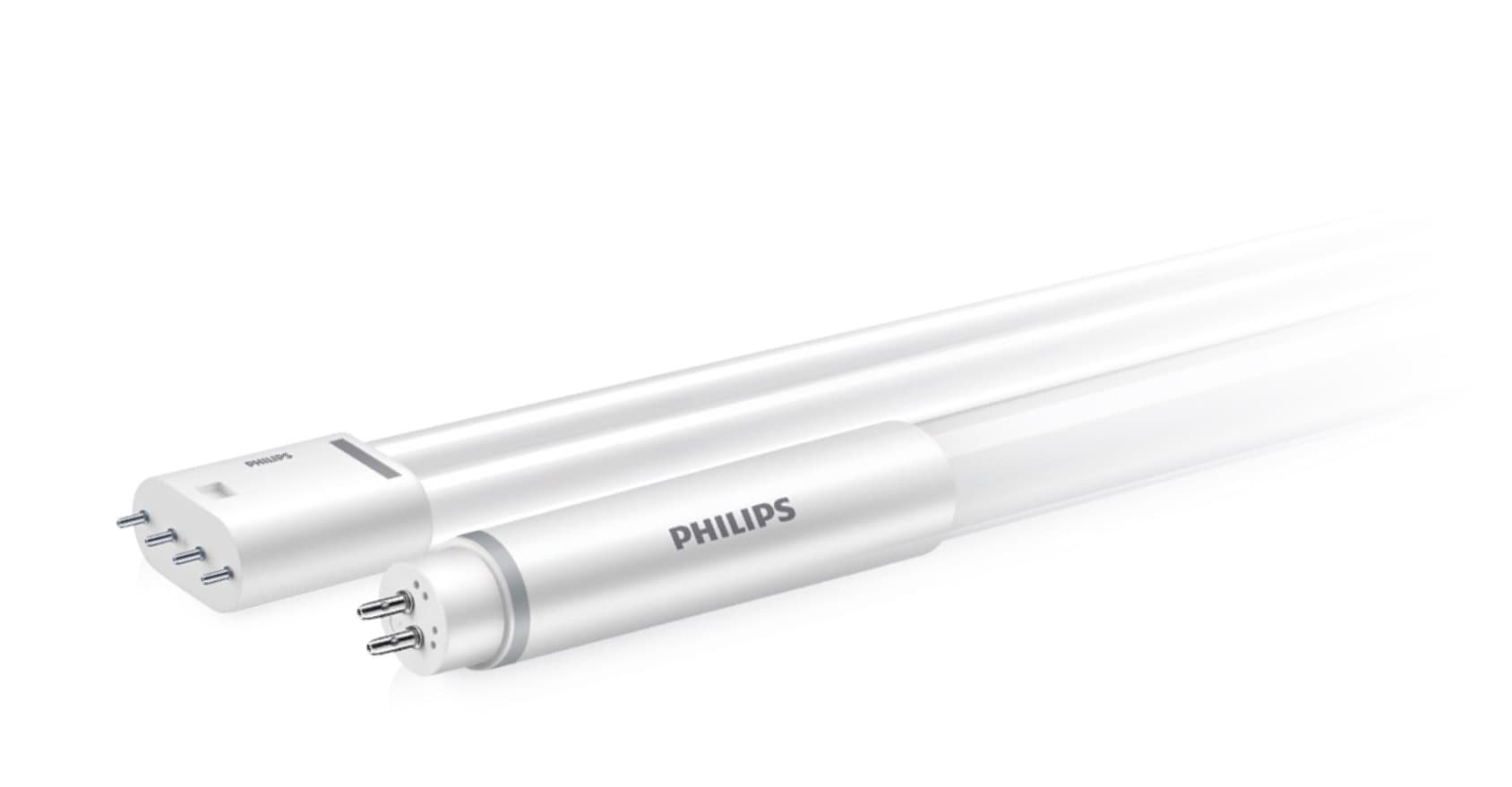
- Phase 2 (effective January 1, 2026): Banned pin-based linear fluorescent lamps — including the T5, T8, and T12 tubes found in the vast majority of commercial and industrial buildings — as well as pin-based CFLs.
The critical distinction for operators: You are not required to immediately remove existing fluorescent fixtures, and you may continue using lamps already in your inventory. What is prohibited is purchasing new fluorescent lamps to replenish that inventory. In practical terms, every burned-out fluorescent tube in your building is now one you cannot replace in kind — because your distributor can no longer legally sell it to you.
For facilities with dozens or hundreds of fluorescent fixtures, this means the clock is already ticking. The question is no longer whether you will transition to LED — it is how prepared you will be when you do.
Why This Matters Specifically for Plymouth's Commercial Landscape
Plymouth is one of the most commercially active suburbs in the Greater Minneapolis region, home to a concentration of corporate office headquarters, light industrial facilities, healthcare campuses, and educational institutions. This density of commercial real estate means the fluorescent lamp ban has broad implications across nearly every property type in the city.
Office buildings along Carlson Parkway and the broader Opus business park corridor are among the most directly affected — many were built or last renovated during an era when T8 and T12 fluorescent systems were the standard specification. Warehouse and distribution facilities near the I-494/Highway 169 interchange rely heavily on high-bay linear fluorescent fixtures that will require systematic replacement planning. Schools within Wayzata Public Schools and Robbinsdale Area Schools, serving students across Plymouth and neighboring communities like Golden Valley, Crystal, and New Hope, face both compliance obligations and an opportunity to improve learning environments with better-quality light.
Municipal and government-owned buildings in Plymouth — from city hall to public works facilities to community centers — are also subject to the ban, and many are positioned to benefit from Minnesota's cooperative purchasing infrastructure to execute their transitions efficiently and compliantly.
The Case for Treating This as an Opportunity, Not Just a Compliance Exercise
Regulatory deadlines have a way of focusing attention, but the most forward-thinking facility managers in the Twin Cities metro are approaching this transition as a meaningful operational upgrade — not merely a box to check. The performance gap between modern LED technology and legacy fluorescent systems is significant and well-documented.
Energy efficiency: LED fixtures typically consume 40–50% less energy than comparable fluorescent systems. For a large commercial or industrial facility in Plymouth running lights across tens of thousands of square feet, that reduction translates into measurable savings on monthly utility bills from providers like Xcel Energy, which serves much of the metro area and offers rebate programs to incentivize exactly this kind of upgrade.
Maintenance and longevity: LED lamps last two to three times longer than fluorescent tubes under typical commercial operating conditions. For facilities managers responsible for multi-building portfolios or hard-to-reach fixtures — think high warehouse ceilings or atrium spaces — the reduction in lamp change frequency alone can represent a meaningful labor and cost savings.
Environmental compliance: The mercury content in fluorescent lamps creates both a disposal obligation and a liability risk when lamps are broken. LED technology is mercury-free, simplifying end-of-life handling and reducing your facility's environmental footprint — a growing priority for tenants, employees, and community stakeholders alike.
Light quality: Modern LED systems deliver superior color rendering, more consistent illumination across a space, and options for tunable white light that can support circadian wellness in workplaces and healthcare environments. This is a dimension of the transition that resonates with HR and wellness-focused leadership, not just facilities teams.
Navigating the Transition: Key Considerations for Facility Operators
A successful fluorescent-to-LED transition in a commercial facility is rarely as simple as swapping one lamp for another. Thoughtful planning across several dimensions helps ensure the project delivers its full value.
Fixture compatibility and retrofit vs. replace decisions: Many existing fluorescent fixtures can be retrofitted with LED tubes or LED retrofit kits rather than requiring full fixture replacement. This approach can reduce upfront cost and construction disruption significantly. However, not all retrofit approaches are equal — some maintain full fixture performance, while others may void warranty coverage or reduce the efficiency gains. A qualified lighting professional can assess your existing infrastructure and recommend the right path for each fixture type.
Rebate capture: Xcel Energy and other Minnesota utilities offer commercial lighting rebates for qualified LED upgrades, and these programs can offset a meaningful portion of project costs. Maximizing rebate capture requires that equipment selections meet program specifications and that documentation is submitted correctly — a step that is easy to overlook but consequential for project economics.
Phased project planning: For larger facilities or multi-building portfolios, a phased approach that prioritizes the spaces with the highest energy consumption, the most frequent lamp failures, or the most urgent compliance exposure can help spread capital investment across budget cycles while delivering early wins.
For public sector and educational organizations in Plymouth: Minnesota government agencies and school districts have access to a VOSS-held Minnesota state contract, enabling compliant procurement of lighting products and services without a separate competitive bidding process. Cooperative purchasing programs including Sourcewell, TIPS, BuyBoard, AEPA, Omnia Partners, PACE, and others are also available to eligible organizations, streamlining the path from project planning to execution.
Further Reading in the Latest Lighting Series
This article is part of VOSS's Latest Lighting content series. If you found this guide useful, related topics in the series include a broader overview of fluorescent tube bans and LED lighting rebates nationwide, a deep dive into Minneapolis LED lighting rebates and how to maximize incentive capture in this market, and guidance on energy audits, incentives, and rebate navigation for businesses. Commercial LED lighting fixtures and outdoor LED lighting upgrades are also covered for operators looking to extend their efficiency initiatives beyond interior spaces.
Service Availability
While VOSS offers a comprehensive suite of national services, specific capabilities may vary by location. Please contact your local branch to confirm the current availability of specific services, technology solutions, or contracting capabilities in your immediate market.
Talk to VOSS About Your Plymouth Facility's Lighting Transition
VOSS has served commercial, industrial, institutional, and public-sector clients across Minnesota for more than 85 years. Our Minneapolis branch team understands the regulatory landscape, the utility rebate programs, and the practical realities of executing lighting upgrades in the diverse building types that define Plymouth and the Greater Minneapolis metro.
Whether you are managing a single commercial building or a multi-facility portfolio across Plymouth, Minnetonka, Maple Grove, Eden Prairie, or the broader Twin Cities region, we are ready to help you think through your transition strategically — from fixture assessment and rebate identification to project execution and documentation.
We invite you to reach out to your local VOSS branch to start the conversation.
VOSS Minneapolis Phone: (651) 697-1599 Toll-Free: (800) 776-8677