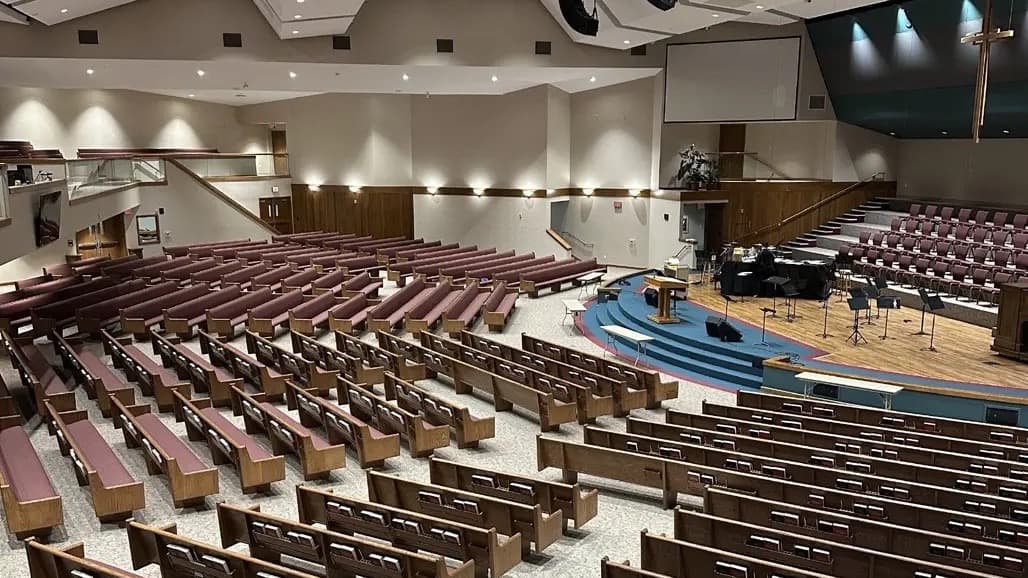
Why Sanctuary Lighting Is a Growing Priority for Plymouth-Area Churches
Plymouth, Minnesota is home to a vibrant and growing faith community. With a population of over 81,000 and steady residential growth across the western Twin Cities suburbs — from Maple Grove and Wayzata to Minnetonka and Golden Valley — churches in this region are often serving larger, more active congregations than they were a decade ago. That growth puts new demands on facilities that were designed for a different era.
For many church facility managers in Plymouth and the surrounding Greater Minneapolis area, sanctuary lighting has quietly become one of the most persistent operational challenges they face. Fixtures installed 20 or 30 years ago — often incandescent, halogen, or fluorescent — were not built for today's expectations around energy efficiency, visual quality, or low maintenance. As congregations expand their programming, add livestreaming capabilities, and host a broader range of events, the limitations of outdated lighting systems become increasingly difficult to ignore.
This article explores the most common sanctuary lighting challenges facing local churches today, the innovations that are reshaping how faith communities approach this problem, and what facility managers should consider before pursuing a retrofit or upgrade.
The Real Costs of Aging Church Sanctuary Lighting
When facility leaders talk about lighting problems, they're rarely talking about aesthetics alone. The operational and financial implications of aging sanctuary fixtures are significant — and often underappreciated until they become urgent.
Frequent bulb replacements in hard-to-reach spaces are among the most disruptive and costly challenges. Many sanctuaries feature vaulted ceilings, decorative pendants, or architectural cove lighting that requires scaffolding or articulating lifts to access. In the Minnesota climate, where facilities are in near-constant use for Sunday services, mid-week gatherings, seasonal events, and community programming, unplanned re-lamping can mean rescheduling contractors around a packed church calendar — or worse, conducting services under failed or flickering fixtures.
Aging ballasts and incompatible dimming systems contribute to flickering, humming, and inconsistent light output. These symptoms are more than a nuisance — they create distraction during worship and can undermine the reverence and atmosphere that sanctuary design is meant to support.
Uneven illumination is another common complaint, particularly in sanctuaries where the original lighting layout was never designed for video production or livestreaming. As more Plymouth-area congregations invest in hybrid worship formats to reach members who cannot attend in person, the gap between adequate lighting for a live audience and camera-ready illumination has become a real operational gap.
Rising energy costs compound these issues. Older incandescent and halogen fixtures are among the least efficient light sources available, and even older fluorescent systems fall well short of modern LED performance benchmarks. For a congregation managing a tight operating budget, the monthly energy burden of an outdated lighting system is a real and ongoing cost — not a one-time capital concern.
What Modern LED Technology Makes Possible in Sanctuary Environments
The LED lighting landscape has matured considerably over the past decade, and the options available today for sanctuary environments are far more sophisticated — and appropriate — than early-generation LED products.
Color rendering and warmth matter deeply in worship spaces. Modern LED systems designed for sanctuary applications can achieve high Color Rendering Index (CRI) scores that render skin tones, wood tones, textile colors, and stained glass accurately and beautifully. Tunable white technology allows facilities to shift the color temperature of the light — warmer for intimate services, cooler for educational programming — without changing fixtures.
Dimming compatibility has improved dramatically. One of the early friction points with LED adoption in church settings was incompatibility with existing dimming infrastructure. Today's LED drivers and control systems are designed to work seamlessly with modern dimming protocols, and a well-planned retrofit can preserve or upgrade existing control panels rather than replacing them wholesale.
Fixture life is a game-changer for high-ceiling sanctuaries. Where a traditional incandescent PAR lamp might last 1,000–2,000 hours, a quality LED replacement can last 50,000 hours or more under normal operating conditions. For a sanctuary running 20 hours of programming per week, that difference translates to years — sometimes a decade or more — between re-lamping cycles. For facilities in Plymouth, Wayzata, or Minnetonka that rely on lifts or scaffolding for access, this reduction in maintenance frequency has real cost and scheduling implications.
Lighting controls add a new layer of operational intelligence. Scene-based control systems allow sanctuary operators to program specific lighting scenes for different service types — traditional worship, contemporary services, weddings, funerals, concerts — and recall them with a single button press. This kind of precision was once reserved for large theatrical venues; it's now accessible and practical for congregations of all sizes.
It's also worth noting that Minnesota's regulatory environment has been shifting. The state's movement to phase out certain fluorescent lamp types — a topic covered in depth in the Minnesota Fluorescent Lamp Ban: Guide for Commercial Building Operators article in our Latest Lighting section — makes proactive planning especially important for churches still operating legacy fluorescent systems in fellowship halls, narthexes, and administrative areas alongside their sanctuary lighting.
Planning a Sanctuary Lighting Upgrade: What Facility Managers Should Know
Upgrading sanctuary lighting is not a simple swap-and-go project. The unique characteristics of worship spaces — architectural complexity, acoustic sensitivity, historic fabric, and the need to minimize disruption to an active programming calendar — require careful planning and experienced execution.
Start with a lighting audit. Before specifying any new equipment, a thorough assessment of existing fixtures, controls, wiring infrastructure, and power capacity is essential. A good audit will identify not just what needs to be replaced, but what can be retained, upgraded, or repurposed — and where phasing the project over time makes more financial sense than a full replacement at once.
Consider phasing for budget and operational reasons. Many churches in the Plymouth area serve as community anchors, with facilities in use six or seven days a week. A phased approach — addressing the main sanctuary first, then fellowship spaces, then administrative areas — allows the work to proceed without displacing core programming. It also allows the congregation to evaluate results before committing to the full project scope.
Understand the utility rebate landscape. Minnesota utilities have historically supported commercial LED upgrades through rebate programs that can meaningfully offset project costs. Partnering with a contractor who understands how to navigate these programs — and can document the project in a way that supports a successful rebate claim — is an important part of making the financial case for an upgrade. The Maximize ROI with Commercial LED Lighting Rebates in Dallas, TX and Energy Audits, Incentives, and Rebate Navigation for Businesses articles in our Latest Lighting section offer broader context on how these programs work nationally.
Don't overlook the video and livestream dimension. If your congregation currently livestreams services or is planning to, lighting design for camera performance should be part of the conversation from the start. This includes considerations around light levels, color consistency, and the elimination of flicker that may not be visible to the naked eye but appears as a rolling effect on video. Addressing this in the retrofit design avoids expensive modifications later.
Historic and architectural constraints require specialized experience. Some Plymouth-area churches occupy buildings with historic designations or sensitive architectural features — decorative plasterwork, wood ceiling systems, ornate millwork — that require careful fixture selection and installation methods. Experience with these constraints is not universal among electrical contractors, and it's worth asking specifically about a contractor's track record in comparable environments.
A Note on Cooperative Purchasing for Eligible Organizations
For churches associated with denominational networks, community organizations, or educational institutions that qualify for cooperative purchasing, VOSS participates in several programs that can simplify procurement and ensure competitive pricing without a lengthy bidding process. Eligible organizations in Minnesota may be able to access VOSS services through Houston Church COOP, Sourcewell, TIPS, BuyBoard, Omnia Partners, AEPA, PACE, and Nebraska ESU Co-Op.
VOSS also holds an approved state contract in Minnesota, which supports government agencies and qualifying public entities with compliant, streamlined procurement for lighting and electrical systems.
If your organization is uncertain whether it qualifies for cooperative purchasing, your local VOSS team can help you identify the right pathway.
Service Availability
While VOSS offers a comprehensive suite of national services, specific capabilities may vary by location. Please contact your local branch to confirm the current availability of specific services, technology solutions, or contracting capabilities in your immediate market.
Talk to the VOSS Minneapolis Team About Your Sanctuary
VOSS has served commercial and institutional facility managers across the Greater Minneapolis region for decades, including congregations throughout Plymouth, Maple Grove, Minnetonka, Wayzata, Golden Valley, and the broader western Twin Cities metro. Our team understands the operational realities of managing an active church facility — tight schedules, community visibility, budget discipline, and the importance of getting the work done right the first time.
If your sanctuary is showing signs of aging infrastructure, or if you're planning ahead for a lighting upgrade, we'd welcome the opportunity to discuss what's possible for your facility.
VOSS Minneapolis
Phone: (651) 697-1599
Toll-Free: (800) 776-8677
Reach out to schedule a consultation or facility assessment — and let's talk about what better lighting could mean for your congregation.