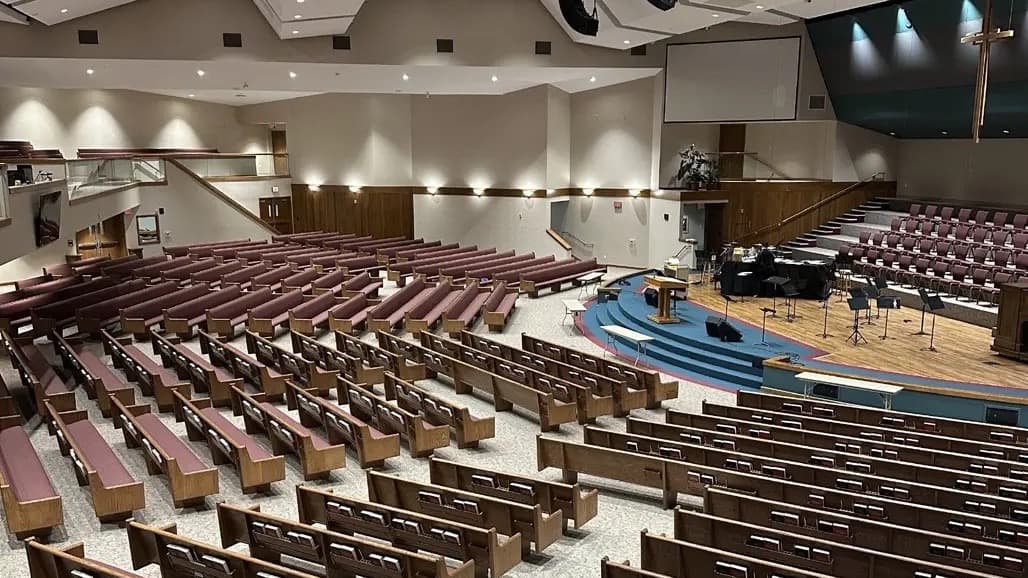
Why Sanctuary Lighting Is a Growing Concern for Minnesota Faith Communities
Brooklyn Park is one of the largest and most diverse cities in Minnesota, home to roughly 83,000 residents and a broad network of faith communities spanning a wide range of denominations, congregation sizes, and building types. From newer suburban worship centers near 85th Avenue to historic sanctuaries in the city's older neighborhoods, church facilities across the area share a common challenge: lighting systems that were designed for a different era of worship.
The state of Minnesota presents a particularly relevant backdrop for this conversation. Minnesota's fluorescent lamp ban — which phases out the sale of many traditional linear fluorescent lamps — is already reshaping how commercial and institutional buildings approach their lighting inventory. For church facility managers in Brooklyn Park, Maple Grove, Osseo, and the surrounding northwest metro, this regulatory shift makes now an especially practical time to evaluate what's in the ceiling and what it will cost to maintain it long-term.
Beyond compliance, there's a broader trend reshaping how faith communities think about their facilities: worship spaces are no longer used just on Sunday mornings. Many Brooklyn Park congregations host weekday services, community programs, food shelves, youth ministries, and livestreamed events — all of which place new demands on lighting systems that were never designed to perform this way.
The Real Cost of Deferred Lighting Maintenance in a Church Sanctuary
Church facility managers and maintenance supervisors often inherit aging lighting infrastructure and face a familiar set of problems. Understanding how these issues compound over time is the first step toward making a sound investment decision.
High-ceiling fixture access is the hidden labor cost. Sanctuary ceilings in the Twin Cities metro area commonly range from 20 to 40 feet. Every time a traditional incandescent, halogen, or fluorescent lamp burns out, accessing it requires scheduling a lift, coordinating with a contractor, and — critically — disrupting sanctuary availability during a busy programming week. In a high-use facility, this cycle can repeat multiple times per year per fixture cluster.
Aging ballasts create cascading problems. Many churches built or renovated in the 1980s through early 2000s still operate fluorescent fixtures with magnetic or older electronic ballasts. As these components age, the symptoms multiply: flickering during services, inconsistent color rendering, fixtures that fail to strike in cold weather (a particularly relevant issue during Minnesota winters), and compatibility problems when trying to swap in newer lamp types.
Uneven illumination affects more than aesthetics. Worship leaders, choir directors, and audio-visual teams managing livestream or video recording operations are acutely aware of how uneven light levels affect the on-screen experience. In today's faith community landscape — where online viewership has become a meaningful extension of in-person attendance — poor sanctuary lighting is no longer just a maintenance issue. It's a ministry effectiveness issue.
Energy costs are quantifiable and ongoing. Traditional sanctuary lighting fixtures, especially in larger worship spaces, can account for a significant share of a church's monthly utility spend. With Xcel Energy and other regional providers offering rebate programs for energy-efficient lighting upgrades, the financial case for modernization has become increasingly concrete for budget-conscious church boards and finance committees across the Minneapolis metro.
How LED Technology Is Transforming Sanctuary Environments
LED lighting has matured considerably over the past decade, and the technology now available for sanctuary applications is far more sophisticated than the flat, harsh light many people associate with early commercial LED products. For faith communities in Brooklyn Park and across the northwest suburbs — including Champlin, Dayton, and Corcoran — this is worth understanding in some depth.
Color quality and worship atmosphere. Modern LED fixtures designed for sanctuary applications offer tunable white capability, meaning the color temperature of the light can shift from warm, intimate tones during a candlelit Christmas Eve service to cooler, brighter tones for a high-energy contemporary worship format. This flexibility is a significant departure from the fixed color output of traditional sources.
Dimming compatibility and control integration. One of the most common frustrations in church lighting maintenance is incompatible dimming — the flicker, buzz, or dropout that occurs when older dimmers are paired with newer lamp types. Purpose-built sanctuary LED systems resolve this through proper driver selection and, increasingly, through integration with digital lighting control platforms that give facility teams precise, scene-based control over every zone in the sanctuary. Related content on lighting controls and smart systems is worth exploring for churches considering a phased approach to modernization.
Reduced maintenance cycles. Quality LED fixtures rated for 50,000 hours or more dramatically reduce the frequency of lamp replacements — which, in a high-ceiling sanctuary environment, translates directly into reduced lift rentals, reduced contractor callouts, and reduced disruption to weekly programming. For facilities teams managing multiple buildings or juggling a small maintenance staff, this operational simplification is often the most compelling argument for upgrading.
Retrofit vs. full replacement. Not every church in the Brooklyn Park area needs a full fixture replacement. In many cases, LED retrofit kits can be installed into existing fixture housings, reducing material costs and installation complexity. VOSS works with church facility teams to evaluate which approach makes the most sense given their ceiling types, existing infrastructure, and budget timelines.
Navigating Incentives and Cooperative Purchasing for Minnesota Faith Communities
One of the most underutilized resources available to Brooklyn Park churches and nonprofit organizations is the range of rebate and incentive programs designed to offset the upfront cost of LED upgrades.
Xcel Energy offers commercial lighting rebates for qualifying LED installations, and navigating these programs — understanding which products qualify, how to document the project, and how to submit claims — is an area where experienced lighting contractors add real value. Our article on Maximize ROI with Commercial LED Lighting Rebates in Dallas, TX provides a useful framework for understanding how these incentive programs work structurally, even as specific programs vary by utility and state.
It's also worth noting that Minnesota's fluorescent lamp ban creates a time-sensitive dimension to this planning. Facilities that delay LED transitions may find themselves managing aging fluorescent inventory with limited replacement options. Our related article on the Minnesota Fluorescent Lamp Ban: Guide for Commercial Building Operators covers this regulatory landscape in detail and is essential reading for any Brooklyn Park facility manager still operating fluorescent fixtures.
For churches with connections to public institutions — congregations that operate childcare centers, partner with school districts, or are affiliated with municipal programs — cooperative purchasing programs may open additional procurement pathways. VOSS participates in several cooperative purchasing programs available to eligible organizations in Minnesota, including Sourcewell, TIPS, BuyBoard, AEPA, Omnia Partners, PACE, Houston Church COOP, Nebraska ESU Co-Op, and others. VOSS also holds an approved Minnesota state contract, which simplifies the procurement process for qualifying entities. These programs allow eligible organizations to purchase lighting products and services through pre-competitively bid contracts, reducing administrative burden and ensuring compliance with procurement requirements.
What a Thoughtful Sanctuary Lighting Project Looks Like
Church lighting projects succeed or fail largely on the basis of planning and communication — not just product selection. For congregations in Brooklyn Park and the surrounding northwest metro, a few principles consistently distinguish successful upgrades from frustrating ones.
Start with an assessment, not a product. Before selecting fixtures or scheduling installation, experienced lighting professionals conduct a thorough review of the existing infrastructure: ceiling heights, fixture types, wiring conditions, dimming systems, and control panels. This assessment shapes every downstream decision and prevents costly surprises during installation.
Plan around the worship calendar. Installation scheduling in a church environment requires sensitivity to programming rhythms. Major holiday seasons — Advent, Christmas, Lent, Easter — are peak periods when sanctuary access is most critical and least available. Experienced church lighting contractors build project timelines around these constraints rather than around standard commercial installation windows.
Consider the full facility, not just the sanctuary. Many churches find that a sanctuary lighting project opens the door to a broader facility evaluation. Fellowship halls, classrooms, lobbies, exterior parking areas, and administrative spaces all have their own lighting maintenance challenges. Our related content on Parking Lot and Outdoor LED Lighting Upgrades and Energy Efficient Church Lighting Upgrades provides additional perspective for facilities teams thinking holistically about their campus.
Communicate with stakeholders. Church boards, senior pastors, and worship directors all have a stake in how a sanctuary looks and feels. Bringing these voices into the planning process early — particularly around light quality, dimming scenes, and the aesthetic character of new fixtures — builds consensus and avoids the rework that comes from surprises.
Service Availability
While VOSS offers a comprehensive suite of national services, specific capabilities may vary by location. Please contact your local branch to confirm the current availability of specific services, technology solutions, or contracting capabilities in your immediate market.
Talk With a Lighting Specialist About Your Brooklyn Park Sanctuary
Whether your congregation is dealing with a single troublesome fixture cluster or planning a full sanctuary renovation, the right conversation starts with understanding your specific facility — its ceiling geometry, its programming calendar, its budget realities, and its vision for worship.
VOSS serves faith communities throughout Brooklyn Park, Maple Grove, Osseo, Champlin, Dayton, Corcoran, and across the Greater Minneapolis area from our local Minneapolis branch. We bring 85+ years of commercial electrical and lighting expertise to every project, and we understand the unique combination of practical, aesthetic, and budgetary considerations that church facilities present.
We invite you to reach out to discuss how current lighting trends, LED technology, and available incentive programs apply to your specific sanctuary — no obligation, just a professional conversation.
VOSS Minneapolis Branch
Phone: (651) 697-1599
Toll-Free: (800) 776-8677