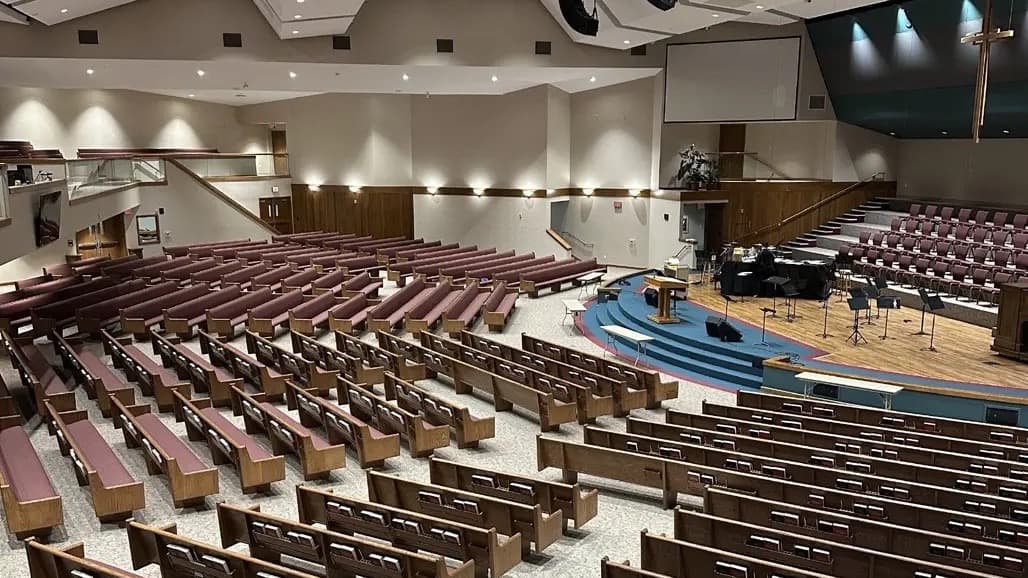
Why Sanctuary Lighting Is a Growing Priority for Bloomington-Area Churches
Bloomington, Minnesota is home to a diverse and active faith community. From established congregations near the Minnesota Valley National Wildlife Refuge corridor to newer houses of worship serving the city's growing neighborhoods, churches across Bloomington — and throughout the broader Minneapolis-Saint Paul metro — are facing a common inflection point: their lighting systems are aging out.
Many sanctuaries built or renovated in the 1980s and 1990s were outfitted with incandescent, halogen, or fluorescent fixtures that were state-of-the-art at the time. Today, those same systems are flickering, failing, and demanding constant attention from facility teams who already wear many hats. As energy costs rise and volunteer maintenance capacity shrinks, the status quo is no longer sustainable.
This article explores what facility managers, pastors, and church operations leaders in the Bloomington area should know about modern sanctuary lighting — including the maintenance challenges driving urgency, what LED technology now makes possible, and how to approach an upgrade strategically without disrupting your congregation.
The Real Maintenance Burden: What's Happening in Sanctuaries Right Now
If you manage a church facility in Bloomington, Eden Prairie, Richfield, or Burnsville, the challenges below likely sound familiar:
- Frequent bulb burnout in elevated fixtures — Sanctuary ceilings are often 20, 30, or even 40 feet high. Every time a bulb fails, replacing it requires scheduling a lift or scaffolding, coordinating around services and events, and absorbing the labor cost. For churches relying on traditional incandescent or halogen sources, this cycle repeats multiple times per year.
- Flickering and dimming failures — As ballasts age and dimmer systems become incompatible with newer lamp types, flickering becomes a persistent complaint. Beyond aesthetics, inconsistent lighting affects safety — particularly for older congregants navigating sanctuary steps, aisles, and balconies.
- Uneven light distribution — Original lighting designs rarely anticipated how sanctuaries would evolve. Expanded choirs, projection screens, livestreaming setups, and reconfigured seating arrangements often leave parts of the room under-lit or washed out.
- Rising energy costs — Older fixtures consume significantly more power than their modern LED equivalents. For churches running multiple services per week, plus Wednesday gatherings, youth events, and community programs, the cumulative energy draw adds real dollars to the monthly utility bill.
- Cold-weather performance issues — Minnesota winters introduce an often-overlooked variable. Fixtures in poorly insulated narthex areas, entryways, or older building envelopes can experience accelerated lamp failure and ballast degradation when exposed to temperature swings — a challenge that's especially relevant to facilities across the Twin Cities metro.
Understanding these pain points is the first step. The good news is that modern LED technology — combined with a thoughtful maintenance and retrofit strategy — addresses all of them directly.
What Modern LED Retrofits Make Possible for Church Sanctuaries
The LED lighting landscape has matured dramatically over the past decade. Today's sanctuary-grade LED systems are purpose-built for the unique demands of worship spaces — not just in terms of light output, but in color quality, controllability, and long-term reliability.
Color rendering and worship atmosphere Sanctuary lighting isn't purely functional. The warmth of light on wood pews, the rendering of stained glass, the illumination of a chancel or altar — these details matter deeply to congregations. Modern LED sources now achieve Color Rendering Index (CRI) scores of 90 or above, meaning colors appear natural and true. Warm color temperatures (2700K–3000K) replicate the familiar glow of incandescent sources without the energy penalty.
Dimming and scene control Integrated control systems allow facility teams to program distinct lighting scenes — a bright, energizing setting for contemporary worship; a warmer, more intimate atmosphere for traditional services; a focused configuration for livestreaming or video production. Scenes can be recalled with a single button, reducing complexity for volunteers and part-time staff.
Dramatically extended fixture life Quality LED fixtures are rated for 50,000 to 100,000 hours of operation — compared to 1,000–2,000 hours for incandescent sources and 8,000–15,000 hours for fluorescent. For a church running 10–15 hours of facility use per week, a quality LED fixture can provide decades of service before requiring replacement. For sanctuaries with high, difficult-to-access ceilings, this shift is transformational.
Energy efficiency and rebate eligibility LED upgrades typically reduce lighting energy consumption by 50–70% compared to older technologies. For churches in the Bloomington area served by Xcel Energy, energy-efficient lighting upgrades may qualify for utility rebate programs that offset upfront installation costs. VOSS can help identify and navigate applicable incentive programs — a process we've supported for numerous facilities across Minnesota.
For churches already exploring energy topics, our related article on Energy Efficient Church Lighting Upgrades provides additional context on how faith communities nationwide are approaching this transition. Our broader Energy Audits, Incentives, and Rebate Navigation for Businesses article is also a useful resource for facilities teams evaluating the financial case.
Strategic Considerations: How to Approach a Sanctuary Lighting Project
A sanctuary lighting upgrade isn't a plug-and-play project. It requires planning, coordination, and expertise specific to worship environments. Here's how experienced facility leaders in the Minneapolis area are approaching it:
Start with a professional lighting assessment Before specifying any products, a thorough audit of the existing system is essential. This includes evaluating current fixture types, wiring conditions, dimmer compatibility, and the specific photometric needs of the space. A well-conducted assessment surfaces hidden issues — aging wiring, non-code-compliant installations, or ballast failures — that can affect both project scope and budget.
Plan around your congregation's calendar Church sanctuaries are rarely empty. A phased installation approach — working section by section, scheduling work between services, or completing major work during lower-activity windows — minimizes disruption and keeps facilities operational throughout the project. Experienced contractors familiar with church environments understand this reality and plan accordingly.
Consider the full system, not just the fixtures Sanctuary lighting involves more than swapping bulbs. Dimming infrastructure, emergency egress lighting, theatrical spotlighting for the chancel or stage, and exterior lighting on the building envelope all contribute to the overall experience and safety of the facility. A holistic approach ensures upgrades are coordinated — not piecemeal.
Evaluate historic or architectural constraints early Many churches in the Bloomington area and across the Twin Cities are housed in buildings with significant architectural character — decorative plasterwork, original woodwork, historic window glazing. Lighting contractors working in these environments need to be sensitive to the physical constraints of the building, including limitations on fixture mounting, wire routing, and structural access.
Explore cooperative purchasing programs For church facilities affiliated with denominations or networks that participate in cooperative purchasing, procurement programs can streamline the sourcing process and deliver competitive pricing. VOSS participates in the Houston Church COOP, as well as Sourcewell, TIPS, BuyBoard, and other cooperative purchasing programs — making it easier for eligible organizations to access quality products and services through pre-vetted, compliant contracting vehicles.
Why Bloomington-Area Churches Are Acting Now
Several converging factors are driving urgency for churches in Bloomington, Edina, Savage, Prior Lake, and the surrounding south metro:
Minnesota's fluorescent lamp restrictions are accelerating timelines for facilities still operating older T12 and some T8 fluorescent systems. Our Minnesota Fluorescent Lamp Ban: Guide for Commercial Building Operators article explains the regulatory landscape in detail — but the short version is that phase-outs are already underway, and churches relying on fluorescent sanctuary lighting should be evaluating their options sooner rather than later.
Livestreaming and video ministry growth has raised the bar for sanctuary illumination quality. Many Bloomington-area congregations that added streaming capabilities during recent years are now discovering that their existing lighting systems produce unflattering footage — inconsistent color temperatures, shadowing, and hot spots that undermine production quality. Upgraded LED systems, properly designed for video environments, solve these problems at the fixture level.
Deferred maintenance is compounding costs. For facilities that postponed capital projects over the past several years, aging systems are now failing at accelerating rates. Proactive planning — rather than reactive repair — consistently delivers better outcomes and lower total cost over time.
Service Availability
While VOSS offers a comprehensive suite of national services, specific capabilities may vary by location. Please contact your local branch to confirm the current availability of specific services, technology solutions, or contracting capabilities in your immediate market.
VOSS holds an approved state contract in Minnesota, supporting government agencies and eligible public-sector organizations with compliant procurement, expert advice, and quality products. Eligible organizations may also access VOSS services through cooperative purchasing programs including Sourcewell, TIPS, BuyBoard, AEPA, Omnia Partners, PACE, Houston Church COOP, and Nebraska ESU Co-Op.
Let's Talk About Your Sanctuary
If your church in Bloomington or the greater Minneapolis area is dealing with persistent lighting maintenance challenges, rising energy costs, or simply an aging system that no longer serves your congregation well, we'd welcome the opportunity to discuss your facility's specific situation.
VOSS brings more than 85 years of electrical and lighting expertise — and a national track record with faith-based facilities — to every conversation. Our Minneapolis branch team understands the local climate, the regional utility landscape, and the unique demands of worship environments across the Twin Cities metro.
VOSS Minneapolis Branch
Phone: (651) 697-1599 Toll-Free: (800) 776-8677
Reach out to start a conversation — no obligation, just a straightforward discussion about what's possible for your facility.