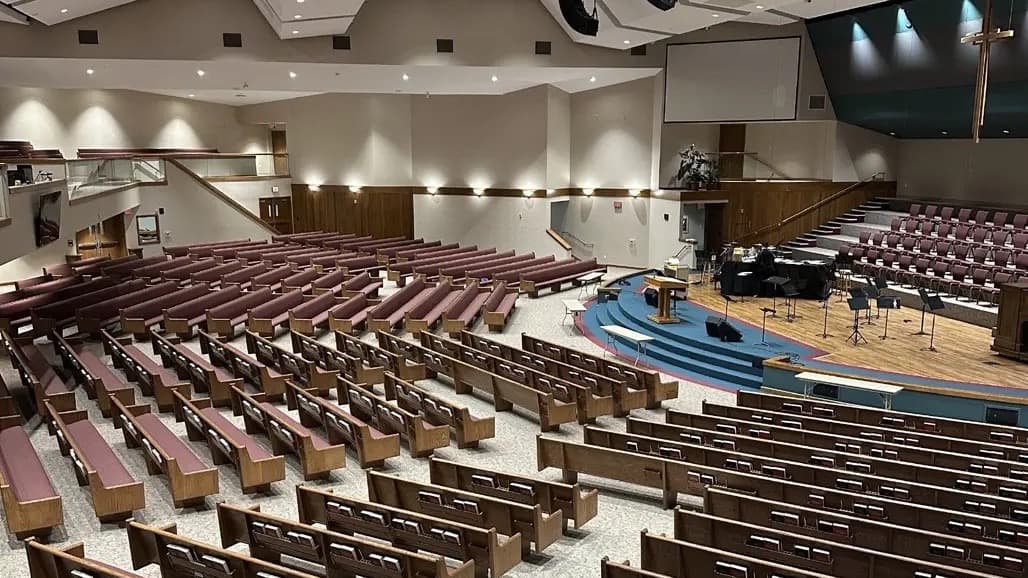
Why Sanctuary Lighting Is a Facility Management Priority for Kearney Churches
Kearney, Nebraska's faith community is a cornerstone of civic life in the Greater Lincoln market region. With a population of nearly 35,000, Kearney supports a wide range of congregations — from historic downtown sanctuaries to newer multi-purpose worship facilities along its growing suburban corridors. Whether your church is nestled near the University of Nebraska at Kearney or serves a congregation across the Platte River valley communities of Gibbon, Shelton, or Minden, one challenge is nearly universal: keeping sanctuary lighting functional, beautiful, and cost-effective.
For facility managers and maintenance supervisors, sanctuary lighting is rarely "set it and forget it." Traditional incandescent, halogen, and fluorescent fixtures installed decades ago were never designed for the demands of modern church life — livestreamed services, theatrical lighting effects for special events, and year-round programming that runs from early morning prayer to late evening rehearsals. The result? Maintenance teams fielding frequent bulb replacements in vaulted ceilings, wrestling with aging ballasts that cause flickering, and managing energy bills that have no business being as high as they are.
This article explores the trends, best practices, and real-world innovations shaping how churches across Nebraska are rethinking their approach to sanctuary lighting — and what Kearney-area facility leaders should know before their next maintenance cycle.
The Hidden Costs of Deferred Lighting Maintenance
One of the most common mistakes church facility managers make is treating lighting as a low-priority line item — something to address only when a fixture fails. In reality, deferred lighting maintenance compounds costs in ways that aren't always visible in the budget until they become unavoidable.
Consider the full picture of what aging sanctuary lighting actually costs a congregation:
- Labor and lift rentals for accessing fixtures in 20-, 30-, or 40-foot vaulted ceilings can run up several times per year with short-lived traditional bulbs
- Ballast failures in fluorescent systems cause flickering and total outages that are disruptive mid-service and often require emergency response
- Uneven illumination creates safety concerns for elderly congregants navigating pews in dim conditions — and noticeably degrades the quality of video and livestream production
- Energy waste from outdated fixtures inflates utility costs month after month, pulling funds away from ministry programs
The good news is that LED technology has matured dramatically over the past decade. Today's church-grade LED solutions offer lamp life measured in tens of thousands of hours, meaning the facilities that make the transition now are insulating themselves from years of reactive maintenance. For a market like Kearney — where extreme Nebraska winters and summer heat stress electrical systems — the durability and thermal stability of modern LED fixtures is a particularly meaningful advantage.
What a Modern Sanctuary Lighting Upgrade Actually Looks Like
The phrase "lighting upgrade" can sound disruptive — scaffolding, dark sanctuaries, weekend closures. In practice, well-planned LED retrofits are designed to minimize exactly that kind of disruption. The most effective approaches share a few common characteristics.
Retrofitting, not replacing, existing fixtures is often the right starting point, especially in churches with historic character or decorative pendant fixtures that define the aesthetic of the space. Rather than pulling out beloved chandeliers or ornate fixtures, experienced contractors can retrofit the interior components with dimmable LED bulbs that deliver modern efficiency while preserving the visual identity of the sanctuary.
Lighting control systems have become a game-changer for church facility managers. Modern controls allow staff to program and save custom scenes for different service types — Sunday morning worship, Wednesday evening Bible study, wedding ceremonies, or Christmas Eve candlelight services — and recall them instantly from a wall-mounted panel or even a smartphone app. This eliminates the guesswork and the manual adjustments that consume staff time week after week.
Commissioning and training are often overlooked but are essential to a successful outcome. A new lighting system is only as effective as the team operating it. The best contractors walk church staff through the system hands-on, ensuring that volunteers and facility coordinators can manage the technology confidently.
A real-world example of this approach comes from right here in Nebraska. At Trinity Lutheran Church in Omaha, VOSS worked with the congregation to retrofit their existing pendant and house lights with energy-efficient, dimmable LED bulbs — preserving the historic aesthetic that the congregation valued deeply. The project included full commissioning of each fixture and hands-on staff training, leaving Trinity with a user-friendly app to control all sanctuary lighting from a phone or iPad. Karna Kudrika, a Board Member at Trinity, noted: "Trinity Lutheran Church was fortunate to connect with Voss Lighting during this project. The working relationship was thorough, patient and the product they delivered was as promised."
That kind of outcome — improved light quality, retained aesthetic character, and empowered staff — is the standard Kearney-area congregations should expect from a sanctuary lighting project.
Trends Shaping Church Lighting in Nebraska
Across Nebraska, several converging trends are accelerating the pace at which congregations are modernizing their lighting infrastructure.
Fluorescent phase-outs are creating urgency for facilities that have delayed the LED transition. Regulatory changes at the federal and state level are restricting the manufacture and sale of certain fluorescent lamp types, meaning that churches still running fluorescent fixtures will face increasing difficulty sourcing replacement lamps. For Kearney facilities currently maintaining fluorescent systems, proactive planning now avoids a future scramble. Our article on Fluorescent Tube Bans and LED Lighting Rebates in the Latest Lighting section covers this topic in greater depth.
Utility rebate programs continue to offer meaningful financial incentives for lighting upgrades, particularly for commercial and institutional properties. Nebraska utility providers have historically supported energy efficiency upgrades through rebate structures that can offset a meaningful portion of project costs. Working with a contractor experienced in rebate navigation — as VOSS demonstrated on the Blue Cross Blue Shield of Nebraska Parking Lot Lighting Upgrade, where rebates were utilized to help offset project costs and energy usage was reduced by over 56% — can make a significant difference in net project cost. Our Energy Efficient Church Lighting Upgrades article explores this topic specifically for faith-based organizations.
Livestream and media production demands are raising the bar for sanctuary illumination quality. Congregations across the country — including in markets like Kearney that have embraced hybrid worship models — are discovering that their existing lighting simply wasn't designed for cameras. Modern LED fixtures with high Color Rendering Index (CRI) ratings produce light that looks natural and flattering on video, reducing the need for expensive production workarounds.
Cooperative Purchasing: A Practical Option for Eligible Kearney Organizations
For public-sector and nonprofit organizations in the Kearney area, procurement compliance is always a consideration. VOSS holds an approved state contract in Nebraska, enabling eligible government entities and institutions to procure lighting and electrical products through a compliant, streamlined process.
Additionally, VOSS participates in several cooperative purchasing programs that may be available to qualifying organizations in the region, including Sourcewell, BuyBoard, TIPS, AEPA, Omnia Partners, PACE, Nebraska ESU Co-Op, and the Houston Church COOP — a program specifically designed for faith-based organizations. These frameworks allow eligible buyers to bypass lengthy individual bidding processes while still meeting procurement requirements, making it easier to move forward with facility improvements efficiently.
Church administrators and business managers evaluating a lighting project should ask their VOSS representative whether their organization qualifies for any of these programs.
Service Availability
While VOSS offers a comprehensive suite of national services, specific capabilities may vary by location. Please contact your local branch to confirm the current availability of specific services, technology solutions, or contracting capabilities in your immediate market.
Talk With a Lighting Expert Serving the Kearney Area
VOSS serves Kearney and the surrounding communities of the Greater Lincoln market — including Gibbon, Shelton, Minden, Lexington, and communities across Buffalo and Phelps counties — from our Lincoln, Nebraska branch. Whether you're managing a historic downtown sanctuary, a growing suburban campus, or a multi-use ministry facility, our team can help you assess your current lighting, identify the right upgrade path, and navigate available rebates and incentive programs.
We invite you to reach out for a no-pressure conversation about what modern sanctuary lighting could mean for your congregation and your facilities team.
VOSS Lincoln Branch Phone: (402) 328-2283 Toll-Free: (800) 733-8677