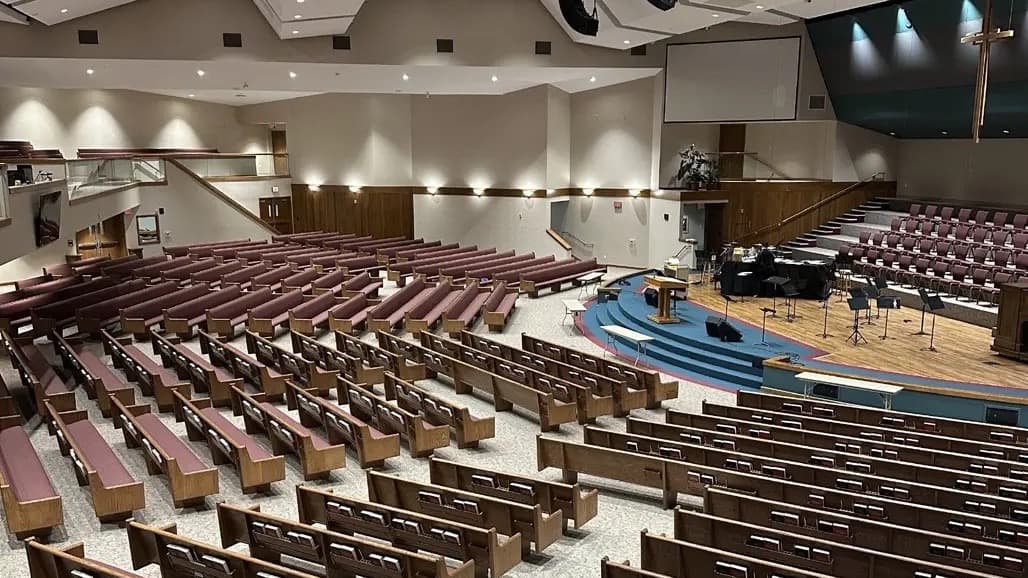
Why Sanctuary Lighting Is a Facility Management Priority for Pearland Churches
Pearland, Texas has grown into one of the most dynamic communities in the Greater Houston area — and its congregation base has grown right alongside it. With a population surpassing 128,000 and continued residential expansion into communities like Friendswood, Manvel, Alvin, and Shadow Creek Ranch, churches in and around Pearland are serving larger, more diverse memberships than ever before. Many of these congregations occupy buildings that were constructed or last renovated decades ago — and the lighting systems inside them are showing their age.
For facility managers and maintenance supervisors at churches in Pearland and the surrounding Brazoria County corridor, sanctuary lighting is rarely a one-time fix. It's an ongoing operational challenge that touches everything from weekend service quality to capital budget planning. Understanding the trends shaping church lighting today — and how they apply specifically to this region — can help facility leaders make smarter, longer-lasting decisions.
The Real Cost of Outdated Sanctuary Lighting
Traditional sanctuary lighting — incandescent, halogen, or fluorescent — carries a hidden cost that extends far beyond the price of a replacement bulb. In sanctuaries with vaulted ceilings, decorative chandeliers, or recessed cove lighting, accessing a burned-out fixture can require scaffolding, scissor lifts, or contracted lift equipment. For a busy church running multiple services each weekend, that kind of disruption is more than inconvenient — it's a recurring operational expense.
Common issues facility teams across the Greater Houston area regularly encounter include:
- Frequent relamping cycles in elevated or hard-to-reach fixtures, often requiring lift rentals or outside labor several times per year
- Flickering or dimming inconsistencies caused by aging ballasts or incompatible dimmer controls — a particular problem in sanctuaries that host livestreamed or recorded services
- Uneven light distribution that creates dark spots in seating areas, reduces visibility for congregation members, and compromises the quality of video production for online worship
- Rising energy consumption from inefficient legacy fixtures running extended hours across midweek programming, Sunday services, weddings, funerals, and community events
- Deferred maintenance cycles that accumulate into larger capital expenditures — a pressure familiar to any facility manager balancing a tight annual budget
The humidity and heat characteristic of Houston's Gulf Coast climate also accelerates fixture degradation, making light source longevity even more critical for churches in Pearland and neighboring communities like League City, Deer Park, and Webster.
What Modern LED Technology Means for Church Sanctuaries
The shift toward LED lighting in religious facilities is no longer an emerging trend — it's an established best practice with a well-documented track record. But the conversation has evolved significantly. Today's church lighting upgrades are less about swapping one bulb for another and more about rethinking how light functions within a worship environment.
Longevity that changes the maintenance equation. Modern LED sources rated at 50,000 hours or more dramatically reduce the frequency of relamping — transforming a semi-annual scaffolding project into a multi-year maintenance interval. For a facility team managing a sanctuary, fellowship hall, and multiple auxiliary spaces, that difference in labor demand is material.
Tunable white and dynamic color control. Many congregations today operate sanctuaries as multi-use environments — hosting traditional worship in the morning and contemporary services or community events in the evening. Tunable LED systems allow lighting levels and color temperature to be adjusted by scene without the need for physical fixture changes. This is particularly relevant for Pearland churches investing in production-quality livestreaming infrastructure, where consistent, controllable light is as important as audio or camera equipment.
Dimming compatibility and control system integration. Aging dimmer infrastructure is one of the most common sources of flickering complaints in sanctuaries. LED retrofits, when properly specified, include drivers and controls that are compatible with modern dimming protocols — eliminating the flicker and hum that plague older fluorescent or halogen dimming systems.
Energy performance at scale. The operational hours of a typical active congregation are substantial. When lighting runs six or seven days a week across multiple programs, even a modest improvement in fixture efficiency compounds into meaningful energy savings over time — a factor of real relevance to church CFOs and business administrators watching utility line items closely.
For those interested in how energy efficiency intersects with available financial incentives, the sibling article Maximize ROI with Commercial LED Lighting Rebates in Dallas, TX explores rebate structures and ROI frameworks in detail, and many of those principles apply to Greater Houston utility programs as well. Congregations also wrestling with legacy fluorescent infrastructure should consider reading Fluorescent Tube Bans and LED Lighting Rebates for context on regulatory timelines that may affect deferred upgrade decisions.
Considerations Unique to Church Facilities
Churches present a distinct set of facility challenges that differ from standard commercial or institutional buildings — and experienced contractors recognize those differences from the outset.
Historic and architectural sensitivity. Many older sanctuaries feature decorative fixtures, stained glass elements, or ornate architectural details that must be preserved throughout any lighting project. Retrofit approaches that protect architectural character while delivering modern performance require both technical expertise and genuine familiarity with ecclesiastical environments.
Minimal disruption windows. Unlike an office building or warehouse where crews can work during standard business hours, church sanctuaries are occupied for worship, rehearsal, and programming on multiple days each week. Effective project planning accounts for these calendar constraints and sequences work to avoid service interruptions.
Multi-zone complexity. A sanctuary lighting system rarely stands alone. Chancel and altar lighting, aisle and pew lighting, platform and stage lighting for musicians and speakers, balcony illumination, and lobby transitions all interact. Addressing only one zone without considering the whole often creates new inconsistencies rather than resolving existing ones.
Budget phasing. Many congregations cannot fund a complete sanctuary overhaul in a single fiscal year. Understanding how to phase a project strategically — prioritizing the highest-maintenance or highest-impact areas first — is an important planning skill that helps facility managers build internal support and manage cash flow responsibly.
Congregations exploring broader efficiency improvements alongside lighting may also find value in reviewing Energy Audits, Incentives, and Rebate Navigation for Businesses and Energy Efficient Church Lighting Upgrades, both of which address how holistic energy assessments can surface savings opportunities beyond the lighting system alone.
Procurement Options for Eligible Organizations
Some Pearland-area faith communities affiliated with schools, community development organizations, or government-adjacent entities may have access to cooperative purchasing programs that simplify the procurement process. Eligible organizations can leverage programs including AEPA, BuyBoard, TIPS, Sourcewell, Omnia Partners, PACE, Houston Church COOP, and Nebraska ESU Co-Op to access pre-negotiated contract vehicles — reducing administrative burden and ensuring procurement compliance. The Houston Church COOP in particular is designed specifically for faith communities in this region and is worth exploring for congregations evaluating larger-scale projects. Contact your local VOSS branch to learn more about which programs may apply to your organization.
Service Availability
While VOSS offers a comprehensive suite of national services, specific capabilities may vary by location. Please contact your local branch to confirm the current availability of specific services, technology solutions, or contracting capabilities in your immediate market.
Connect With VOSS in Pearland and the Greater Houston Area
VOSS serves congregations throughout Pearland, Friendswood, Manvel, Alvin, League City, Deer Park, Webster, and the broader Greater Houston region from our local Houston branch. With more than 85 years of experience as a full-service commercial electrical contractor, we bring the technical depth and project management discipline to handle sanctuary lighting challenges of any complexity — from a targeted retrofit of hard-to-reach fixtures to a phased, multi-zone modernization across an entire campus.
If your congregation is experiencing any of the challenges described in this article — or simply evaluating what a more efficient, lower-maintenance lighting environment could look like — we'd welcome the opportunity to talk through the specifics of your facility.
VOSS — Houston Branch
(713) 996-8060
Reach out to schedule a facility consultation with our team. We're here to help you understand your options, not just sell you a solution.