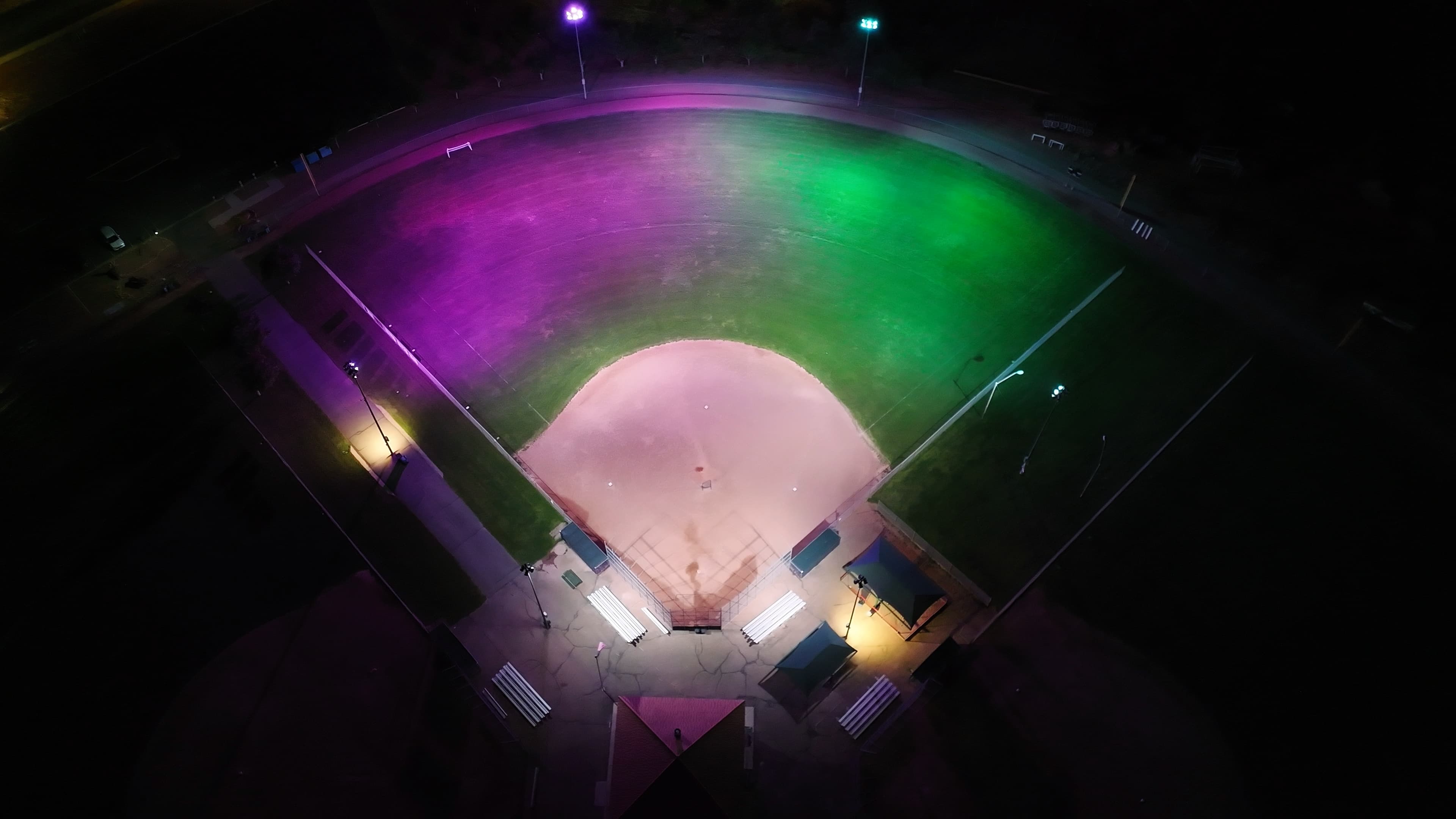
Why Pearland's Baseball Community Is Ready for an LED Moment
Pearland has become one of the most dynamic and fastest-growing communities in the Greater Houston region. With a population approaching 128,000 and steady residential expansion pushing into Manvel, Friendswood, and Shadow Creek Ranch, the demand for high-quality recreational infrastructure has never been greater. Baseball and softball are central to that fabric — from youth rec leagues and travel ball programs to high school varsity competition at facilities throughout Brazoria County.
Yet many of the fields serving Pearland's athletes were built during an era when metal halide and HPS lighting were the only options. Those systems are aging, energy-intensive, and increasingly difficult to maintain. The transition to LED sports lighting isn't just a technology upgrade — it's a strategic investment in the long-term viability of athletic facilities and the communities that depend on them.
As LED adoption accelerates across facilities in Missouri City, League City, Sugar Land, and the broader South Houston corridor, Pearland facility operators and parks administrators are asking the right questions: What does a modern baseball lighting upgrade actually involve? What results can we expect? And who has the expertise to get it right?
What Makes Baseball Lighting Uniquely Demanding
Not all sports lighting challenges are created equal. Baseball and softball present a distinct set of design requirements that separate a well-engineered system from a generic one.
The geometry of a baseball field — with its irregular fair territory, varying outfield depths, and the critical sight lines between pitcher and batter — demands precise photometric modeling before a single pole goes in the ground. Glare control is paramount: a batter tracking a 90-mph fastball or a fielder reading a fly ball against a night sky has zero tolerance for poorly aimed or excessive luminance.
Key design considerations for any baseball or softball lighting project include:
- Pole placement and mounting height — determining the right number of poles, their positions relative to the foul lines and outfield fence, and the mounting heights necessary to achieve the required foot-candle levels without creating blind spots
- Uniformity ratios — professional and competitive standards require that light be distributed evenly across the playing surface, minimizing the contrast between bright and dim zones that can impair player performance
- Glare management — optically engineered LED fixtures with precise beam control reduce spill light and direct glare, protecting both players and neighboring properties
- League and governing body compliance — from Little League International and NFHS high school standards to NCAA and professional specifications, each level of play carries its own lighting requirements
- Spill and obtrusive light control — especially relevant for Pearland's residential growth areas, where fields are increasingly proximate to neighborhoods
This is why sports lighting is a specialty discipline — and why the design phase is just as important as the installation itself.
Proven Results: What LED Upgrades Deliver in the Field
The shift from legacy sports lighting to modern LED systems consistently produces measurable outcomes across four dimensions: energy performance, light quality, operational control, and long-term cost of ownership.
Energy and Cost Efficiency
LED fixtures consume significantly less energy than the metal halide systems they replace. For a multi-field baseball complex operating evening games several nights per week across a spring and summer season, the cumulative energy reduction can be substantial. Lower kilowatt-hour consumption translates directly to reduced utility costs — a meaningful budget consideration for public parks departments and independent facility operators alike.
Light Quality and Player Experience
Modern LED sports lighting systems produce a consistent, high-CRI (Color Rendering Index) white light that improves depth perception and color contrast on the field. Players, coaches, and umpires benefit from a visually cleaner environment. Broadcast-quality facilities gain the high, stable illumination levels that cameras require. And fans — whether at a packed varsity game at a Pearland ISD facility or a Saturday morning travel ball tournament — experience a more vibrant atmosphere.
Instant Performance and Controls Integration
Unlike metal halide systems that require a 15–20 minute warm-up period and cannot be easily dimmed, LED fixtures deliver full brightness instantly. This is practically significant for facilities managing rain delays, multi-game schedules, or broadcast windows. When paired with smart lighting controls — programmable schedules, remote monitoring, and zone-based dimming — facility managers gain a level of operational flexibility that legacy systems simply cannot provide. Controls integration is explored further in our related content on sports lighting controls and energy-efficient field lighting strategies.
Reduced Maintenance Burden
LED fixtures carry significantly longer rated lifespans than metal halide sources. For parks departments and school districts managing large athletic campuses, fewer lamp replacements mean lower maintenance labor costs and less operational disruption during active seasons.
A Proof Point: LED Baseball Lighting in Page, AZ
VOSS's experience with baseball and softball LED lighting extends to real, completed projects — including work in Page, Arizona, where we delivered a professional-grade LED lighting upgrade for a baseball facility. That project demonstrated the full arc of what a well-executed sports lighting engagement looks like: photometric design to confirm compliance with applicable standards, engineered pole and fixture specifications, installation and commissioning, and a final system that measurably improved the playing environment while reducing energy consumption.
Projects like Page, AZ reinforce a core principle: sports lighting outcomes are determined by the quality of the engineering and execution, not just the fixtures themselves. That's the standard we bring to every project, whether it's a single Little League field in Brazoria County or a multi-diamond complex serving a regional tournament host.
Who Benefits from a Baseball Lighting Upgrade in Pearland?
The conversation around LED sports lighting touches a broad range of stakeholders across the Greater Houston area. Understanding how this topic applies to different decision-makers helps clarify what questions to ask and what outcomes to prioritize.
Parks and Recreation Administrators managing Pearland city facilities or Brazoria County parks are balancing capital project budgets, energy costs, and community expectations. For this audience, the ROI case — lower operating costs, reduced maintenance, longer asset life — is central. Eligible public agencies may also have access to cooperative purchasing programs such as BuyBoard, TIPS, Sourcewell, and Omnia Partners, which can streamline procurement and reduce administrative burden on public-sector lighting projects.
School District Facilities Directors overseeing athletic campuses at Pearland ISD or Alvin ISD are responsible for maintaining safe, compliant facilities for student-athletes and the community events those fields host. LED upgrades that meet NFHS or UIL standards while reducing utility spend are a strong fit for bond-funded or deferred maintenance capital programs. Cooperative purchasing vehicles like AEPA and PACE may be available to qualifying educational institutions.
Private Facility Operators and Tournament Directors — including those running travel ball complexes, training academies, and multi-use sports parks throughout the South Houston region — are focused on player experience, competitive positioning, and the ability to host high-profile events. Modern LED lighting is increasingly a prerequisite for attracting premier tournaments and maximizing evening scheduling revenue.
Youth League Boards and Nonprofit Organizations running recreational baseball and softball programs in communities like Friendswood, Manvel, and Alvin often operate with constrained budgets but real facility needs. Understanding available utility incentives and financing structures is key for these organizations, and VOSS can help navigate those options.
VOSS and the Greater Houston Market
VOSS operates a full-service branch in Houston, giving Pearland-area clients direct access to a local team with the technical depth and project management capabilities to handle sports lighting engagements of any scale. From initial site assessment and photometric design through permitting, installation, and commissioning, we manage the entire project lifecycle — so facility owners aren't coordinating between multiple vendors.
Our work spans the broader South Texas and Gulf Coast region, and we understand the specific conditions — heat, humidity, coastal air quality — that influence fixture selection, pole foundation design, and long-term system durability in this climate.
This article is part of VOSS's Latest Lighting content series, which covers topics ranging from LED gymnasium and pickleball court lighting to outdoor parking lot upgrades, utility rebate navigation, and EV charging infrastructure. Readers interested in how sports lighting connects to broader energy management strategy may find our related content on energy audits, incentives, and rebate navigation a useful companion resource.
Service Availability
While VOSS offers a comprehensive suite of national services, specific capabilities may vary by location. Please contact your local branch to confirm the current availability of specific services, technology solutions, or contracting capabilities in your immediate market.
Let's Talk About Your Facility
Whether you're managing a single youth baseball field in Pearland or planning a multi-diamond complex upgrade across the Greater Houston area, the right conversation starts with understanding your facility's specific needs — playing levels, scheduling demands, budget structure, and long-term operational goals.
We invite you to connect with our Houston team to discuss how a modern LED lighting strategy can improve the player and fan experience at your facility while delivering measurable operational benefits.
VOSS Houston Branch Phone: (713) 996-8060