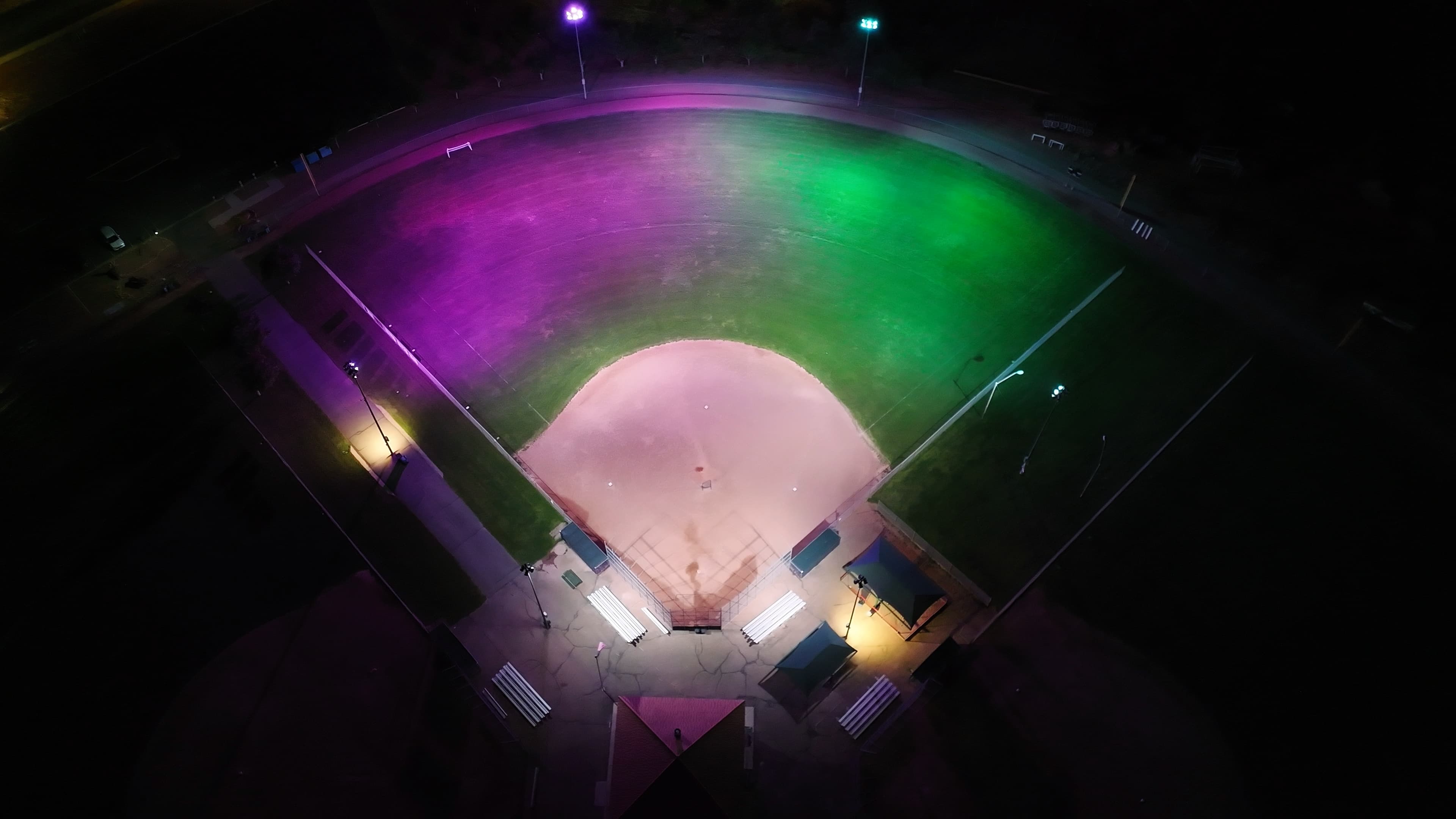
Why Baseball LED Lighting Is a Game-Changer for Houston-Area Facilities
Baseball and softball have deep roots in the Houston metro area. From youth recreation leagues in Pasadena and Deer Park to high school programs in La Porte, Baytown, and League City, the Greater Houston region supports an enormous volume of organized play — and the facilities that host those games are under increasing pressure to modernize. For parks and recreation departments, school districts, and private facility operators, the question is no longer whether to upgrade to LED sports lighting, but when and how to do it right.
The shift to LED technology in athletic field lighting isn't simply a trend — it reflects a fundamental change in what players, coaches, officials, and fans expect from a well-run facility. High-quality baseball LED lighting provides the kind of consistent, uniform illumination that older metal halide and high-pressure sodium systems simply cannot match. Shadows in the infield, washed-out outfields, and the long warm-up delays of legacy lighting are operational liabilities that today's LED systems eliminate entirely.
For facility operators across Pasadena, South Houston, Friendswood, Pearland, and the surrounding communities, this is an inflection point worth understanding — because the decisions made now will shape the performance and operating costs of these fields for the next two to three decades.
What Sets Baseball Lighting Apart from Other Sports
Not all sports lighting challenges are created equal. Baseball and softball present a unique set of engineering demands that distinguish them from arena-based sports like basketball or indoor volleyball — topics explored in our related articles on LED gymnasium lighting and court transformation. Outdoor field sports introduce variables that require careful photometric planning and precise execution.
The geometry of baseball is unlike any other sport. A standard diamond, warning track, outfield fence, and bullpen create irregular zones of play that must all be lit to appropriate and consistent foot-candle levels. The batter's box, in particular, demands careful attention — a batter must be able to track a pitch traveling at high speed from the mound, meaning light quality, uniformity, and glare control are not optional refinements but essential safety and performance factors.
Key design considerations for baseball and softball field LED lighting include:
- Pole placement and height — Properly engineered systems position poles to maximize field coverage while minimizing spill light into neighboring properties and residences, a significant concern in dense suburban communities like those throughout east Harris County and Galveston County
- Uniformity ratios — League standards from organizations including Little League International, NFHS, and the NCAA specify minimum uniformity ratios to ensure consistent play conditions across all zones of the field
- Glare control — Advanced LED optics direct light precisely where it's needed, reducing glare for batters, outfielders, and broadcast cameras — a critical factor for facilities hosting televised or streamed events
- Color rendering — High Color Rendering Index (CRI) values make it easier for players to track the ball against the sky and differentiate field markings, improving both performance and safety
Understanding these factors is what separates a well-engineered LED retrofit from a simple fixture swap — and it's why the expertise of an experienced sports lighting contractor matters enormously at the planning stage.
The Real-World Case for LED: Lessons from Page, AZ
One of the most instructive examples of what a thoughtful LED baseball lighting upgrade can accomplish comes from a project VOSS completed in Page, Arizona. This community-level project illustrates the tangible outcomes that cities and park systems across the country — including municipalities throughout the Greater Houston area — can realistically expect when they approach LED sports lighting with a strategic, engineered mindset.
The Page project demonstrated how LED technology, properly designed and installed, delivers on multiple fronts simultaneously: measurable reductions in energy consumption, improved field visibility for players and officials, and reduced maintenance demands that free up already-stretched public works and parks staff. For a community baseball facility, those operational savings compound over time into a genuinely compelling financial case.
For Pasadena-area decision-makers — whether in the city's Parks and Recreation Department, at one of the many independent school districts serving Harris County, or at a private sports complex operator — the takeaway is consistent: LED baseball field lighting is not a luxury upgrade. It is a durable, cost-justified investment that improves outcomes for every stakeholder involved, from the youth player stepping into the batter's box to the facility manager reviewing the utility bill at the end of the month.
Facilities in communities like Webster, Seabrook, Manvel, and Alvin are evaluating similar projects right now. The operational logic is the same regardless of scale.
Controls, Connectivity, and the Smart Field
Modern baseball LED lighting systems are increasingly integrated with controls platforms that extend their value well beyond simple on/off operation. For facility managers overseeing multiple fields or athletic complexes — a common scenario in larger park systems across the Greater Houston metro — intelligent lighting controls represent a meaningful operational upgrade.
Sports lighting controls platforms allow operators to:
- Schedule field lighting remotely — Eliminate wasted energy from fields left lit after games conclude, a surprisingly common and costly occurrence at busy recreational facilities
- Dim lights for practice versus game play — Different levels of play require different illumination levels; dimming capability allows facilities to match energy use precisely to operational needs
- Monitor system performance in real time — Advanced platforms provide alerts for outages, performance degradation, or maintenance needs before they become visible problems on game night
- Integrate with access control and facility management systems — Connecting lighting to broader facility infrastructure is an increasingly common expectation for modern sports venues
For readers interested in how controls integration fits into broader facility electrification strategy, our related content on commercial LED outdoor lighting and energy audits and rebate navigation provides useful context.
Funding, Rebates, and Cooperative Purchasing in Texas
One of the most frequently overlooked aspects of LED sports lighting projects is the availability of financial incentives that can materially improve project economics. For facility operators in Pasadena and across the Greater Houston region, these programs are worth understanding early in the planning process — before budgets are finalized and project scopes are set.
Utility rebate programs offered by providers serving the Houston metro area often include incentives for commercial and institutional LED upgrades, including outdoor sports lighting. The specific availability and structure of these programs evolves regularly, and working with an experienced contractor who understands how to navigate rebate applications is a meaningful advantage.
For public agencies, school districts, and government entities in Texas, cooperative purchasing programs can simplify procurement significantly. Eligible organizations may be able to access VOSS services through established programs including BuyBoard, TIPS, Sourcewell, Omnia Partners, AEPA, and PACE — frameworks that streamline contracting while ensuring compliance with public procurement requirements. For parks departments and ISD athletic programs in Harris County, Galveston County, and surrounding areas, this can meaningfully reduce the administrative burden of bringing a lighting project to bid.
Our related article on maximizing ROI with commercial LED lighting rebates in Dallas, TX offers a useful framework for how these incentive structures typically work — many of the same principles apply in the Houston market.
Service Availability
While VOSS offers a comprehensive suite of national services, specific capabilities may vary by location. Please contact your local branch to confirm the current availability of specific services, technology solutions, or contracting capabilities in your immediate market.
Talk to VOSS About Your Baseball Lighting Project
Whether you're managing a single community field in Pasadena or overseeing a multi-diamond athletic complex serving communities across the Greater Houston area, VOSS brings the engineering depth, project management experience, and local presence to help you make the right decisions for your facility.
We invite you to start the conversation — not with a quote, but with a consultation. What are your current lighting challenges? What are your energy goals? What standards does your facility need to meet? Those answers shape every good lighting project, and we're here to help you work through them.
VOSS Houston Branch
Phone: (713) 996-8060
Our Houston team serves Pasadena, Deer Park, La Porte, Baytown, League City, Friendswood, Pearland, Webster, Seabrook, and communities throughout Harris County, Galveston County, and the broader Greater Houston metropolitan area.