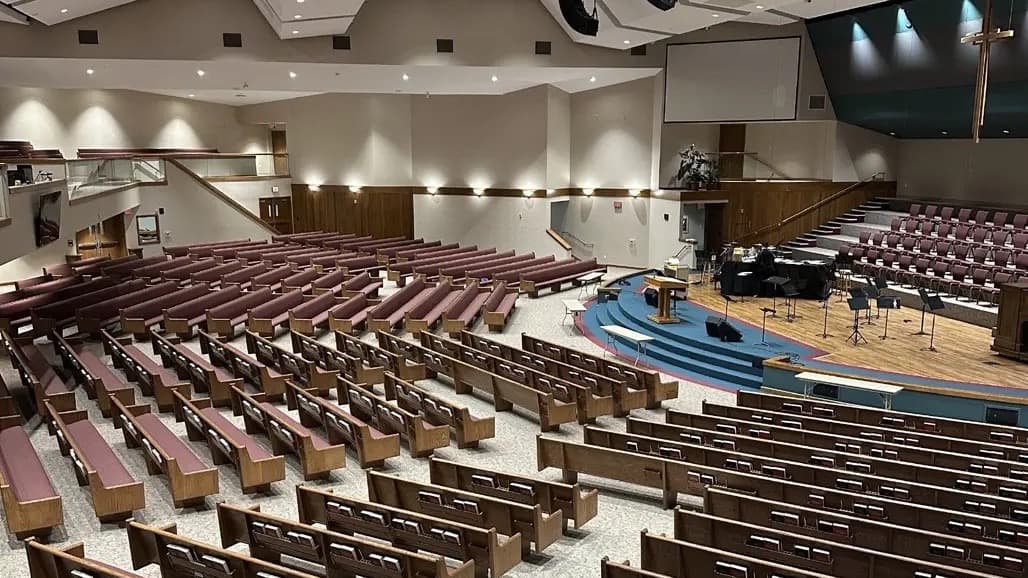
Why Sanctuary Lighting Is a Growing Concern for League City Churches
League City has experienced remarkable growth over the past two decades, expanding from a quiet bedroom community south of Houston into one of the fastest-growing cities in Texas, now home to more than 115,000 residents. With that growth has come a surge in congregation sizes, facility expansions, and the increasing complexity of managing large, multi-use worship spaces. Churches along the Gulf Freeway corridor and throughout the Clear Creek and Friendswood areas are discovering that the lighting infrastructure installed during earlier construction phases is simply no longer keeping pace with modern demands.
For facility managers and operations leaders at these churches, the problem often shows up in predictable ways: a chandelier or pendant fixture in the main sanctuary needs a bulb swap every few months, requiring a lift rental and a half-day of labor. Dimmer switches that once worked seamlessly now flicker or buzz during services. And the energy bill — particularly through the brutal Gulf Coast summer months — reflects an electrical system that was never designed with efficiency in mind.
These are not minor inconveniences. In a worship environment, lighting directly shapes the congregation's experience. Poor or inconsistent lighting can undermine the atmosphere of a service, create safety hazards for older congregants navigating aisles in low-light conditions, and increasingly affect the quality of livestream or video-recorded services — a consideration that has become standard for churches of virtually every size across the Houston region.
The Unique Maintenance Challenges of Church Sanctuaries
Sanctuary lighting is categorically different from standard commercial lighting, and it presents a distinct set of challenges that general electrical contractors may not fully appreciate. Understanding these challenges is the first step toward building a smarter, more sustainable maintenance strategy.
Elevated and Hard-to-Reach Fixtures Many sanctuaries in the League City area — whether traditional in design or more contemporary — feature high ceilings, vaulted roof lines, or decorative overhead structures that make routine bulb replacement a significant undertaking. Incandescent, halogen, and older fluorescent lamps in these positions can require scaffolding or aerial lift rentals multiple times per year, adding cost and disruption to an already stretched maintenance budget.
Aging Ballasts and Incompatible Dimming Systems Fluorescent fixtures installed in the 1990s or early 2000s typically rely on magnetic or early-generation electronic ballasts that are now aging out of their useful life. As these ballasts degrade, the symptoms are familiar: flickering lights, humming or buzzing sounds during quiet moments in a service, and fixtures that take longer and longer to reach full brightness. Compounding the issue, many older dimming systems are incompatible with modern LED drivers, which means a lighting upgrade must be approached holistically rather than as a simple one-to-one fixture swap.
Uneven Light Distribution Older lighting layouts were often designed without detailed photometric planning, resulting in bright spots near the front of the sanctuary and darker areas toward the back or along the sides. This uneven distribution affects both the visual comfort of congregants and the technical quality of any video or livestream production — a factor that churches in the greater Houston metro increasingly cannot afford to overlook.
Historic and Architectural Constraints Some established congregations in the League City and Galveston County area occupy buildings with architectural or historic significance, where modifications must be approached carefully to preserve the character of the space. Retrofitting these environments requires a contractor with the sensitivity and technical expertise to integrate modern lighting technology without compromising the aesthetic integrity of the sanctuary.
How LED Technology Is Changing the Equation for Church Facilities
The shift toward LED lighting in commercial and institutional settings is well documented, but its impact on church sanctuaries specifically deserves closer attention. Modern LED fixtures and retrofit systems offer a combination of benefits that align directly with the operational realities of a house of worship.
Dramatically Longer Lamp Life Where a standard incandescent or halogen bulb might last 1,000 to 2,000 hours, a quality LED source typically delivers 50,000 hours or more of rated life. For a sanctuary fixture in an elevated position, this difference is transformative — a lamp that once required replacement multiple times per year may now last a decade or longer without intervention. For facility teams managing lean staffing and tight schedules, this reduction in maintenance frequency is one of the most tangible benefits of an LED upgrade.
Energy Efficiency and Cost Reduction LED sources consume significantly less energy than the technologies they replace, a benefit that compounds over time and becomes especially meaningful during peak cooling season in Southeast Texas. Churches that run multiple services per week, host weekday programs, or operate production lighting for livestreaming are running their fixtures for substantial hours each year. An LED upgrade can meaningfully reduce the electrical load associated with lighting — and in Texas's deregulated energy market, where rate structures and pricing can vary, reducing consumption provides consistent, predictable savings regardless of the rate environment.
Improved Light Quality and Controllability Modern LED systems offer precise color temperature control, high color rendering index (CRI) values, and smooth, flicker-free dimming that older fluorescent or incandescent systems simply cannot match. For worship environments, this translates to more intentional lighting design: warmer, more intimate tones for traditional or contemplative services, brighter and more dynamic settings for contemporary worship or special events, and consistent, professional-grade illumination for video production. Paired with programmable control systems, a sanctuary lighting upgrade can give facility teams the ability to switch between preset scenes with a single button press — eliminating the manual adjustments that previously required staff time before every service.
Reduced Demand for Emergency Repairs Fewer burnouts, more predictable maintenance cycles, and more reliable components mean fewer after-hours calls and fewer instances of entering a service with a non-functioning fixture. For church administrators managing volunteers and lean operations teams, this reduction in reactive maintenance is a meaningful quality-of-life improvement.
Trends Shaping Church Lighting in the Greater Houston Area
Several broader trends are influencing how congregations across the Houston region — from League City and Webster to Friendswood, Pearland, and Clear Lake City — are approaching their lighting infrastructure decisions.
The Livestream and Hybrid Service Shift The normalization of hybrid worship — where a portion of the congregation attends in person and another portion joins via livestream or on-demand video — has created new technical demands on sanctuary lighting. Video cameras require consistent, high-CRI light sources with minimal flicker and adequate intensity to produce a professional-quality image. Many churches that upgraded their A/V systems in recent years are now discovering that their existing lighting is the limiting factor in video quality. LED systems designed with production lighting principles in mind are increasingly being specified as part of broader A/V and technology upgrades.
Fluorescent Lamp Phase-Outs Federal and state-level regulatory changes are accelerating the phase-out of certain fluorescent lamp types, creating a practical urgency for churches that have not yet transitioned to LED. Facilities that depend on T12 fluorescent tubes or specific compact fluorescent types are already finding these products harder to source. Proactive planning — rather than reactive scrambling when a lamp type becomes unavailable — is the approach that best protects a congregation's budget and operational continuity. Our article on the Fluorescent Tube Bans and LED Lighting Rebates topic in this series provides additional context for facility managers navigating these changes.
Energy Audits as a Strategic Starting Point Increasingly, church facility managers in the Houston area are turning to professional energy audits before committing to a lighting upgrade project. A well-executed audit identifies not just which fixtures are consuming the most energy, but also which areas of the building offer the greatest return on investment from an upgrade, and which utility incentives or rebate programs apply. VOSS's coverage of Energy Audits, Incentives, and Rebate Navigation for Businesses explores this process in greater depth and is a valuable companion resource for any congregation considering a significant lighting investment.
Cooperative Purchasing as a Path to Cost-Effective Procurement For church organizations that participate in cooperative purchasing programs, there may be a practical and cost-efficient pathway to procuring lighting upgrades and electrical services. Programs such as Houston Church COOP, BuyBoard, TIPS, Sourcewell, and Omnia Partners allow eligible organizations to leverage pre-negotiated contracts, reducing the administrative burden of competitive bidding while ensuring competitive pricing. Church facility managers and administrators should consult with their denominational or network leadership to determine which cooperative programs they may be eligible to access.
What a Thoughtful Sanctuary Lighting Upgrade Process Looks Like
The most successful church lighting projects share a common thread: they begin with a thorough assessment of the existing conditions and a clear understanding of the congregation's goals before any product is specified or installed. A well-managed upgrade process typically involves several key phases.
- Facility Walkthrough and Photometric Assessment: An experienced lighting contractor evaluates the existing fixtures, identifies maintenance pain points, measures current light levels, and maps areas of uneven illumination.
- Goal Alignment: Understanding how the space is used — worship services, events, livestreaming, community programs — shapes the lighting design. A one-size-fits-all approach rarely serves the diverse programming needs of a modern congregation.
- Retrofit vs. Full Replacement Planning: Not every fixture needs to be replaced. In many cases, a well-executed retrofit — replacing lamps and drivers within existing housings — can deliver substantial improvements at a fraction of the cost of a full fixture replacement. Where full replacement is warranted, proper specification ensures compatibility with the dimming and control systems already in place.
- Scheduling Around Congregation Activity: Churches operate on full schedules, and installation work must be planned to minimize disruption to services, rehearsals, and community programs. Low-disruption installation sequencing is essential for maintaining the trust of church leadership and congregants throughout the project.
- Training and Handoff: Facility teams should come away from any lighting project with a clear understanding of how to operate and maintain the new system, including how to use any control or scene-preset features introduced during the upgrade.
Service Availability
While VOSS offers a comprehensive suite of national services, specific capabilities may vary by location. Please contact your local branch to confirm the current availability of specific services, technology solutions, or contracting capabilities in your immediate market.
Talk to VOSS About Your Church Facility's Lighting Needs
VOSS has served commercial and institutional facilities across the United States for more than 85 years, and our Houston branch team brings deep familiarity with the churches, community organizations, and facility environments of League City, Galveston County, and the greater Southeast Texas region. Whether your congregation is dealing with a persistent maintenance challenge, planning a sanctuary renovation, or simply looking to understand what a modern LED upgrade could mean for your operations and budget, we welcome the conversation.
We approach every engagement as a partner, not a vendor — starting with listening, asking the right questions, and helping you build a path forward that fits your congregation's timeline, priorities, and resources.
VOSS Houston Branch Phone: (713) 996-8060
Reach out to our Houston team to schedule a facility consultation and learn how we can help your church create a sanctuary lighting environment that serves your congregation well for years to come.