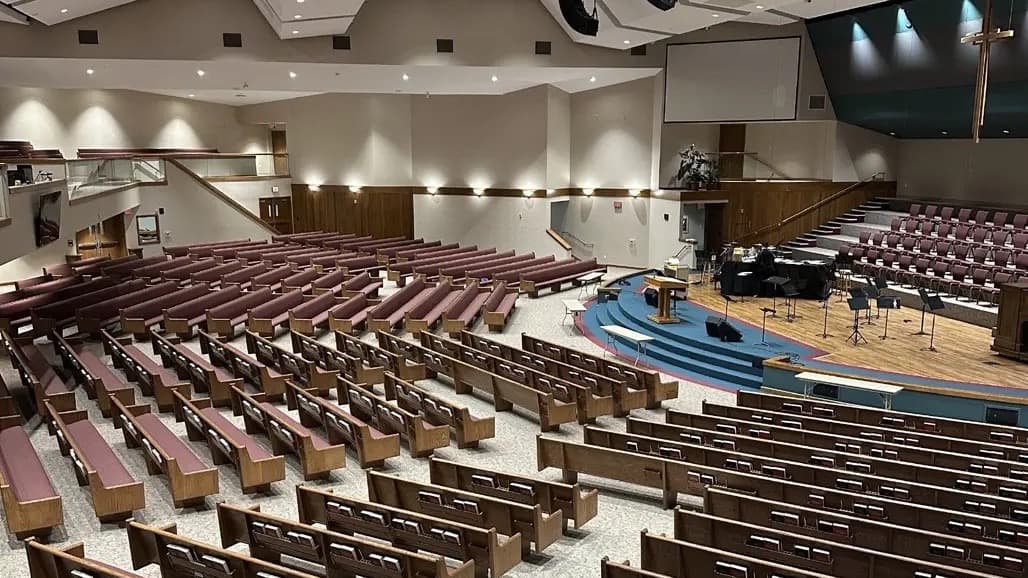
Why Sanctuary Lighting Is a Growing Priority for Houston-Area Churches
Greater Houston is home to one of the most vibrant and diverse faith communities in the United States. From large megachurches along the Katy Freeway corridor and in Sugar Land to historic congregations in Midtown and The Woodlands, and neighborhood churches across Pasadena, Pearland, Humble, and Baytown — houses of worship here run the full spectrum of size, age, and architectural style. What they share is a common operational reality: maintaining a sanctuary that serves its congregation well, week after week, is no small task.
Lighting sits at the intersection of nearly every challenge a church facility manager faces. It affects safety, worship atmosphere, energy costs, and — increasingly — the quality of livestreamed services that reach members who can't be present in person. Yet because lighting tends to fail gradually rather than catastrophically, it often falls to the bottom of the maintenance priority list until the problems become impossible to ignore.
That's beginning to change. Across the Houston metro, facility managers and ministry leaders are taking a more proactive, strategic approach to sanctuary lighting — not just replacing bulbs as they burn out, but rethinking their entire lighting infrastructure for the decade ahead.
The Most Common Sanctuary Lighting Problems — and Why They're Worse Than They Look
Church sanctuaries present a unique set of maintenance challenges that most commercial buildings simply don't encounter. Understanding why these problems develop is the first step toward solving them durably.
High Ceilings and Hard-to-Reach Fixtures
Many sanctuaries — particularly traditional Gothic, A-frame, or cathedral-style buildings found throughout Houston's older neighborhoods — feature ceiling heights of 30, 40, or even 60 feet. Replacing a single burned-out bulb in a fixture that high requires renting a lift, scheduling a crew, and potentially disrupting services or mid-week programming. When this happens multiple times per year across dozens of fixtures, the labor and disruption costs add up quickly — often far exceeding the cost of a full LED retrofit.
Aging Ballasts and Flickering Issues
Fluorescent and metal halide fixtures installed in the 1990s and early 2000s are now well past their expected service life. Failing ballasts cause flickering and buzzing — distracting during worship, problematic for video recording, and a sign that total fixture failure is not far off. This is particularly relevant for Houston congregations that installed these systems during the region's rapid suburban expansion in that era.
Incompatible Dimming Systems
Many sanctuaries use theatrical or preset dimming systems to create different lighting moods for worship, prayer, and events. Older dimmer technology is often incompatible with newer LED lamps, causing flickering, buzzing, or failure to dim smoothly. A piecemeal approach — swapping bulbs without addressing the dimmer infrastructure — frequently makes the problem worse.
Uneven Illumination and Poor Video Quality
Congregations in the Houston area have increasingly embraced video production, livestreaming, and hybrid worship formats. Uneven light levels, harsh shadows, or color temperature inconsistencies that were tolerable to the naked eye become glaring problems on camera. Facility managers are now being asked to solve what is fundamentally a technical lighting problem with production quality implications.
Rising Energy Costs
CenterPoint Energy serves the majority of Greater Houston's commercial customers, and energy costs remain a meaningful line item for any operating budget. Sanctuaries with traditional incandescent, halogen, or T8 fluorescent systems can consume significantly more energy than their LED equivalents. For a large congregation running multiple services, rehearsals, and events each week, that difference compounds quickly over the course of a year.
The Case for LED Retrofits: More Than an Energy Play
When facility managers think about LED lighting upgrades, the conversation often starts — and sometimes stops — with energy savings. And while those savings are real and measurable, the full value of a modern LED retrofit for a church sanctuary goes well beyond the utility bill.
Extended Lamp Life Reduces Maintenance Burden
Quality LED fixtures designed for church and auditorium applications are rated for 50,000 hours or more of operation. Compare that to a metal halide lamp rated for 10,000–15,000 hours, or a halogen PAR lamp at 2,000–4,000 hours, and the math becomes clear: a well-executed LED retrofit can eliminate the need for routine re-lamping for a decade or longer. For a facility team already stretched thin, that represents a meaningful reduction in workload and unplanned disruptions.
Improved Worship Atmosphere
Modern LED technology offers precise control over color temperature and intensity in ways that older lamp technologies simply cannot match. Warm white LEDs in the 2700K–3000K range create the inviting, reverent atmosphere most sanctuaries seek, while maintaining consistent color rendering across the entire space. Programmable scene controls allow a single operator to shift the sanctuary from a bright, uplifting Sunday morning setup to a candlelit-feeling Good Friday service with a single button press.
Livestream and Broadcast Readiness
For Houston congregations investing in video ministry — whether that's a full production team or a single-camera livestream — consistent, high-CRI (Color Rendering Index) lighting is not optional. LED systems with CRI ratings of 90 or higher render skin tones accurately and eliminate the color casts that older lamp technologies introduce. This directly improves production quality without requiring additional camera equipment or post-production correction.
Resilience After Weather Events
Houston's climate presents challenges that facility managers in other markets don't face to the same degree. High humidity, flooding events, and the occasional freeze can stress aging electrical infrastructure. A comprehensive lighting upgrade is also an opportunity to assess and address fixture housings, wiring connections, and control systems that may have been compromised by moisture exposure over the years.
What a Modern Church Lighting Upgrade Actually Looks Like
A successful sanctuary lighting upgrade is not a one-size-fits-all project, and it rarely happens overnight. The most effective approaches follow a disciplined process that respects the unique nature of a worship environment.
Start with an Assessment
Before any fixtures are specified or purchased, a thorough lighting audit establishes the baseline: current fixture types, lamp technologies, control systems, ceiling heights, natural light sources, and the congregation's specific functional needs. For churches with multiple use spaces — sanctuaries, fellowship halls, classrooms, and exterior parking — this assessment should cover the entire facility.
Address Controls Alongside Fixtures
One of the most common missteps in church lighting projects is upgrading fixtures while leaving an outdated control system in place. Modern LED fixtures paired with a contemporary dimming and scene control platform unlock capabilities that older systems never offered — preset scenes, smartphone or tablet control, occupancy-based automation, and integration with audiovisual systems. Addressing controls as part of the upgrade plan, rather than as an afterthought, delivers a dramatically better long-term outcome.
Plan Around the Ministry Calendar
Houston churches maintain busy, year-round programming calendars. A well-coordinated lighting upgrade is designed to work around that schedule — staging installation phases to avoid major holidays, seasonal series, and community events. Many projects are completed in sections, with the main sanctuary addressed in phases so that worship services are never interrupted.
Plan for Ongoing Maintenance
Even with LED's extended lamp life, a proactive maintenance plan remains important — particularly for fixtures in hard-to-reach locations. Establishing a periodic inspection and group relamping schedule (replacing fixtures in a zone before they fail, rather than one at a time) dramatically reduces the frequency and disruption of lift mobilizations over time.
Trends Shaping Church Lighting in the Houston Region
Several broader trends are influencing how Houston-area congregations approach their lighting infrastructure decisions right now.
Utility Incentive Programs
Energy efficiency incentive programs available through Texas utilities and third-party administrators can meaningfully offset the upfront cost of a lighting upgrade. Eligible organizations — including churches and nonprofit facilities — should explore what programs may be available to them. Our related article on Maximize ROI with Commercial LED Lighting Rebates in Dallas, TX covers the rebate landscape in detail and offers a useful framework for understanding how these programs work across Texas markets.
The Phase-Out of Fluorescent Lighting
Federal regulations are accelerating the transition away from fluorescent lamp technology, affecting T8, T12, and compact fluorescent products. Congregations that have been deferring lighting decisions may find their options narrowing as fluorescent lamps become less available and more expensive. Our article on Fluorescent Tube Bans and LED Lighting Rebates provides a thorough overview of what these regulatory changes mean for facilities that haven't yet made the switch.
Energy Audits as a Starting Point
For ministry leaders who aren't sure where to begin, a professional energy audit provides a data-driven foundation for prioritizing investments. Our Energy Audits, Incentives, and Rebate Navigation for Businesses article explores how this process works and how it can inform a multi-year capital improvement plan — a useful reference for any congregation in the Greater Houston area weighing a phased approach to facility upgrades.
Cooperative Purchasing for Eligible Organizations
For Houston-area churches and faith-based organizations that may qualify, cooperative purchasing programs can simplify procurement and reduce project costs. Programs such as Houston Church COOP, BuyBoard, TIPS, Sourcewell, and Omnia Partners offer pre-negotiated contract vehicles that eligible organizations can use to access commercial lighting services without a standalone competitive bid process. Speak with your local VOSS representative to learn whether your organization qualifies and which program best fits your project.
Service Availability
While VOSS offers a comprehensive suite of national services, specific capabilities may vary by location. Please contact your local branch to confirm the current availability of specific services, technology solutions, or contracting capabilities in your immediate market.
Talk to a Local Expert About Your Sanctuary
VOSS has been a trusted partner for commercial and institutional facilities for more than 85 years, and our Houston team brings that depth of experience to churches and faith-based organizations across the Greater Houston area — from the Inner Loop to Katy, Cypress, The Woodlands, League City, and beyond.
If your congregation is dealing with frequent bulb replacements, flickering fixtures, inconsistent light levels, or simply aging infrastructure that's overdue for an upgrade, we'd welcome the opportunity to walk through your facility and talk about what's possible.
VOSS — Houston Branch
Phone: (713) 996-8060
Reach out to start a conversation with our local team. We're here to help you understand your options — not to push a predetermined solution.