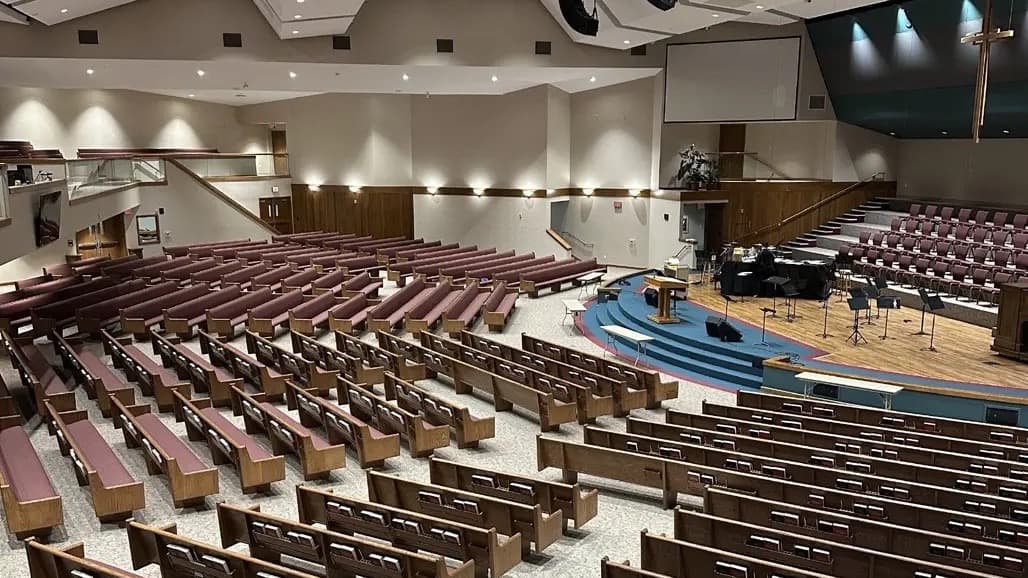
Why Dallas-Area Churches Are Rethinking Sanctuary Lighting
The Greater Dallas metroplex is home to one of the most vibrant and diverse faith communities in the United States. From historic congregations in Oak Cliff and East Dallas to growing suburban campuses in Plano, Frisco, McKinney, Allen, and Garland, churches across North Texas range from century-old sanctuaries with soaring vaulted ceilings to modern multi-building worship campuses serving thousands of weekly attendees.
What many of these facilities share — regardless of size or style — is the mounting pressure of aging lighting infrastructure. Traditional incandescent, halogen, and fluorescent fixtures that were standard installations a generation ago were never designed for today's operational demands: extended service hours, livestreamed worship services, midweek programming, and growing congregations that use their buildings seven days a week.
In a region where summer temperatures regularly exceed 100°F, heat-generating legacy fixtures also contribute to cooling loads in large sanctuaries — a detail that matters when utility costs in North Texas are a consistent operational pressure point. For facility managers and administrators across Dallas, Denton, Irving, Richardson, and the broader DFW corridor, lighting is increasingly recognized not just as a maintenance line item, but as a strategic facility investment.
The Real Maintenance Challenges Inside Church Sanctuaries
Understanding the specific pain points of sanctuary lighting helps facility teams prioritize the right solutions. The challenges go beyond a burned-out bulb — they involve structural, operational, and financial dimensions that compound over time.
Access and Height Many Dallas-area sanctuaries feature dramatic architectural elements — coffered ceilings, exposed trusses, decorative pendants, or recessed coves that can sit 30 to 60 feet above the floor. Every bulb replacement in these fixtures requires scheduling a lift crew, coordinating around services and events, and managing safety protocols. When bulbs burn out frequently, this becomes a recurring disruption that taxes maintenance staff and budgets alike.
Ballast and Dimmer Incompatibility Older fluorescent and halogen systems rely on ballasts and dimmer controls that degrade over time. As these components age, flickering, buzzing, and color inconsistency become increasingly common. In worship environments where lighting sets the atmosphere for prayer, reflection, and celebration, these quality issues are noticeable to every person in the room.
Livestream and Video Production Demands The rapid adoption of livestreamed services across DFW congregations — accelerated significantly in recent years — has exposed a new lighting challenge: legacy fixtures were not designed with camera performance in mind. Uneven illumination, color temperature inconsistency, and insufficient foot-candle levels all translate directly into poor video quality, which affects a congregation's ability to reach and serve its online audience.
Energy Costs and Budget Pressure North Texas utility rates and the energy intensity of large sanctuary spaces make lighting a meaningful driver of operating costs. Churches running multiple services, events, and community programs throughout the week find that legacy fixtures — which often consume three to five times the wattage of modern LED equivalents — represent a significant and addressable budget inefficiency.
What Modern LED Upgrades Deliver for Faith Communities
The transition to LED technology in sanctuary environments is well past the experimental stage. Across the country, faith communities of every size and denomination have completed LED retrofit projects that deliver measurable, sustained improvements — and the technology continues to mature rapidly.
Extended Lamp Life and Reduced Maintenance Frequency Modern LED fixtures are rated for 50,000 hours or more of operational life — a figure that translates to decades of use in typical church settings. For facilities in Mesquite, Carrollton, Lewisville, and Grand Prairie where maintenance staff is lean and budget cycles are tight, that reduction in replacement frequency is one of the most immediately felt benefits of an upgrade.
Precise Dimming and Scene Control Contemporary LED dimming systems allow facility teams to program distinct lighting scenes for different moments in a worship service — full illumination for congregational singing, softer ambient settings for prayer, or dramatic focal lighting for special ceremonies. These scenes can be recalled instantly with a single button or through an integrated control system, eliminating the need for manual adjustments during services.
Improved Color Rendering and Visual Comfort LED technology has advanced significantly in color rendering — modern fixtures achieve CRI (Color Rendering Index) ratings of 90 or above, meaning colors appear rich, accurate, and natural to the human eye. For sanctuaries with stained glass, decorative finishes, or detailed architectural elements, this improvement in light quality can genuinely transform the visual experience of the space.
Livestream-Ready Illumination Properly designed LED systems deliver consistent, even illumination across the platform and congregation areas, with color temperatures that perform well on camera. For churches investing in video production and online ministry, lighting quality is a direct contributor to the professionalism and reach of their digital presence.
Navigating the Upgrade Process: What Facility Teams Should Know
A sanctuary lighting upgrade is not a plug-and-replace project. Thoughtful planning — particularly in historic or architecturally significant buildings — makes the difference between a smooth installation and a disruptive one.
Auditing the Existing System The starting point for any upgrade is a thorough assessment of current fixtures, wiring, ballasts, control systems, and structural access points. This audit informs fixture selection, identifies any electrical infrastructure that needs attention before new fixtures are installed, and establishes the baseline data needed to calculate future energy savings.
Phased Implementation Many Dallas-area congregations cannot accommodate a full sanctuary shutdown for an extended installation period. A phased approach — addressing the most critical or highest-maintenance fixtures first, then completing the project in subsequent phases during low-activity periods — allows upgrades to proceed without disrupting regular services or programming.
Historic and Architectural Sensitivity Older congregations in neighborhoods like Bishop Arts, Lakewood, or downtown Dallas may have historic buildings where fixture changes require careful coordination with preservation guidelines or denominational standards. Experienced lighting contractors understand how to work within these constraints while still delivering meaningful performance improvements.
Incentives and Rebate Opportunities Energy efficiency incentives can meaningfully offset the upfront investment in LED upgrades. Eligible organizations in the Greater Dallas area should explore available utility rebate programs, as well as federal tax incentives and financing options that can improve project economics. Our related article on Maximize ROI with Commercial LED Lighting Rebates in Dallas, TX covers this topic in greater depth and is a valuable companion resource for any congregation beginning the planning process.
For churches and faith-based organizations affiliated with public institutions or cooperative purchasing networks, it's also worth noting that several cooperative procurement programs — including TIPS, BuyBoard, Sourcewell, Houston Church COOP, and PACE — may be available to eligible organizations, offering a streamlined path to engaging qualified contractors and potentially simplifying the procurement process.
VOSS and the Greater Dallas Faith Community
VOSS has worked with a wide range of institutional and faith-based facilities across the United States, bringing a practical, low-disruption approach to lighting upgrades in environments where operational continuity is non-negotiable. Our Dallas branch serves congregations throughout the metroplex — from Denton and Lewisville in the north to Cedar Hill and DeSoto in the south, and from Fort Worth in the west to Rockwall and Wylie in the east.
Our approach begins with listening. Every congregation has unique architectural characteristics, operational rhythms, and budget realities. We don't apply a one-size-fits-all solution — we work with facility teams and church leadership to develop a scope that fits the building, the budget, and the community's long-term vision.
For facility managers navigating aging infrastructure, our focus is practical: reduce maintenance burden, extend fixture life, and deliver a lighting environment that genuinely serves the congregation. For administrators focused on cost management, we ground our recommendations in real energy performance data and available incentive programs. And for worship leaders and production teams concerned about the in-room and on-camera experience, we bring lighting design expertise that goes beyond simple efficiency.
Additional resources in our Latest Lighting series — including our article on Energy Efficient Church Lighting Upgrades and our guide on Fluorescent Tube Bans and LED Lighting Rebates — offer further context on the regulatory and economic trends shaping commercial lighting decisions for churches and nonprofits across North Texas.
Service Availability
While VOSS offers a comprehensive suite of national services, specific capabilities may vary by location. Please contact your local branch to confirm the current availability of specific services, technology solutions, or contracting capabilities in your immediate market.
Talk With Our Dallas Team
If your congregation is experiencing maintenance challenges, rising energy costs, or quality concerns with your current sanctuary lighting, we'd welcome the opportunity to have a straightforward conversation about what options may be available for your facility.
Our Dallas branch team is here to help — whether you're in the early stages of exploring an upgrade or ready to move forward with a formal assessment.
VOSS — Dallas Branch
Phone: (972) 432-8367 Toll-Free: (800) 736-8677
Reach out to schedule a consultation with a member of our local team. We'll listen first, ask the right questions, and help you understand what a lighting upgrade could realistically mean for your facility — on your timeline and within your budget.