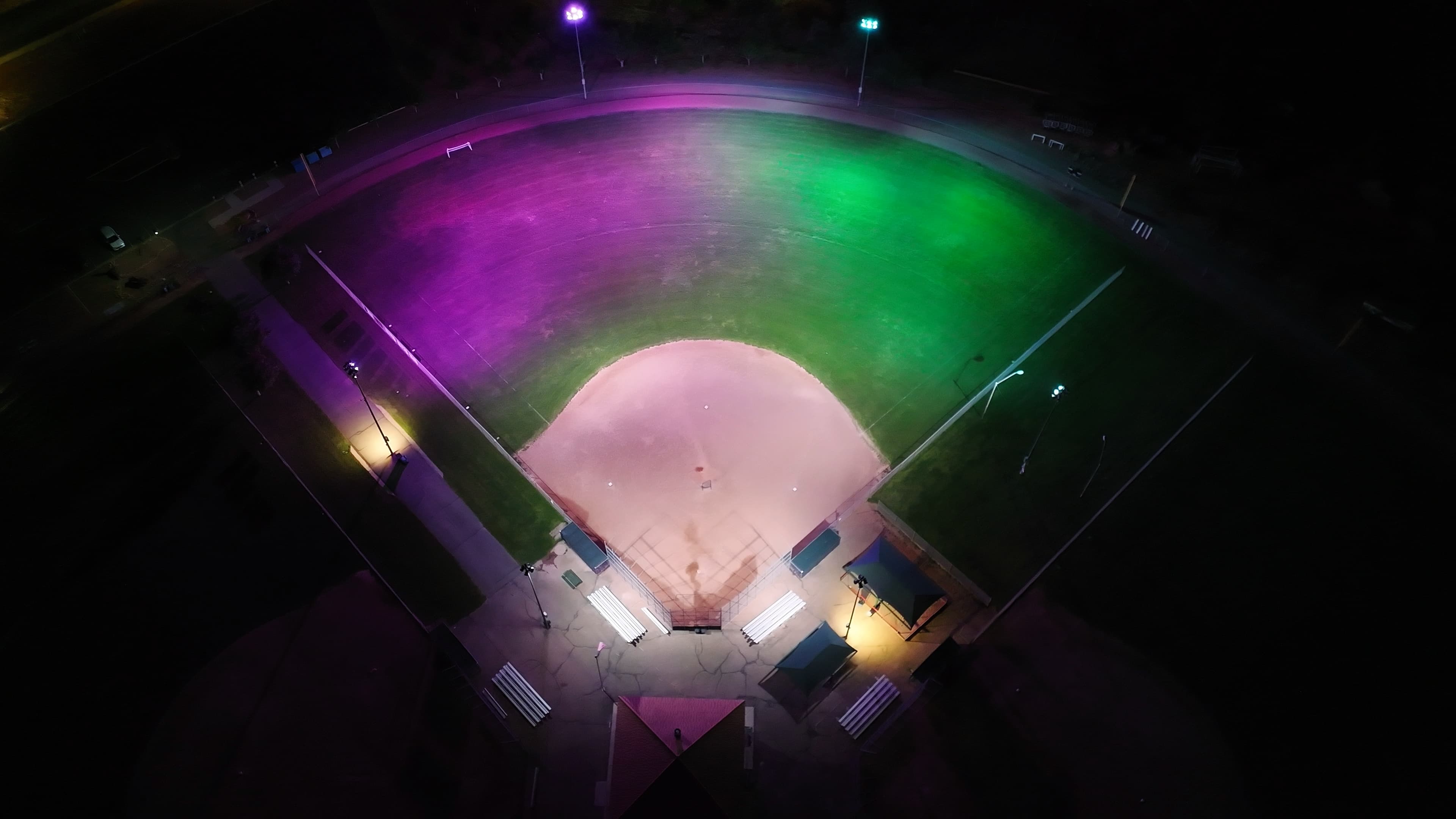
Why Baseball Lighting Is Having a Moment in the Dallas–Fort Worth Metroplex
Greater Dallas is one of the most sports-active regions in the country. From youth recreational leagues in Plano, Allen, and Garland to premier tournament complexes in Frisco, Southlake, and Arlington, baseball and softball infrastructure is expanding at a pace that matches the region's explosive population growth. The DFW Metroplex is home to millions of residents, dozens of municipalities investing in parks and recreation, and a robust network of school districts — all of which operate athletic fields that are increasingly in need of modern lighting upgrades.
The good news: LED technology has matured to a point where it is now the clear standard for sports field illumination at every level of play. The question facility managers, parks directors, and athletic administrators across North Texas are asking is no longer whether to upgrade — it's how to do it right.
At VOSS, we've worked on baseball and softball lighting projects ranging from small community fields to large-scale stadium environments, and the pattern is consistent: facilities that invest in engineered LED solutions see immediate improvements in performance, safety, and operating efficiency. This article explores what makes LED the right call for baseball and softball facilities in the Dallas area, and what a well-executed project actually looks like.
What Makes Baseball Lighting Uniquely Challenging
Baseball and softball are among the most technically demanding sports to illuminate properly — and that complexity is often underestimated. Unlike a rectangular basketball court or a football field, a baseball diamond presents an irregular geometry: an infield that demands high uniformity for fast-moving ground balls, an outfield that extends in a large arc, and warning tracks and foul territory that still require adequate coverage for player safety.
Poor lighting design in this context creates real problems:
- Glare and shadows that impair a batter's ability to track a pitch or a fielder's ability to judge a fly ball
- Uneven illuminance levels that create "hot spots" near the infield and dark zones in the outfield corners
- Spill light onto neighboring residential areas — a significant concern in dense suburban communities across Dallas, Mesquite, Irving, and Richardson
- High energy consumption from aging metal halide or HPS fixtures that run for hours per game, night after night throughout a long season
Governing bodies including USA Baseball, NFHS, NCAA, and the International Softball Federation each publish specific footcandle requirements and uniformity ratios for their respective levels of play. A field designed only to "look bright" without meeting these standards can create compliance issues for leagues and tournaments — a costly oversight for facility operators.
Proper lighting design starts with photometric engineering: modeling the exact placement, aiming angle, mounting height, and fixture output needed to achieve uniform light distribution across every zone of the field. This is not a commodity purchase — it is an engineered system, and the difference between a well-designed layout and a poorly specified one is visible the first time a night game is played.
LED Upgrades in Action: Lessons from the Field
One of the most instructive examples of what a well-executed baseball LED project can achieve comes from Page, Arizona, where VOSS completed a full LED retrofit of a baseball facility. The project involved a comprehensive redesign of the field's lighting system, replacing outdated fixtures with high-performance LED equipment engineered to meet sport-specific standards. The results demonstrated what communities across the country — including those in the Dallas–Fort Worth area — can expect from a properly scoped upgrade: dramatically improved on-field visibility, reduced glare for players and spectators, and meaningful reductions in energy consumption.
That project reinforced several principles that apply directly to Dallas-area facilities:
- Pole placement and mounting height matter as much as fixture quality. Getting the geometry right is the foundation of a successful design.
- Controls integration amplifies the value of the investment. Dimming, scheduling, and scene programming allow facility operators to match light levels to the activity — whether it's a varsity game, a practice session, or a community event — without wasting energy.
- The upgrade process can be planned to minimize disruption. Phased installation approaches allow fields to remain operational, which is critical for facilities with active league schedules.
For municipalities and park districts across communities like Carrollton, Lewisville, Cedar Hill, and DeSoto — where fields often host multiple leagues simultaneously and operate from early spring through late fall — these operational considerations are just as important as the technical specifications.
Energy and Financial Considerations for Dallas-Area Operators
The energy economics of LED baseball lighting are compelling in any market, but they are particularly relevant in Texas. Electricity rates in the ERCOT grid can be volatile, and facilities that run metal halide or HPS systems for extended hours face significant and unpredictable operating costs. LED systems typically consume 50–70% less energy than their traditional counterparts — a reduction that translates directly to lower utility bills across a multi-field complex.
Beyond operating savings, LED fixtures have dramatically longer rated lifespans — often 50,000 hours or more — compared to the 10,000–15,000-hour lifespan of metal halide lamps. For a facility manager in Garland, Rowlett, or Wylie juggling a maintenance backlog, the reduction in relamping labor and material costs alone can be significant.
It is also worth noting that utility rebate programs and incentive structures are available in many markets that can offset a portion of upfront capital costs. For public-sector organizations — municipal parks departments, independent school districts, community colleges, and other government entities across Dallas, Tarrant, Collin, and Denton counties — cooperative purchasing programs can provide an additional pathway to cost-effective procurement. VOSS is available through several cooperative purchasing vehicles including BuyBoard, TIPS, Sourcewell, AEPA, Omnia Partners, and PACE, which allow eligible organizations to access pre-negotiated contracts and streamline the procurement process without sacrificing project quality.
For facility managers preparing budget justifications or working with elected officials on capital improvement plans, these tools can meaningfully simplify the path from concept to approved project.
Choosing the Right Partner for Your Baseball Lighting Project
The Greater Dallas market has no shortage of lighting contractors, but baseball and softball field lighting is a specialty — and the consequences of getting it wrong are felt every night a game is played under substandard conditions. There are several things to look for when evaluating a lighting contractor for this type of project:
- Photometric design capability. Your contractor should be able to produce a lighting simulation showing predicted footcandle levels and uniformity ratios before a single fixture is ordered.
- Familiarity with governing body standards. Whether your facility hosts TAPPS, UIL, NAIA, or recreational league play, the design must reflect the specific standards for your level of competition.
- Electrical infrastructure expertise. Upgrading field lighting often involves upgrades to the electrical service, panel capacity, and conduit infrastructure — not just the fixtures themselves. A full-service electrical contractor is better positioned to manage this scope than a lighting-only vendor.
- Controls and smart systems integration. Modern LED systems can be connected to scheduling platforms, remote monitoring tools, and building management systems. These capabilities add operational value that extends well beyond the initial installation.
- Long-term support. A lighting system is a long-term asset. Your contractor should offer commissioning, warranty support, and ongoing service — not just an installation and a handshake.
VOSS brings all of these capabilities together under one roof. As a full-service commercial electrical contractor with 85+ years of experience and a local presence in the Dallas area, we manage every phase of a lighting project — from initial site assessment and photometric design through installation, commissioning, and post-project support.
If you're exploring related topics, our content section also covers LED Football Stadium Lights and Sports Field Lighting Solutions, Pickleball LED Lighting Solutions, Tennis Court Lighting and Energy Solutions, and LED Gymnasium Lighting Solutions — each addressing the specific design and performance requirements of different athletic environments.
Service Availability
While VOSS offers a comprehensive suite of national services, specific capabilities may vary by location. Please contact your local branch to confirm the current availability of specific services, technology solutions, or contracting capabilities in your immediate market.
Let's Talk About Your Facility
Whether you're managing a single-field community park in Duncanville or overseeing a multi-diamond tournament complex in Frisco, the right LED lighting solution starts with the right conversation. Our Dallas team is ready to discuss your facility's current conditions, performance goals, and project timeline — and help you understand what a well-engineered upgrade can realistically deliver.
VOSS — Dallas Branch
Phone: (972) 432-8367 Toll-Free: (800) 736-8677
Reach out to schedule a site assessment or photometric consultation. There's no obligation — just an informed conversation with a team that knows baseball lighting and knows the Dallas–Fort Worth market.