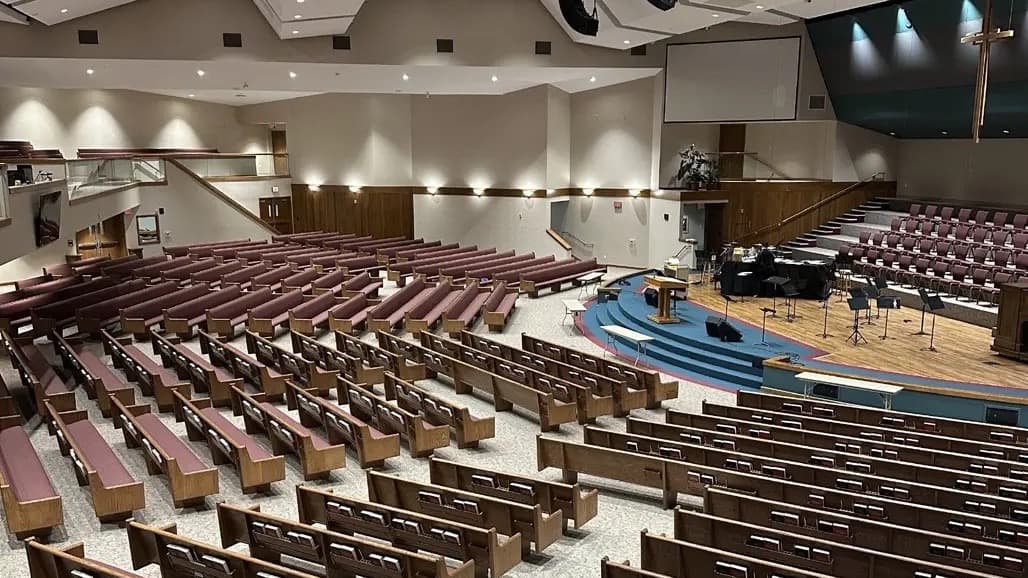
Why Sanctuary Lighting Is a Growing Priority for Garland-Area Churches
Garland, Texas — a city of more than 240,000 residents in the heart of the Dallas-Fort Worth metroplex — is home to a rich and diverse faith community. From historic congregations in downtown Garland and along Garland Road to newer, rapidly growing campuses near Rowlett, Sachse, and Wylie, churches across this region share a common operational reality: their buildings were designed for worship, not for the rigors of modern facility management.
Sanctuary lighting, in particular, has become one of the most pressing maintenance challenges for church facility managers and operations leaders throughout the area. The reasons are well understood by anyone who has climbed a scissor lift to swap out a burned-out PAR lamp thirty feet above a congregation — or fielded complaints from a worship director about uneven stage lighting during a livestreamed service. What is less well understood is how dramatically the landscape of church lighting technology has evolved, and how accessible smart, energy-efficient solutions have become for congregations of every size and budget.
This article explores the key trends, best practices, and practical considerations shaping church sanctuary lighting maintenance and upgrades across the Garland market today.
The Real Costs of Aging Sanctuary Lighting Systems
Before diving into solutions, it is worth examining what aging lighting systems actually cost a congregation — because the true price extends well beyond the electricity bill.
Frequent Re-lamping in Difficult Spaces
Most traditional church sanctuaries were built around incandescent, halogen, or early fluorescent technology. These sources have relatively short lifespans — often 1,000 to 3,000 hours for incandescent and halogen sources — which translates to multiple re-lamping cycles per year in an active worship facility. When those fixtures are mounted in vaulted ceilings, choir lofts, or ornate architectural trusses common in the churches of Garland's older neighborhoods, every bulb change requires scaffolding, lifts, or contracted labor. The labor cost alone can dwarf the cost of the lamp itself.
Ballast and Dimmer Failures
Fluorescent and metal halide systems rely on ballasts that degrade over time, causing flickering, humming, and inconsistent output. In sanctuaries where worship experience is paramount, these failures are not just maintenance headaches — they are disruptions to the congregation. Incompatible dimming systems compound the problem, creating erratic light behavior that is particularly problematic for churches that have invested in video and livestreaming production.
Energy Costs That Don't Reflect Modern Standards
Across the Dallas area, commercial electricity rates have fluctuated in recent years, placing pressure on non-profit operating budgets. A traditional sanctuary lighting system — often running for multiple services per week, plus rehearsals, events, and community programs — can consume significantly more energy than a modern LED equivalent. For many Garland-area churches operating on tight margins, that gap represents real dollars that could otherwise support ministry programming, community outreach, or facility improvements.
Uneven Illumination and Worship Quality
Lighting shapes the worship experience in ways that congregants feel even when they cannot articulate them. Uneven illumination creates dark zones in seating areas, reduces visibility for elderly members reading bulletins or hymnals, and undermines the visual quality of video production. As more Garland and DFW-area congregations expand their digital ministry footprint — broadcasting services online to members across the region and beyond — the quality of sanctuary lighting has become a genuine communications and outreach concern.
LED Retrofits and Modern Sanctuary Lighting: What the Technology Offers Today
The shift toward LED technology in commercial and institutional lighting is well documented, and the church market has followed that trajectory — albeit with some unique requirements that make a one-size-fits-all approach inadequate.
Extended Lifespan and Reduced Maintenance Cycles
Modern LED sources are rated for 50,000 hours or more under normal operating conditions. For a sanctuary used 20 hours per week across services, rehearsals, and events, that translates to decades of service life — not years. The practical implication for a church facility manager in Garland is fewer lift rentals, fewer contracted re-lamping visits, and significantly less disruption to the worship schedule.
Dimming Compatibility and Controls Integration
Contemporary LED systems are designed to work seamlessly with modern dimming infrastructure, enabling smooth, flicker-free control across the full dimming range. This is particularly valuable in sanctuaries that transition between different lighting scenes — full illumination for a Sunday morning service, dramatic theatrical lighting for a Christmas or Easter production, or subdued ambient light for a Wednesday evening prayer gathering. Programmable scene controls allow worship and technical staff to execute complex lighting transitions with a single button press, without technical expertise at the dimmer board.
Color Temperature and Rendering Quality
LED technology has advanced to the point where color rendering — the accuracy with which a light source reveals the true colors of surfaces, skin tones, and architectural details — is fully comparable to traditional sources, and often superior. For sanctuaries with stained glass, rich wood tones, or vibrant décor, selecting the right color temperature and CRI (Color Rendering Index) rating is critical to preserving the visual character of the space. This is an area where professional specification matters enormously, and where a generalist approach can produce disappointing results.
Energy Efficiency and Utility Incentives
LED upgrades in commercial and institutional facilities routinely deliver energy reductions of 40 to 60 percent compared to the systems they replace. In the Dallas-Fort Worth market, Oncor Electric Delivery — the transmission and distribution utility serving Garland and much of the surrounding region — offers commercial energy efficiency programs that may provide rebates or incentives for qualifying LED lighting upgrades. Engaging a lighting contractor experienced in navigating these programs can meaningfully reduce the net cost of an upgrade project. For churches exploring the broader landscape of rebate opportunities, the sibling article Maximize ROI with Commercial LED Lighting Rebates in Dallas, TX in the Latest Lighting section provides additional context.
Unique Challenges in Church Lighting Projects — And How to Address Them
Churches are not standard commercial facilities, and sanctuary lighting projects require a level of sensitivity and expertise that general electrical contractors may not bring to the table. Several factors distinguish church lighting work from a typical commercial retrofit.
Access and Scheduling Constraints
Sanctuaries are in active use for worship, rehearsals, funerals, weddings, and community events throughout the week. Lighting work must be planned around a facility calendar that does not pause for construction. Professional church lighting contractors sequence work in phases, often completing installation during early morning hours, weekdays between services, or planned maintenance windows — minimizing disruption to congregation activities.
Historic and Architectural Sensitivity
Many of Garland's established congregations occupy buildings with significant architectural character — ornate chandeliers, decorative sconces, exposed beam trusses, or stained glass windows that have defined the worship space for generations. A credible lighting upgrade approach respects these elements, matching fixture aesthetics to the existing environment rather than imposing an industrial or generic commercial look. In some cases, historic lamp shapes and decorative housings are available in LED technology, preserving the visual character of the sanctuary while delivering modern performance.
Budget Phasing and Priority Sequencing
Church budgets operate differently from corporate capital expenditure processes. Many congregations fund facility improvements through designated giving campaigns, reserve funds, or multi-year capital plans. A well-structured lighting upgrade project can be phased across budget cycles — addressing the highest-priority spaces and the most problematic fixtures first, then expanding the scope as resources allow. Facility managers and church administrators benefit from working with a contractor who understands this reality and can develop a prioritized scope that delivers meaningful results within available funding.
Cooperative Purchasing Options for Eligible Organizations
Some Garland-area churches, particularly those affiliated with school programs, community development organizations, or public-benefit entities, may be eligible to procure lighting services and equipment through cooperative purchasing programs. Frameworks such as Houston Church COOP, BuyBoard, TIPS, Sourcewell, and Omnia Partners can streamline procurement, reduce administrative burden, and provide access to pre-negotiated pricing — a meaningful advantage for organizations with limited procurement staff. Facility administrators at eligible organizations are encouraged to ask about these options.
Trends Shaping Church Lighting in the Greater Dallas Market
The Garland and greater Dallas market reflects several broader trends that are reshaping how churches think about their lighting infrastructure.
Livestreaming and Production-Quality Lighting
The growth of digital ministry — accelerated by the pandemic and now a permanent feature of how many congregations engage their communities — has elevated expectations for sanctuary lighting quality. Cameras are less forgiving than the human eye; they require higher, more consistent light levels and better color rendering to produce broadcast-quality video. Churches across the DFW area, from large multi-campus congregations in Plano and Richardson to community churches in Mesquite and Rowlett, are discovering that a lighting upgrade is simultaneously a production infrastructure investment.
Smart Controls and Remote Management
Building automation and smart lighting controls are no longer exclusively the domain of large corporate facilities. Modern church lighting systems increasingly incorporate wireless controls, occupancy sensing, and daylight harvesting — features that reduce energy consumption during non-peak hours and give facility staff remote management capability. For a facilities director overseeing multiple building spaces across a large campus, the ability to monitor and adjust lighting systems from a tablet or smartphone represents a genuine operational improvement.
Sustainability as a Congregational Value
Environmental stewardship is increasingly a stated value for faith communities across the theological spectrum. LED upgrades and energy-efficient controls align lighting infrastructure with broader sustainability commitments — a consideration that resonates with congregational leadership and can support capital campaign narratives. The Energy Efficient Church Lighting Upgrades article in the Latest Lighting section explores this dimension in greater depth for congregations where sustainability is a driving priority.
Service Availability
While VOSS offers a comprehensive suite of national services, specific capabilities may vary by location. Please contact your local branch to confirm the current availability of specific services, technology solutions, or contracting capabilities in your immediate market.
Start a Conversation About Your Sanctuary
If you are a facility manager, church administrator, or operations leader at a congregation in Garland, Rowlett, Sachse, Wylie, Mesquite, Richardson, or anywhere across the greater Dallas area, VOSS welcomes the opportunity to discuss your sanctuary lighting challenges and goals — without obligation and without a sales pitch.
Our Dallas branch team brings decades of experience with institutional and faith-based facilities across North Texas, and we are happy to walk through your current system, identify the most impactful priorities, and outline what a phased or full-scope upgrade could look like for your congregation.
VOSS — Dallas Branch
Phone: (972) 432-8367 Toll-Free: (800) 736-8677