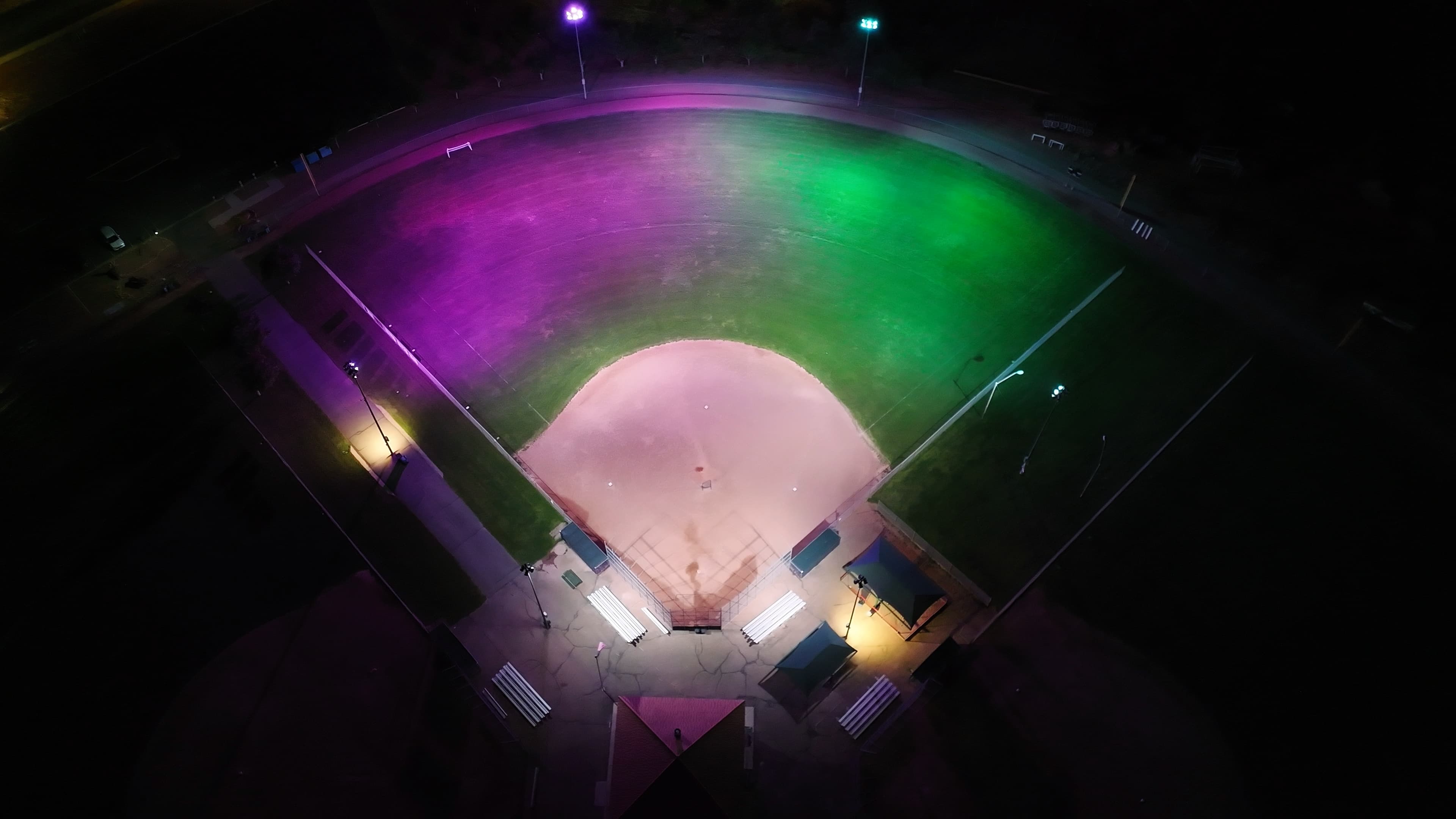
Why Baseball Lighting Is Having a Moment in St. Louis
St. Louis has long been one of America's great baseball cities. From the roar of Cardinals fans at Busch Stadium to the crack of the bat at youth fields in Chesterfield, O'Fallon, Ballwin, and Fenton, the game is woven into the fabric of daily life across the Missouri side of the metro. But while the passion for baseball has never dimmed, the lighting technology illuminating many of the region's fields has fallen behind.
Across Greater St. Louis — from Jefferson County in the south to St. Charles County in the north, and from Illinois border communities like Collinsville and Belleville to the inner-ring suburbs of Kirkwood, Florissant, and University City — facility managers and parks directors are grappling with aging metal halide and high-pressure sodium (HPS) field lighting systems. These systems are expensive to operate, difficult to maintain, and increasingly out of step with what players, coaches, and spectators expect from a modern athletic experience.
LED sports lighting technology has matured dramatically over the past decade, and the conversation is no longer about whether to upgrade — it's about how to do it right. This article explores what facility leaders across the St. Louis region should understand as they evaluate baseball and softball lighting projects, from community recreation centers to collegiate and semi-professional venues.
The Case for LED: What the Data Actually Shows
The business case for LED sports lighting in baseball and softball applications has become compelling at virtually every facility level. Understanding a few key performance dimensions helps decision-makers cut through the marketing noise and focus on what matters.
Energy Consumption and Operating Costs
Traditional metal halide systems — still found on a large share of fields across the St. Louis metro — consume significantly more energy per lumen of output than modern LED alternatives. For a typical multi-field recreational complex operating evening games four to five nights per week through a full spring and summer season, the difference in utility costs between legacy HPS fixtures and a properly designed LED system can be substantial. For facilities managed by municipalities in St. Louis County, St. Charles County, or Jefferson County, those savings translate directly to budget relief — dollars that can be redirected toward field maintenance, programming, or other capital needs.
Light Quality and Player Safety
Uniform illumination across the infield, outfield, and warning track isn't just an aesthetic preference — it's a safety and performance issue. Inconsistent or shadowed lighting increases the risk of tracking errors on fly balls, misjudged line drives, and reduced reaction time for batters. LED systems designed to sport-specific photometric standards deliver measured uniformity ratios that legacy systems simply cannot match. For facilities hosting travel ball tournaments, high school varsity competitions, or adult amateur leagues throughout the greater St. Louis area, that quality difference is meaningful.
Maintenance Burden
Metal halide lamps degrade significantly over their lifespan, losing lumen output well before they actually fail — a phenomenon called lumen depreciation. Facility staff at parks departments from Wentzville to Waterloo, IL know the drill: lights that were adequate when installed become visibly dim after a few seasons, and lamp replacements require bucket trucks, skilled labor, and significant downtime. LED fixtures are rated for dramatically longer operational lifespans with far less depreciation, reducing both the frequency and cost of maintenance interventions.
Designing for Baseball: It's Not One-Size-Fits-All
One of the most important things facility managers should understand about baseball LED lighting is that good design requires sport-specific engineering — not simply swapping old fixtures for new ones on existing poles.
Baseball and softball fields present unique photometric challenges. The playing surface is asymmetrical, fields vary by level of play (Little League, travel ball, high school, collegiate, adult recreational), and different governing bodies — including USA Baseball, NFHS, NCAA, and the IES (Illuminating Engineering Society) — establish distinct footcandle and uniformity requirements for each competitive level. A lighting design that meets NFHS standards for a high school varsity field is engineered quite differently from one serving a youth recreational complex in Hazelwood or a collegiate diamond at a university in the St. Louis metro.
Key design considerations include:
- Pole placement and height — Determining optimal pole locations and mounting heights to achieve required footcandle levels while managing spill light into neighboring residential areas, a common concern in dense suburban markets like South County or West County
- Glare control — Shielding and optical engineering to minimize direct glare into batters' lines of sight, which can be both a safety hazard and a source of complaints from adjacent properties
- Outfield and warning track uniformity — Ensuring that light levels don't drop sharply in the outfield corners or along the warning track, where critical plays are made
- Broadcast and event capability — For facilities hosting televised or livestreamed games, achieving the higher footcandle thresholds and color rendering indexes (CRI) required for quality video production
Photometric modeling — the computational simulation of how light will distribute across a playing surface — is an essential step before any fixture or pole decision is made. Skipping this step is one of the most common and costly mistakes facility owners make when managing lighting projects without experienced guidance.
Proof Point: Lessons from the Field in Page, AZ
While Greater St. Louis presents its own unique market conditions, the fundamentals of a well-executed baseball LED lighting project are consistent across geographies. VOSS' work on a baseball lighting project in Page, Arizona illustrates what thoughtful design and execution look like in practice.
Page is a remote community with limited local contractor resources — meaning the project demanded careful logistical planning, precision in photometric design, and seamless coordination between engineering, procurement, and field installation teams. The project delivered sport-compliant illumination levels, measurable energy reduction compared to the prior system, and a facility that serves the community's players and families at a significantly improved level of quality.
The Page, AZ project reflects a broader pattern in VOSS' sports lighting work: the outcomes that matter most — performance, energy efficiency, and long-term reliability — are achieved through disciplined process, not just product selection. That same approach translates directly to projects across the St. Louis metro, whether serving a parks district in St. Peters, a school district in Affton, or a private athletic club in Ladue.
Controls Integration: The Next Frontier for St. Louis Athletic Facilities
Modern LED sports lighting systems are increasingly paired with intelligent controls platforms — and for good reason. Controls integration transforms a lighting system from a simple on/off utility into a managed asset that can generate additional operational value.
For baseball and softball facilities in Greater St. Louis, controls capabilities worth understanding include:
- Scheduling and remote management — Automatically adjusting lighting based on game schedules, practice windows, and facility hours without manual intervention from staff
- Dimming and multi-scene programming — Setting different light levels for practice, competition, warm-ups, and post-game situations, reducing energy consumption during lower-demand periods
- Occupancy and event-based triggers — Responding dynamically to field usage, rain delays, or early game endings to avoid running full lighting loads unnecessarily
- Remote monitoring and diagnostics — Identifying fixture performance issues before they become service failures, supporting the kind of proactive maintenance approach that reduces emergency repair costs
For larger parks departments managing multiple fields across communities like Florissant, Maryland Heights, or Crestwood, centralized controls platforms offer the ability to oversee an entire portfolio of athletic lighting from a single interface — a significant operational efficiency gain for lean maintenance teams.
Controls integration also connects naturally to broader energy management goals. Facilities pursuing utility rebates or working toward sustainability targets will find that documented energy performance data — generated by a managed controls system — strengthens rebate applications and supports internal reporting requirements.
Procurement Pathways for Missouri Public Agencies
For municipalities, school districts, parks and recreation departments, and other public agencies across Greater St. Louis, procurement compliance is a real and practical consideration in lighting project planning. The good news: accessing VOSS' baseball and softball lighting expertise doesn't require navigating a lengthy competitive bid process from scratch.
VOSS holds an approved state contract in Missouri, providing public agencies with a streamlined, compliant procurement path for lighting products, installation services, and ongoing support. Missouri public agencies can leverage this contract to access competitive pricing and expert guidance while satisfying procurement requirements with confidence.
In addition, eligible organizations across the region may access VOSS' services through a range of cooperative purchasing programs, including Sourcewell, BuyBoard, TIPS, AEPA, Omnia Partners, PACE, and others. These vehicles are widely recognized by Missouri procurement officers and simplify the contracting process for parks districts, school districts, and municipal facilities departments from St. Louis City to Warren County.
Related Topics Worth Exploring
Baseball and softball lighting is one dimension of a broader conversation about athletic and recreational facility modernization. If your organization is evaluating adjacent topics, VOSS has published additional resources in this series worth reviewing:
- Pickleball LED Lighting Solutions and Tennis Court Lighting and Energy Solutions address the growing demand for court sport lighting across Greater St. Louis' expanding recreational infrastructure
- LED Football Stadium Lights & Sports Field Lighting Solutions covers multi-use athletic field lighting for organizations managing football, soccer, and lacrosse alongside baseball programs
- Transform Your Court into an Electrifying, Revenue-Generating Arena explores how premium lighting design can elevate facility revenue potential and community engagement
- Energy Audits, Incentives, and Rebate Navigation for Businesses is essential reading for any facility manager looking to maximize the financial return on a lighting investment
Service Availability
While VOSS offers a comprehensive suite of national services, specific capabilities may vary by location. Please contact your local branch to confirm the current availability of specific services, technology solutions, or contracting capabilities in your immediate market.
Talk to a St. Louis Lighting Specialist
If your organization is managing a baseball or softball facility in Greater St. Louis — whether a single community field in St. Charles or a multi-diamond complex serving thousands of players across St. Louis County — the right starting point is a conversation with a lighting professional who understands both the technical requirements and the local market context.
VOSS' St. Louis branch team brings regional knowledge and national project experience to every engagement. We're not here to sell you a fixture — we're here to help you understand your options, navigate your procurement requirements, and design a lighting solution that serves your community for decades.
VOSS — St. Louis Branch
Phone: (636) 660-0088 Toll-Free: (877) 577-5409
Reach out to schedule a consultation or request a photometric design assessment for your facility. Whether your project is in the planning stages or ready to move to design, we're ready to help you illuminate the game the right way.