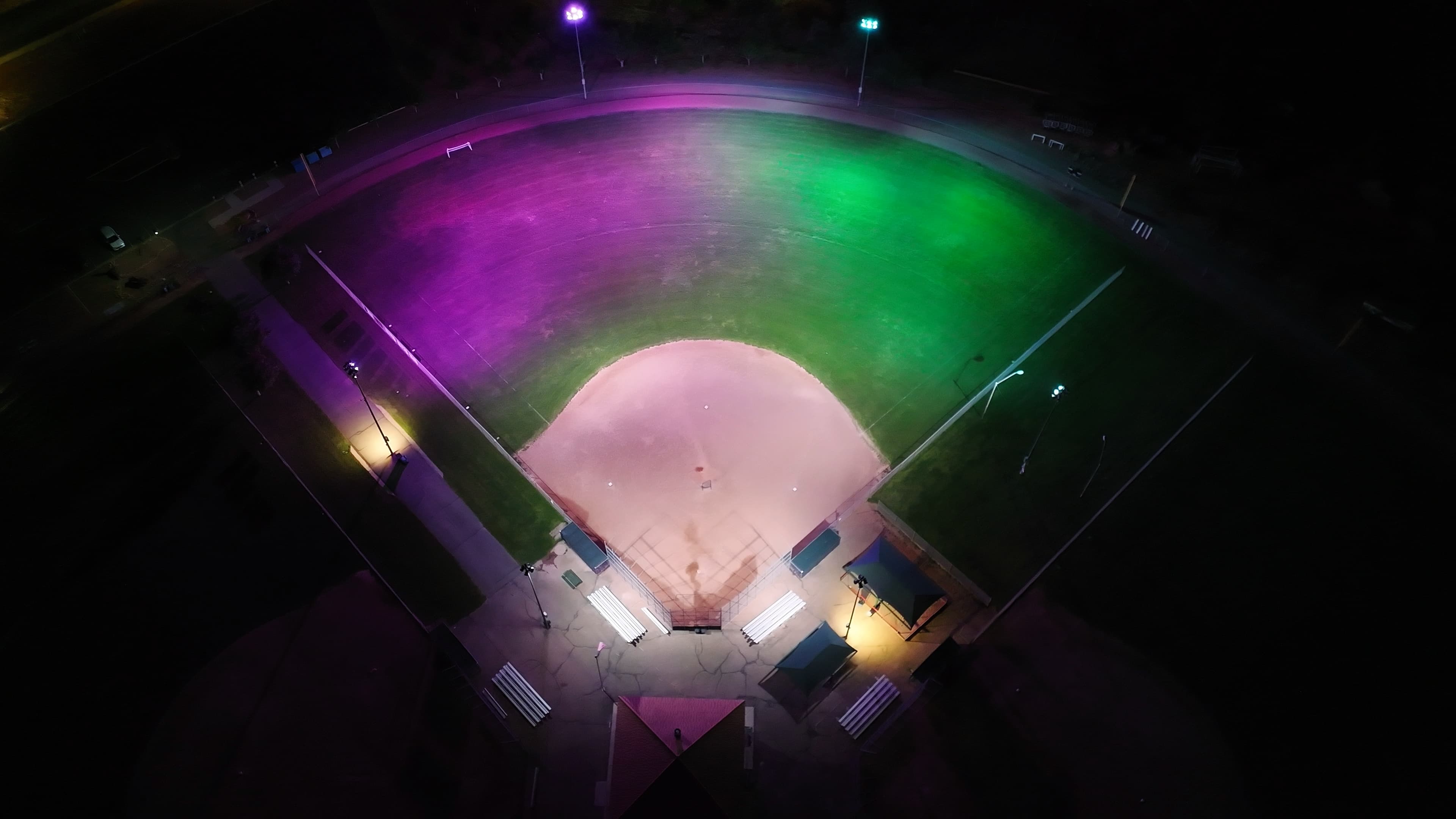
Why Baseball Lighting Is Having a Major League Moment
Across the country, parks and recreation departments, school athletic programs, and private sports facilities are rethinking how they light their fields — and for good reason. The shift from traditional metal halide and high-pressure sodium (HPS) systems to LED technology isn't just a trend. It's a structural change driven by measurable improvements in performance, energy efficiency, and long-term cost management.
In a community like Chesterfield, MO — a city of approximately 50,000 residents situated along the Missouri River in western St. Louis County — the stakes are particularly high. Chesterfield is home to an active and growing youth athletics culture, with well-established recreation programs serving families throughout the Chesterfield Valley, Baxter, and Wild Horse Creek corridors. Neighboring communities like Ballwin, Wildwood, St. Peters, and O'Fallon round out a regional youth sports ecosystem that fields hundreds of baseball and softball teams each spring and summer. For facility operators managing these fields, aging lighting infrastructure isn't just a maintenance headache — it's a liability that affects play quality, energy budgets, and community perception.
The Problem with Aging Field Lighting — and What's Replacing It
Most baseball and softball fields built before the mid-2010s rely on metal halide or HPS fixtures — technologies that were state-of-the-art decades ago but now lag significantly behind current LED systems in virtually every performance category. These legacy systems take 15–20 minutes to reach full brightness, struggle to maintain consistent output across the field, and consume far more energy than modern alternatives.
For facility managers and parks directors in the Greater St. Louis region, the operational picture is equally frustrating: replacement bulbs for aging HID fixtures are increasingly difficult to source, and the regulatory landscape is shifting. Federal efficiency standards and state energy policies are accelerating the obsolescence of older lighting technologies — a trend covered in detail in our related article on the Fluorescent Tube Bans and LED Lighting Rebates series.
Modern LED systems address these shortcomings directly:
- Instant-on performance — full brightness from the moment the switch is thrown, with no warm-up delay, which matters enormously for rain delays, makeup games, and broadcast schedules
- Uniform light distribution — engineered photometric designs eliminate the hot spots and dark zones that affect depth perception for batters, fielders, and umpires alike
- Dramatically lower energy consumption — LED systems typically consume 50–75% less energy than the HID systems they replace, which translates directly to lower utility bills for municipalities and school districts
- Longer service life — quality LED fixtures are rated for 100,000+ hours, dramatically reducing lamp replacement and maintenance labor costs over time
- Controllability — modern LED systems integrate with smart controls that allow dimming, scene presets, and remote management, capabilities explored further in our LED Football Stadium Lights & Sports Field Lighting Solutions article
What Good Baseball Lighting Design Actually Requires
Not all LED upgrades are created equal. Baseball and softball lighting is among the most technically demanding applications in the sports lighting category — and the gap between a well-engineered system and a mediocre one shows up immediately on the field.
Sport-specific photometric engineering is the foundation of every quality installation. Baseball fields have an unusually complex geometry: the infield diamond, the outfield arc, the warning track, foul territory, and the backstop zone all have different lighting needs and different sight lines to consider. Pole placement, mounting height, fixture aiming angles, and spill light control must all be calculated precisely to meet the standards set by governing bodies including the Illuminating Engineering Society (IES), Little League Baseball, the NCAA, and Major League Baseball.
Key design parameters that VOSS engineers consider on every project include:
- Maintained footcandle levels — the minimum illumination required at playing surface across the full lifespan of the fixture, not just at installation
- Uniformity ratios — how evenly the light is distributed across the field, critical for player safety and fair play
- Glare control — improper fixture aiming can create disabling glare for fielders tracking fly balls against a night sky, a safety issue as much as a performance one
- Spill and obtrusive light — particularly important for fields located near residential neighborhoods in communities like Chesterfield's older subdivisions or near the Route 340 and Clarkson Road corridors
- Vertical illuminance — often overlooked but essential for broadcast-quality coverage if the facility hosts televised events
This level of design rigor is what separates a professional installation from a simple fixture swap — and it's what VOSS brings to every project.
Proof in Practice: Lessons from a Real LED Baseball Project
VOSS has applied this design-first approach to baseball and softball projects across the country. One example that illustrates what's possible: a project in Page, AZ, where VOSS delivered a professional-grade LED baseball lighting solution that met sport-specific standards while delivering meaningful energy savings for the facility operator. Projects like this one demonstrate that whether a field serves a small community or a larger regional sports complex, the combination of precise engineering, quality fixtures, and experienced installation produces results that last.
For facilities in the Greater St. Louis area — from community parks in Chesterfield and Wildwood to school athletic complexes in the Rockwood or Marquette school districts — the same principles apply. The goal is always the same: a lighting system that performs at the level the sport demands, operated at a cost the owner can sustain.
It's also worth noting that baseball LED lighting projects connect naturally to the broader energy management strategies covered in our Energy Audits, Incentives, and Rebate Navigation for Businesses article. Many facilities can offset a significant portion of project costs through utility rebates and, for public agencies in Missouri, through state procurement vehicles that streamline the contracting process.
A Practical Path Forward for Missouri Facilities
For facility owners and administrators evaluating a baseball or softball lighting upgrade, the path to a successful project typically moves through several practical stages — and knowing what to expect at each stage reduces surprises and improves outcomes.
Step 1 — Photometric Assessment A qualified lighting designer evaluates the existing field geometry, current light levels, and performance gaps. This produces the design basis for the project and informs fixture selection, pole placement, and electrical load calculations.
Step 2 — Engineering and Specification Detailed photometric models confirm that the proposed system will meet the applicable IES or league standards for maintained footcandles and uniformity. This documentation is also essential for permitting and, where applicable, for utility rebate applications.
Step 3 — Procurement and Installation For public agencies in Missouri — including municipalities, park districts, and school districts in and around Chesterfield, Ballwin, Manchester, and St. Peters — VOSS holds an approved Missouri state contract, which simplifies procurement and helps agencies meet their competitive bidding requirements efficiently. Eligible organizations may also access cooperative purchasing programs including Sourcewell, BuyBoard, TIPS, AEPA, Omnia Partners, PACE, and others, providing additional flexibility and competitive value.
Step 4 — Commissioning and Controls Integration A properly commissioned system is tested for light levels, uniformity, and control functionality before the first game is played. Smart controls — including dimming, scene management, and remote monitoring — can be integrated to give operators maximum flexibility and to support ongoing energy management.
Step 5 — Ongoing Support Quality installations are backed by warranty coverage and service support. VOSS' St. Louis branch serves the full Greater St. Louis metro, including St. Louis County, St. Charles County, Jefferson County, and the communities of the Chesterfield Valley and beyond.
Related Topics Worth Exploring
Baseball and softball lighting intersects with several adjacent topics covered in our Latest Lighting series. Facility operators managing multi-sport complexes may also find value in our articles on Pickleball LED Lighting Solutions, LED Gymnasium Lighting Solutions, and Tennis Court Lighting and Energy Solutions — all of which address the same principles of sport-specific photometric design applied to different athletic environments. For organizations navigating utility incentive programs, our Maximize ROI with Commercial LED Lighting Rebates and Energy Audits, Incentives, and Rebate Navigation for Businesses articles offer practical guidance on capturing available savings.
Service Availability
While VOSS offers a comprehensive suite of national services, specific capabilities may vary by location. Please contact your local branch to confirm the current availability of specific services, technology solutions, or contracting capabilities in your immediate market.
Talk to VOSS About Your Field
If you're evaluating a baseball or softball lighting project in Chesterfield, the Greater St. Louis area, or anywhere in Missouri, our local team is ready to help you think through the options. From a single community field to a multi-diamond sports complex, VOSS brings the engineering depth, installation experience, and local relationships to deliver a system that performs for decades.
VOSS — St. Louis Branch
Phone: (636) 660-0088 Toll-Free: (877) 577-5409
Reach out to start a conversation — whether you're ready to move forward or just beginning to explore what an upgrade could look like for your facility.