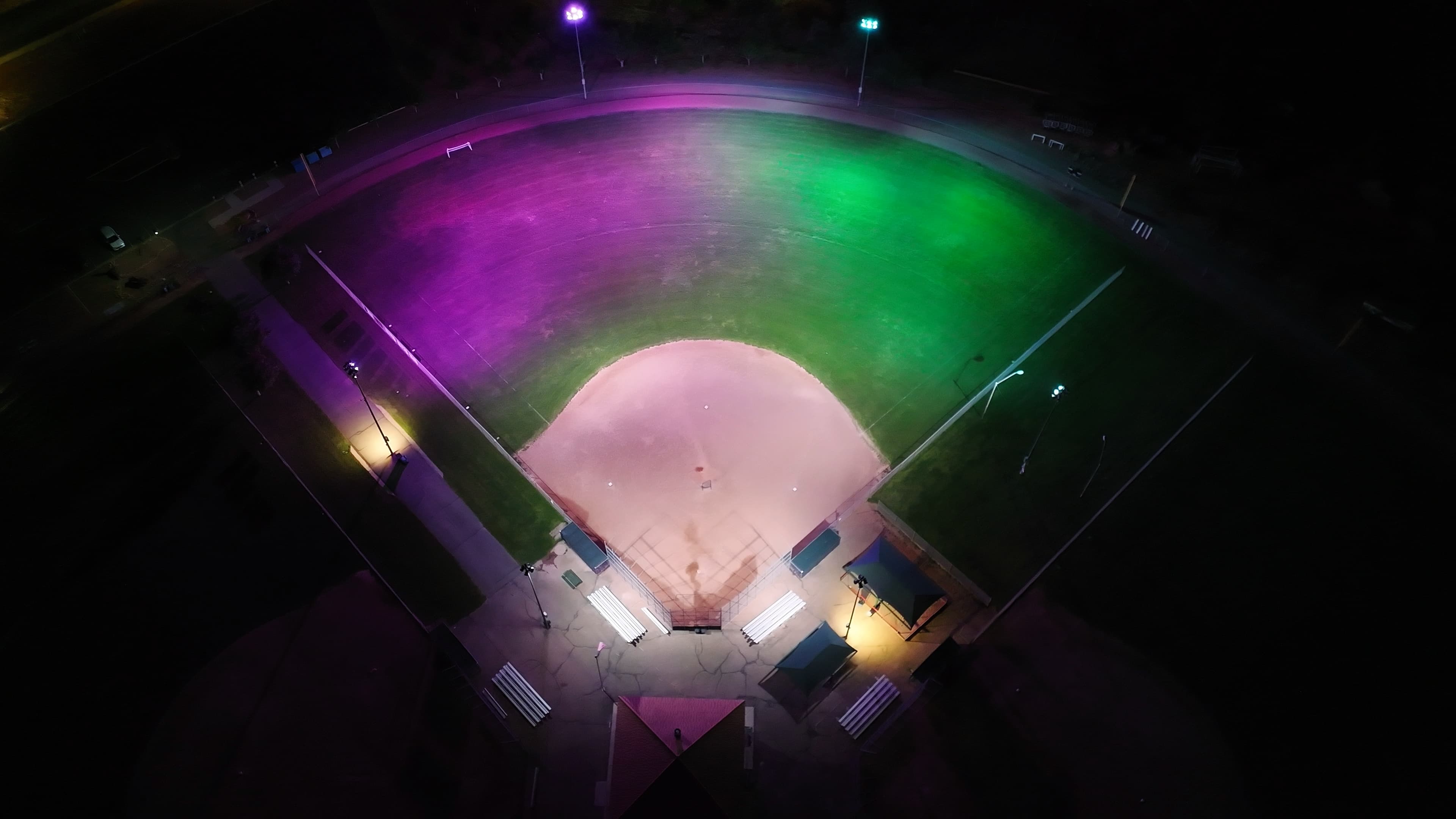
Why Baseball Field Lighting Is a Game-Changer for Seguin and the San Antonio Region
Seguin, Texas has a proud athletic tradition rooted in its schools, parks, and community organizations. As the seat of Guadalupe County and a fast-growing city of roughly 30,000 residents along the I-10 corridor, Seguin sits at the heart of one of the most economically dynamic regions in the state. The communities of New Braunfels, San Marcos, Schertz, Cibolo, and the greater San Antonio metro area all share a deep investment in recreational and competitive sports infrastructure — and baseball is central to that culture.
Yet across this region, many athletic fields still rely on aging metal halide or high-pressure sodium (HPS) lighting systems that were engineered decades ago. These legacy systems struggle to meet the demands of today's players, fans, and broadcast environments. For facility managers, parks and recreation directors, school athletic coordinators, and municipal leaders in Guadalupe County and beyond, the question is no longer whether to upgrade — it's how to do it right.
This article explores what modern LED sports lighting looks like for baseball and softball facilities, why the technology matters, and what separates a well-engineered installation from one that falls short.
The Shortcomings of Legacy Sports Lighting — and Why It Matters Now
Traditional metal halide and HPS field lighting systems were once the industry standard, but they carry real limitations that compound over time:
- High energy consumption — Older systems routinely consume two to three times more electricity than equivalent LED solutions, driving up utility costs season after season
- Poor uniformity — Legacy fixtures often create hot spots near poles and dark zones in the outfield and warning track, reducing visibility for batters, fielders, and umpires
- Slow warm-up and restrike times — Metal halide lamps can take 15–20 minutes to reach full brightness, creating operational challenges during rain delays or after power interruptions
- Escalating maintenance costs — Lamp replacements, ballast failures, and pole inspections add ongoing expense and downtime for parks departments and school districts already managing tight budgets
- Glare and spill light — Poorly aimed or unshielded fixtures create glare that affects player performance and can generate complaints from neighboring properties and communities
For cities like Seguin — where recreational leagues, UIL athletics, and community events share the same field infrastructure — these limitations translate directly into reduced playability, higher operating costs, and a diminished experience for the athletes and families who rely on those facilities.
What Modern LED Baseball Lighting Actually Involves
Not all LED upgrades are created equal. A well-executed baseball or softball lighting project is an engineered system — not simply a fixture swap. Here's what a professional-grade LED lighting solution encompasses:
Photometric Design and Compliance
Every field has unique geometry — the distance between poles, the height of mounting, the orientation of the diamond, and the proximity of the outfield fence all factor into how light distributes across the playing surface. VOSS begins every project with a detailed photometric analysis, modeling light levels across the entire field to ensure compliance with governing body standards. Whether a facility serves a Little League division, a high school UIL program, a college club team, or a professional or semi-professional organization, illumination requirements differ — and a design that doesn't account for those differences creates problems from day one.
Key standards typically referenced include those from organizations such as the Illuminating Engineering Society (IES) and individual governing bodies for amateur and professional leagues. Foot-candle levels, uniformity ratios, and color rendering index (CRI) all matter for player safety and broadcast quality.
Pole Placement and Mounting Strategy
Where poles go — and how high fixtures are mounted — has a profound effect on shadow patterns, glare angles, and the overall uniformity of the playing surface. Poor pole placement is one of the most common sources of lighting complaints at athletic facilities. A thoughtful layout minimizes shadows at the plate, in the batter's eye zone, and across the infield skin, while controlling spill light toward adjacent streets, neighborhoods, and parking areas.
Controls and Dimming Integration
Modern LED sports lighting systems support sophisticated controls that legacy technology simply cannot match. Programmable dimming schedules, remote monitoring, zone-by-zone control, and integration with building management or park operations systems give facility operators far greater flexibility and efficiency. A recreation department managing multiple fields across Seguin or Guadalupe County, for example, can remotely adjust lighting levels for practice versus game conditions — eliminating the energy waste of running full-power lighting for a half-empty practice session.
For facilities interested in exploring smart controls further, VOSS covers this topic in depth in our related article on LED sports lighting for gymnasium and court environments, which addresses many of the same control integration principles in an indoor context.
Energy Savings and Utility Incentives
The energy reduction from transitioning off metal halide to LED is substantial and well-documented across the industry. For baseball facilities operating multiple nights per week across a full spring and fall season — common for the year-round climate of Central Texas — the cumulative savings are significant.
Facility owners and operators in the Seguin area may also have access to utility rebate programs and incentive structures that can offset upfront capital costs. Public sector organizations including school districts, municipal parks departments, and county-operated facilities may additionally be eligible to procure lighting upgrades through cooperative purchasing programs such as BuyBoard, Sourcewell, TIPS, Omnia Partners, AEPA, and PACE — streamlining the procurement process and reducing administrative burden without sacrificing competitive pricing.
Lessons from the Field: A Real-World LED Baseball Project
One of the strongest illustrations of what thoughtful LED baseball lighting can achieve comes from a project VOSS completed in Page, Arizona — a community-level baseball facility upgrade that demonstrates both the technical precision and the operational impact of a professional installation.
The Page project required navigating a location with unique environmental and logistical considerations, while still delivering lighting performance that met governing body standards and meaningfully improved the experience for players and spectators. The result was a facility that operates more efficiently, provides superior visibility across the playing surface, and requires far less ongoing maintenance than the system it replaced.
While every market is different, the core lessons from Page translate directly to facilities in Seguin, New Braunfels, Schertz, and across the San Antonio region: engineered design matters, pole placement is as important as fixture selection, and controls integration turns a good lighting system into a great one.
Considerations for Different Types of Baseball Facilities
Baseball and softball facilities across the Greater San Antonio area vary enormously in scale, use, and ownership structure. The right LED lighting strategy looks different depending on the context:
Municipal and County Recreation Fields Parks departments in Guadalupe County and surrounding communities manage fields that serve youth recreational leagues, adult softball leagues, and public open play. For these facilities, durability, energy efficiency, and low maintenance burden are the top priorities. LED systems with long-rated lifespans and minimal lamp replacement needs align directly with the operational realities of public parks maintenance teams.
School District Athletic Complexes UIL competition requirements establish specific lighting standards for sanctioned high school baseball and softball. School districts in the Seguin area — and across neighboring communities like Marion, Navarro, and Stockdale — need to ensure their facilities meet those standards while managing capital budgets responsibly. Cooperative purchasing programs can be especially valuable for school districts navigating public procurement requirements.
Private and Semi-Professional Venues Privately operated training academies, travel ball complexes, and semi-professional or collegiate summer league venues have different priorities — broadcast-quality lighting, the ability to support video production, and the aesthetic experience for paying fans. LED systems with high CRI ratings and flicker-free performance are essential for these environments.
Multi-Use Athletic Complexes Many facilities in the San Antonio region serve multiple sports across the same physical footprint. Flexible lighting controls that allow zone-by-zone management — supporting baseball tonight and a different event tomorrow — are a key advantage of modern LED systems. For readers exploring multi-sport lighting strategies, our related articles on pickleball, tennis, and LED gymnasium lighting solutions cover how these principles extend across different athletic environments.
Service Availability
While VOSS offers a comprehensive suite of national services, specific capabilities may vary by location. Please contact your local branch to confirm the current availability of specific services, technology solutions, or contracting capabilities in your immediate market.
Talk to VOSS About Your Baseball Lighting Project in Seguin
Whether you're a parks director evaluating an aging field lighting system, a school athletic coordinator preparing for UIL compliance, or a private facility owner planning a new construction or retrofit project, VOSS brings the engineering depth, installation experience, and local presence to help you get it right.
Our San Antonio branch serves Seguin, Guadalupe County, and communities throughout the Greater San Antonio region — including New Braunfels, Schertz, Cibolo, San Marcos, and the broader Hill Country corridor. We welcome the opportunity to discuss your facility's specific needs, walk through a photometric design concept, and help you understand what a well-executed LED baseball lighting upgrade could look like for your organization.
VOSS — San Antonio Branch (210) 967-8766
Reach out to start a conversation. There's no obligation — just the insight and expertise of a team that has been doing this for more than 85 years.