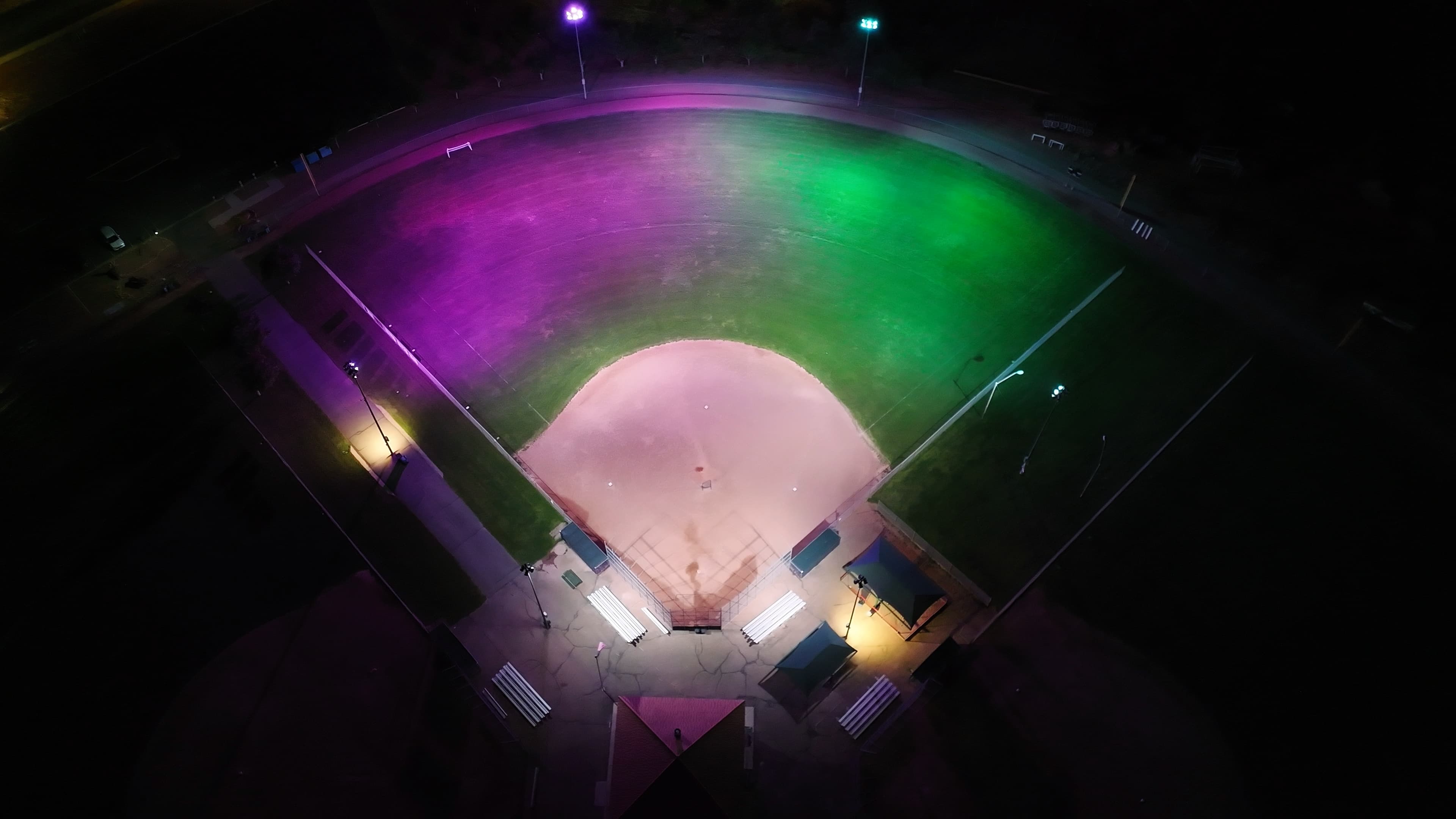
Why Baseball Lighting Is Having a Moment in Central Texas
Across the Greater San Antonio region, athletic facilities are in the middle of a quiet but significant transformation. From the growing youth leagues of Schertz and Cibolo to the recreation complexes serving communities like Converse, Universal City, and New Braunfels, facility operators are taking a hard look at what's lighting their fields — and increasingly, they don't like the answer.
Traditional metal halide and high-pressure sodium (HPS) fixtures have served ballparks for decades, but the technology has aged poorly compared to modern alternatives. Long warm-up times, poor color rendering, high energy consumption, and expensive lamp replacements are pushing facility managers, parks directors, and school athletic administrators toward a better solution: purpose-built LED sports lighting systems designed specifically for the demands of baseball and softball.
This isn't just a trend driven by cost savings, though energy reduction is a compelling part of the story. It's also about the quality of the game. Coaches, players, umpires, and fans all experience better outcomes when the lighting is right — and getting lighting "right" for baseball is more technically demanding than most people realize.
What Makes Baseball Lighting Uniquely Challenging
Baseball is one of the most optically demanding sports to light well, and that complexity is easy to underestimate. A batter tracking a 90-mph fastball, an outfielder reading a fly ball against a dark sky, an umpire calling balls and strikes at the plate — each of these moments depends on precise, consistent, shadow-free illumination.
Poor lighting design creates predictable problems: hot spots and dark zones across the outfield, glare that impairs depth perception, color temperatures that make the ball harder to track, and spill light that draws complaints from surrounding neighborhoods. In growing communities like Schertz — where residential development and athletic infrastructure are expanding side by side — managing light trespass is not a courtesy, it's increasingly a compliance requirement.
Professional-grade LED baseball lighting systems address all of these challenges through engineered photometric design:
- Pole placement and aiming strategies are calculated to maximize uniformity across the infield, outfield, and warning track
- Glare control optics are specified to protect batter sightlines and reduce eye strain for players and fans
- Color rendering indexes (CRI) in the 70–90+ range improve ball visibility and overall visual clarity compared to older HPS systems
- Uniformity ratios are designed to meet or exceed standards set by governing bodies including Little League Baseball, NFHS, NCAA, and professional league specifications
When lighting is designed correctly from the start, the field performs better — and so do the teams using it.
The LED Upgrade Conversation: Energy, Maintenance, and Longevity
For facility directors and operations leaders managing parks and recreation budgets in Schertz, Selma, or across Guadalupe and Bexar Counties, the financial case for LED baseball lighting is straightforward — even if the procurement process requires some navigation.
Energy consumption is the most immediate factor. Modern LED sports fixtures use significantly less power than the metal halide systems they replace. For a typical multi-field complex running lights four to five nights per week across a full season, that reduction in consumption translates to meaningful savings year over year. Those savings compound when you factor in reduced demand charges from your utility provider.
Maintenance costs tell an equally important story. Metal halide lamps degrade in output over time and require scheduled replacement, often involving bucket trucks, lane closures, and contracted labor. LED fixtures are rated for dramatically longer service lives — often 100,000 hours or more — and maintain consistent light output throughout that lifespan. For parks departments balancing tight maintenance budgets, that's a meaningful shift in total cost of ownership.
Controls integration adds another layer of value. Modern LED sports lighting systems can be paired with intelligent control platforms that allow operators to dim fields for practice versus game conditions, set automated schedules, enable remote monitoring, and receive alerts when a fixture needs attention. For multi-field complexes, this level of control can significantly reduce the administrative burden on parks staff.
It's worth noting that LED technology also supports sustainability goals that are increasingly important to municipalities and school districts in the San Antonio metro — goals that are often tied to reporting requirements, community expectations, and long-term capital planning.
Proof Point: What a Real LED Baseball Project Looks Like
VOSS recently completed a baseball field LED lighting project in Page, Arizona — a community-owned facility that needed to meet modern lighting standards while staying within a realistic public budget. The project involved engineered photometric design, pole-mounted LED sports fixtures, and full electrical installation managed by VOSS from design through commissioning.
The result was a field that meets current league lighting standards, performs reliably night after night, and delivers the energy and maintenance cost profile that community facilities need to be financially sustainable over time.
While every project is different, the Page, AZ installation illustrates what a well-executed LED baseball lighting upgrade looks like in practice: a community facility that was underlit and operationally costly becomes a modern, well-illuminated venue that serves players and families the way it should.
For Schertz and the surrounding communities in the Greater San Antonio area — where youth sports participation is strong and facilities serve multiple leagues and age groups throughout the year — that kind of outcome is both achievable and increasingly expected.
Serving Baseball and Softball Facilities Across the Greater San Antonio Region
VOSS's San Antonio branch serves communities throughout Bexar, Guadalupe, Comal, and Wilson Counties. Whether you're managing a municipal parks complex in Schertz, a school district athletic facility in Cibolo, a private youth baseball club in New Braunfels, or a multi-purpose sports campus serving Universal City and Converse, our team has the local presence and technical depth to support your project from initial assessment through long-term performance.
Our baseball and softball LED lighting work spans facilities of every scale:
- Youth recreational fields — Little League, recreational leagues, and community park facilities
- Middle and high school athletic complexes — meeting NFHS standards for scholastic competition
- College and university facilities — designed to NCAA specifications
- Semi-professional and professional venues — high-output systems for broadcast-quality illumination
This breadth of experience matters because the engineering requirements vary significantly across these levels. A Little League field in a neighborhood park has different pole height requirements, footcandle targets, and budget constraints than a high school varsity facility or a tournament-grade complex. VOSS designs to the actual requirements of each project — not to a one-size-fits-all template.
Public agencies and school districts in the Greater San Antonio region may be able to access VOSS services through cooperative purchasing programs, which can simplify and accelerate the procurement process. Eligible organizations should ask about access through BuyBoard, TIPS, Sourcewell, AEPA, Omnia Partners, and PACE — programs that VOSS participates in and that are widely used by Texas municipalities and school districts.
For broader context on LED sports lighting applications beyond baseball, the Pickleball LED Lighting Solutions, Tennis Court Lighting and Energy Solutions, and LED Gymnasium Lighting Solutions articles in our Latest Lighting series address related topics across the sports facility spectrum. Our LED Football Stadium Lights & Sports Field Lighting Solutions piece is also a useful reference for multi-sport complexes with diverse lighting needs.
Service Availability
While VOSS offers a comprehensive suite of national services, specific capabilities may vary by location. Please contact your local branch to confirm the current availability of specific services, technology solutions, or contracting capabilities in your immediate market.
Let's Talk About Your Field
If you manage or oversee a baseball or softball facility in Schertz, the Greater San Antonio area, or anywhere across Central Texas, we'd welcome the opportunity to discuss what a lighting upgrade could mean for your venue. Whether you're in early planning, evaluating a capital project, or responding to a specific performance or compliance challenge, VOSS is ready to help you think it through — no pressure, just expertise.
VOSS — San Antonio Branch (210) 967-8766
Reach out to schedule a consultation or request a preliminary photometric assessment for your facility.