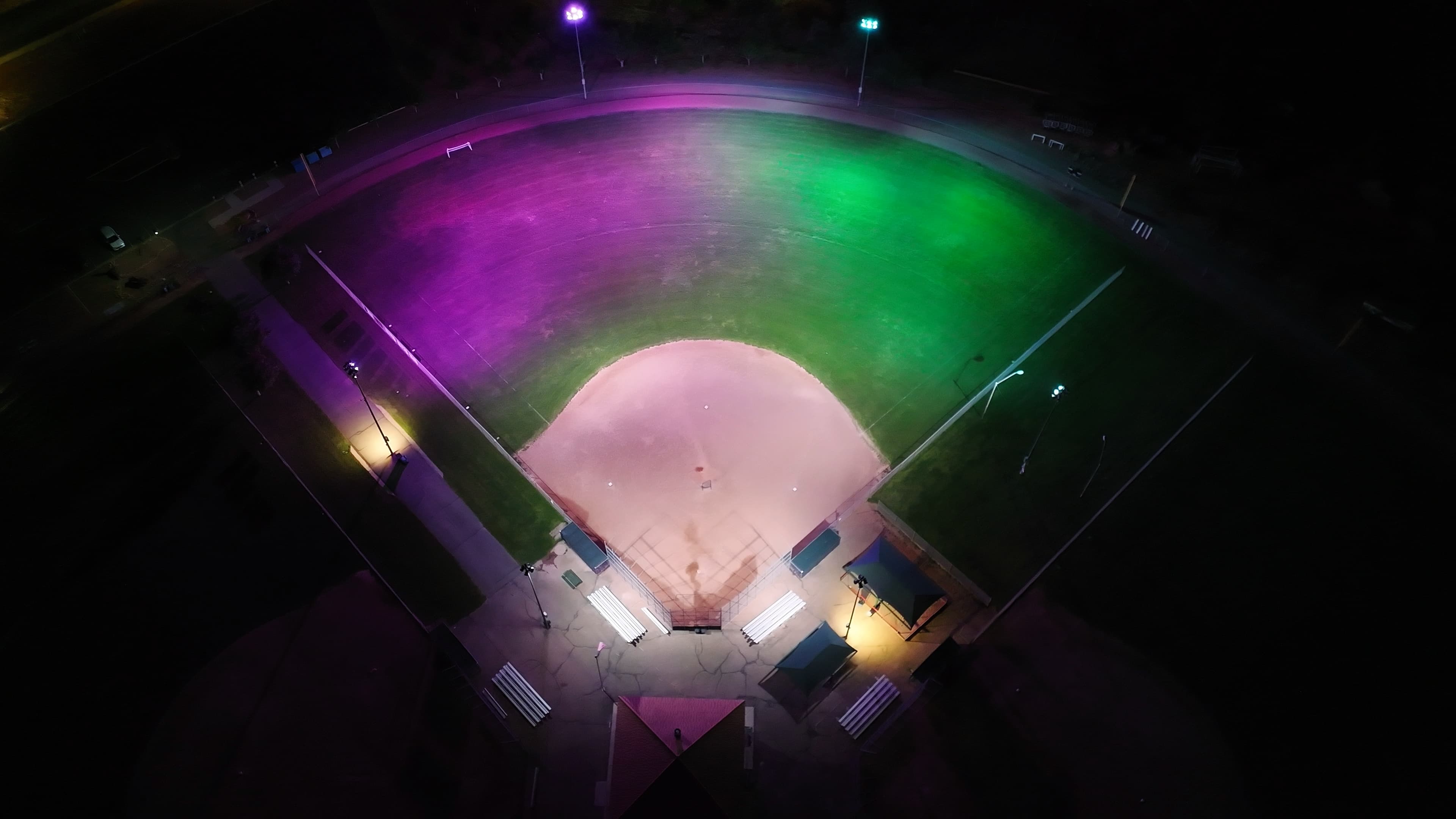
Why Baseball Lighting Is Having a Defining Moment in Nebraska
Across Nebraska — from the competitive travel ball programs in the Greater Omaha metro to the community recreation fields in Fremont and neighboring Dodge County — a quiet revolution is underway. Facility managers, parks and recreation directors, school athletic administrators, and private club operators are all arriving at the same conclusion: the old metal halide and high-pressure sodium systems lighting their baseball and softball fields are no longer serving the game.
The shift to LED sports lighting isn't simply a technology upgrade. It represents a rethinking of what a great athletic facility can deliver — for players trying to track a 90-mph fastball, for umpires making split-second calls, for fans watching under the lights, and for the organizations responsible for managing energy budgets and long-term maintenance costs. In a community like Fremont, where local athletics are woven into the fabric of daily life and where infrastructure investments must go the distance, this conversation is both timely and consequential.
At VOSS, we've been serving the Greater Omaha region — including Fremont, Blair, Wahoo, Columbus, and surrounding communities — as a full-service commercial electrical contractor for more than 85 years. We've seen how thoughtful lighting design transforms spaces. And baseball fields are one of the most technically demanding environments we work in.
What Makes Baseball Lighting Uniquely Complex
Not all sports lighting challenges are created equal. Baseball and softball present a specific set of optical and structural demands that separate an expertly engineered system from one that merely gets the lights on.
Field geometry creates competing lighting zones. The infield, outfield, warning track, bullpens, dugout areas, and press facilities each require different light levels and distribution patterns. A poorly designed system creates shadows in the outfield corners, uneven brightness at the batter's eye, or glare that impairs fielders tracking fly balls.
Pole placement is both a science and an art. The number of poles, their heights, their setback from the foul lines, and the aiming angles of each fixture all interact to produce — or fail to produce — the uniform illuminance ratios that governing bodies require. Whether a facility is seeking to meet Little League, NFHS, NCAA, or professional broadcast standards, the photometric design must be precise from the start.
Glare control is non-negotiable. Excessive spill light that reaches a batter's line of sight — or floods adjacent neighborhoods, roads, or residential areas — is both a performance problem and a community relations concern. In Fremont, where ballfields often sit near residential streets or share park space with other community amenities, responsible glare management matters.
Controls add another dimension. Modern LED systems can be paired with intelligent controls that allow field managers to dim lighting for practice sessions, schedule lights remotely, set pre-programmed scenes for different game types, and reduce energy consumption during off-peak hours. These capabilities aren't luxuries — they're tools that directly affect operating costs and facility management efficiency.
Our team approaches every baseball lighting project with a full photometric analysis before a single fixture is specified. That process — grounded in the actual field dimensions, pole placement constraints, and lighting standards that apply to your specific facility — is what ensures the finished system performs the way it should.
The Real Cost of Outdated Field Lighting — and the Case for LED
For facility operators in Fremont and across the Greater Omaha region, the financial case for LED conversion is increasingly hard to ignore. Traditional metal halide systems — still common on fields built in the 1990s and early 2000s — carry a compounding cost burden that touches energy consumption, lamp replacement, maintenance labor, and fixture lifespan.
Consider what our team has seen in comparable Omaha-area projects. At the Salvation Army Kroc Center in Omaha, VOSS retrofitted an indoor gymnasium lighting system that had required monthly — sometimes weekly — fluorescent lamp maintenance. By redesigning the layout and specifying long-lasting LED high bays, we reduced the fixture count from 99 to 47, cut energy usage in half, and delivered a projected annual savings of $4,257. The facilities team gained back time, budget, and peace of mind.
The same logic applies outdoors. Metal halide fixtures on a multi-field sports complex can represent one of the largest single line items in a parks department's utility budget. LED systems typically consume 50–70% less energy than the systems they replace, and they do so while delivering better light quality — more consistent color rendering, faster response time, and no warm-up delay between innings or after a rain delay.
For Fremont specifically, those savings matter. A community of just over 28,000 residents expects its public amenities to be fiscally responsible. When parks and recreation departments, school districts, or nonprofit athletic associations can demonstrate that a lighting upgrade pays back through energy savings — and potentially through available utility rebates and state procurement vehicles — the investment becomes easier to justify to boards, councils, and community stakeholders.
Nebraska government entities and public institutions should also know that VOSS holds an approved state contract in Nebraska, making procurement straightforward and compliant. Cooperative purchasing programs — including Sourcewell, TIPS, BuyBoard, AEPA, Omnia Partners, PACE, and the Nebraska ESU Co-Op — are available to eligible organizations, streamlining the path from project approval to installation.
From Little League Fields to Competitive Venues: Scaling the Right Solution
One of the most common misconceptions about LED sports lighting is that it's primarily a solution for large-scale or professional venues. In reality, some of the most impactful projects VOSS manages are community-level fields — the Little League parks, high school varsity diamonds, and recreational softball complexes that serve hundreds of families every season.
Youth and recreational facilities benefit from right-sized LED systems that meet basic illuminance standards (typically 30–50 footcandles for recreational play), reduce energy overhead, and eliminate the frequent lamp replacement cycles that burden volunteer-run organizations and underfunded parks departments.
High school and collegiate programs — including institutions in the Fremont area and across the Greater Omaha region — operate under NFHS and NCAA illuminance guidelines that demand higher, more uniform light levels and often require consideration of broadcast or streaming capabilities. VOSS designs to those standards, with photometric documentation to support facility compliance reviews.
Competitive travel ball complexes and multi-field parks present the most complex planning challenges: coordinating pole placement across multiple fields, managing light spill between adjacent diamonds, integrating controls that allow independent zone management, and future-proofing the infrastructure for additional fields or technology upgrades.
Regardless of scale, our approach is the same: begin with a thorough site assessment, develop a photometric design validated against applicable standards, and deliver a system that performs reliably from opening night forward.
This approach also connects naturally to the broader work our team does across the sports and recreation sector in Nebraska. Our sister content on LED gymnasium lighting solutions and pickleball and tennis court lighting explores how the same engineering discipline that makes a baseball field perform well under the lights applies across the full spectrum of athletic facilities — and readers interested in comprehensive facility lighting strategies will find those resources useful context.
What a Trusted Regional Partner Brings to Your Project
For facility operators in Fremont, Blair, Wahoo, North Bend, Schuyler, and the surrounding communities of eastern Nebraska, working with a locally connected contractor matters. VOSS's Omaha branch team understands the regional climate conditions that affect fixture selection and pole foundation design, the utility programs available to help offset project costs, and the procurement pathways that make public-sector projects move efficiently.
Our full-service model means we manage every phase of your lighting project — from initial photometric design and equipment specification through installation, commissioning, controls programming, and post-installation support. We don't hand a plan to a subcontractor and walk away. Our team is present throughout the process, and we remain available after the project closes.
The testimonial from Rob Porter, Director of Facilities at Blue Cross Blue Shield of Nebraska, reflects the standard our team holds itself to on every project: "We sincerely appreciate Voss's efficient, gracious customer service and the level of detail and professionalism they have demonstrated on this project. Our team could not be more satisfied with Voss's work." That commitment to thoroughness and client communication is what drives long-term partnerships — and it's the foundation on which every successful sports lighting project is built.
Service Availability
While VOSS offers a comprehensive suite of national services, specific capabilities may vary by location. Please contact your local branch to confirm the current availability of specific services, technology solutions, or contracting capabilities in your immediate market.
Let's Talk About Your Facility
Whether you're managing a single Little League field in Fremont or overseeing a multi-diamond athletic complex serving the broader Dodge County region, VOSS is ready to help you think through what a modern LED lighting system could mean for your players, your fans, your budget, and your long-term facility strategy.
We invite you to reach out to our Omaha branch team to schedule a consultative conversation — no obligation, just an honest discussion about your facility's current situation, your goals, and what a well-designed LED system could realistically deliver.
VOSS — Omaha Branch (402) 328-2283