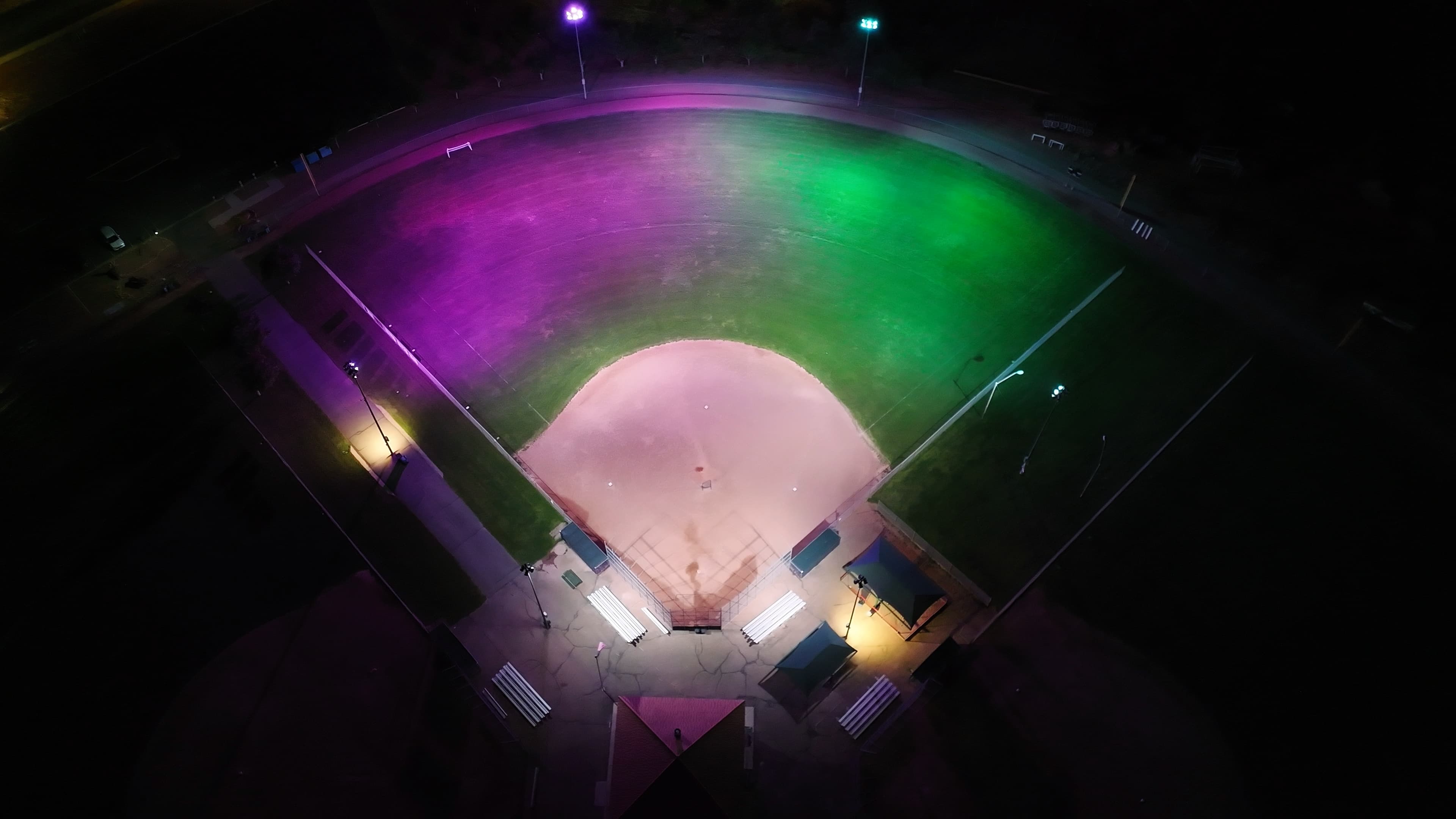
Why Baseball and Softball Lighting Is Having a Moment in Minnesota
Across the Twin Cities metro, something is changing on the diamond. Parks departments from Roseville to Woodbury are replacing aging metal halide systems with high-performance LED arrays. University athletic programs are rethinking how their fields perform on game night. Youth baseball associations — the kind that fill fields in South St. Paul, Eagan, and Apple Valley every spring — are discovering that better lighting means longer seasons, safer play, and fewer rain-delay headaches.
This shift isn't just about swapping out bulbs. It reflects a broader rethinking of what athletic facilities owe their players, fans, and communities. LED sports lighting technology has matured to the point where it delivers measurable advantages that facility managers and parks directors can justify to boards, city councils, and athletic directors with hard numbers. For organizations navigating tight operating budgets — which describes most public parks systems and school districts in Ramsey County — the energy and maintenance savings alone can make a compelling case.
Understanding what drives the best outcomes starts with understanding what makes baseball and softball lighting uniquely demanding — and what the latest generation of LED systems can actually deliver.
The Engineering Challenge of Baseball Field Lighting
Baseball is one of the most technically demanding sports to illuminate. Unlike a gymnasium or tennis court, a baseball field radiates outward in an irregular geometry — the infield diamond, the outfield arc, the warning track, the bullpens, and the foul territory all require consistent, uniform light from multiple angles. Batters need to pick up a pitched ball traveling at 60, 70, or 90 miles per hour against a backdrop that must be free of glare and hotspots. Outfielders tracking a fly ball against an evening sky need consistent light that doesn't shift or shadow between zones.
This is why photometric design — the science of mapping how light distributes across a surface — is so critical to a successful baseball lighting project. The right system isn't just about lumens. It's about:
- Pole placement and height — Positioning fixtures to minimize shadows in the infield and provide uniform coverage across the outfield without creating glare for players or spectators
- Mounting angles and aiming — Precisely directing each fixture to hit target zones while controlling spill light onto neighboring properties, roads, and residences
- Uniformity ratios — Meeting the standards set by governing bodies like the Illuminating Engineering Society (IES), NCAA, and various youth and amateur league organizations
- Color rendering and temperature — Selecting the right color temperature to ensure natural-looking light that supports high-definition broadcast and clear visibility for players at all levels
For facilities in dense urban and suburban environments — think parks in Maplewood, Arden Hills, or along the Mississippi River corridor in St. Paul — light trespass and spill control are not just technical considerations. They're community relations issues. A well-engineered LED system addresses both performance and neighbor impact at the same time.
What LED Technology Actually Delivers for Baseball Facilities
The performance gap between legacy metal halide or high-pressure sodium (HPS) systems and modern LED sports lighting is significant, and it's worth examining concretely for the benefit of anyone evaluating an upgrade.
Energy efficiency at scale. LED fixtures for sports applications typically consume 50–75% less energy than the metal halide systems they replace. For a facility running lights three to five nights per week through a full Minnesota spring and summer season, that reduction translates directly to lower utility bills — month after month, year after year. In a state where energy costs and sustainability goals are increasingly prominent in municipal and institutional budgets, that matters.
Instant-on performance. Traditional metal halide systems require a warm-up period of 15–20 minutes before reaching full brightness — and if power is interrupted during a rain delay, they require a cooling and re-strike period before they can be relit. LED systems reach full output instantly. For youth leagues managing tight game schedules, or high school programs with limited field time, this is a practical operational advantage that facility managers notice immediately.
Long service life and reduced maintenance. Quality LED sports fixtures are rated for 100,000+ hours of operation — dramatically longer than metal halide lamps, which require regular relamping cycles. For parks departments managing multiple facilities across St. Paul and Ramsey County, reducing the frequency of bucket truck visits and lamp replacement labor is a meaningful budget benefit.
Controls and smart systems integration. Modern LED sports lighting systems can integrate with programmable controls that allow facility managers to schedule lighting remotely, dim zones independently, and monitor energy consumption in real time. This kind of controls integration — a core VOSS specialty — opens the door to further efficiency gains and simplifies operations for parks and recreation staff who are already managing multiple responsibilities.
Broadcast and event readiness. For facilities that host tournaments, regional championships, or any event with video coverage, LED systems with high Color Rendering Index (CRI) values produce the kind of vivid, true-to-life light that cameras require. This is increasingly relevant even at the amateur and collegiate level, where social media coverage and live streaming have become standard parts of the game-day experience.
Proven Results: The Page, AZ Baseball Facility Project
When talking about what professional-grade sports LED lighting can accomplish in the real world, VOSS points to its work on a baseball facility project in Page, Arizona as a concrete example of what thoughtful design and expert execution deliver.
The Page project involved a full LED lighting upgrade for a baseball facility, replacing legacy fixtures with a modern, engineered LED system designed to meet sport-specific illumination standards. The result was a dramatic improvement in field-level light quality — more uniform coverage, reduced glare, and a significant reduction in energy consumption compared to the prior system. The project demonstrated how the right combination of fixture selection, pole placement, and photometric planning can transform a facility's performance while delivering long-term operating savings.
That same methodology — rigorous design, precise installation, and ongoing support — is what VOSS brings to every baseball and softball lighting project, whether it's a single-field community park in the St. Paul suburbs or a multi-field athletic complex serving a school district or university program.
For facility directors and parks administrators in the greater Minneapolis–St. Paul area evaluating similar upgrades, the Page project is a useful proof point: the outcomes are real, the savings are measurable, and the improvement in player and fan experience is immediate.
The St. Paul and Twin Cities Market: Why This Is the Right Time
Minnesota's baseball and softball infrastructure is extensive. The Twin Cities metro supports youth leagues, high school programs, community park fields, collegiate athletic departments, and independent and affiliated professional baseball — a full spectrum of facility types and ownership models, all with lighting needs that have evolved faster than many systems have kept pace.
Several factors make the current moment particularly well-suited for LED upgrades across the St. Paul area and surrounding communities like Maplewood, Shoreview, Burnsville, Inver Grove Heights, and Cottage Grove:
- Utility incentive programs — Minnesota utilities offer rebate and incentive programs for energy-efficient lighting upgrades. VOSS helps clients identify and navigate these programs to offset upfront project costs, making the economics of an LED upgrade even more favorable.
- State and cooperative purchasing options — For public-sector organizations including school districts, park districts, and municipal recreation departments in Ramsey, Dakota, Washington, and Hennepin counties, procurement doesn't have to be complicated. VOSS holds an approved state contract in Minnesota, making it straightforward for government agencies to source lighting systems and contracting services through a compliant, pre-vetted pathway. Eligible organizations may also access cooperative purchasing programs including Sourcewell, BuyBoard, TIPS, AEPA, Omnia Partners, PACE, and others — streamlining the process and reducing administrative burden.
- Long Minnesota playing seasons and extended lighting use — The region's spring and fall shoulder seasons, combined with tournament activity and multi-sport field sharing, mean that many facilities run their lights heavily. The higher the usage, the faster an LED upgrade pays back through energy savings.
- Aging infrastructure across municipal park systems — Many fields across the metro that were lit during the 1980s and 1990s expansion of youth sports infrastructure are now operating with systems well past their intended service life. Proactive replacement avoids emergency failures mid-season.
For facilities connected to related topics in this series, the conversation about baseball LED lighting fits naturally alongside broader discussions of sports lighting controls, outdoor LED upgrades, and energy audits — all of which are covered in related articles under VOSS's Latest Lighting resource section. Those resources are worth exploring alongside this one, particularly for organizations managing multiple facility types or evaluating a multi-phase capital improvement approach.
What to Expect from a VOSS Sports Lighting Engagement
VOSS approaches baseball and softball lighting projects as a full-service partner — not a fixture supplier. That distinction matters because the quality of the outcome depends as much on the engineering, project management, and installation as it does on the hardware itself.
A typical engagement with our Minneapolis team involves:
- Site assessment and photometric design — Our team evaluates the existing field layout, pole infrastructure, utility connections, and performance requirements to develop a lighting design that meets governing body standards and your specific operational goals
- Equipment specification and procurement — We work with leading sports lighting manufacturers to specify systems that match your performance targets, budget parameters, and long-term maintenance profile
- Permitting and coordination — VOSS manages the permitting process and coordinates with local utilities, ensuring the project moves forward without administrative delays
- Installation and commissioning — Our licensed electricians handle the full installation, including any electrical service upgrades required to support the new system, followed by commissioning and verification against design specifications
- Ongoing support — After commissioning, VOSS remains available for system support, controls programming adjustments, and any service needs that arise over the life of the installation
This end-to-end capability — backed by 85+ years of commercial electrical experience and a local Minneapolis branch team with deep roots in the region — is what distinguishes a VOSS project from a simple fixture swap.
Service Availability
While VOSS offers a comprehensive suite of national services, specific capabilities may vary by location. Please contact your local branch to confirm the current availability of specific services, technology solutions, or contracting capabilities in your immediate market.
Talk to VOSS About Your Baseball Lighting Project
Whether you're a parks director in Ramsey County weighing a field upgrade, a high school athletic director in the eastern suburbs planning for next season, or a recreational league coordinator looking to extend playing hours into the evening — the conversation starts the same way: with a site visit and an honest assessment of what your facility needs and what's achievable within your budget.
VOSS's Minneapolis branch serves St. Paul and the entire Twin Cities metro, including communities throughout Ramsey, Hennepin, Dakota, Washington, Anoka, and Scott counties. Our team is ready to discuss your project, walk you through available utility incentives and procurement options, and help you understand what a modern LED upgrade could mean for your facility's performance and bottom line.
VOSS — Minneapolis Branch
Phone: (651) 697-1599 Toll-Free: (800) 776-8677
Reach out today to schedule a consultation and take the first step toward a brighter, more efficient diamond.