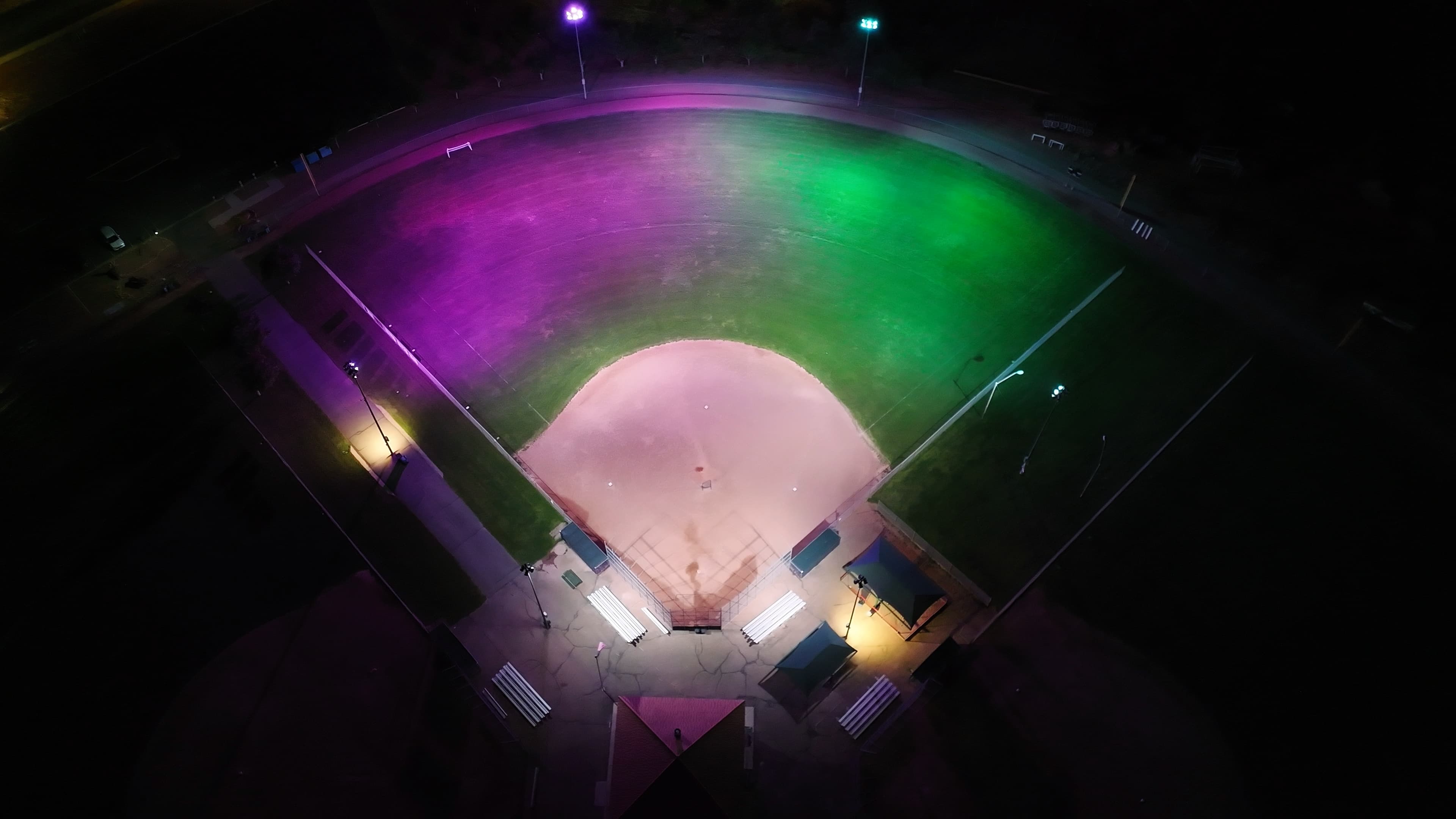
Why Baseball Lighting Deserves More Attention in Plymouth and the Twin Cities Suburbs
Plymouth, Minnesota is one of the most active athletic communities in the state. With a population of approximately 81,000 and a strong culture of youth sports, recreation, and competitive athletics, the city supports an extensive network of ballfields — from youth Little League diamonds in neighborhoods like Ridgemount and Plymouth Creek Park to competitive travel and high school programs feeding into the broader Wayzata and Robbinsdale school districts. Across the Greater Minneapolis region, communities from Maple Grove and Minnetonka to Eden Prairie and Brooklyn Park share a similar story: high participation, aging infrastructure, and growing pressure to make outdoor sports facilities safer, more efficient, and more welcoming to families.
For facility managers, parks and recreation directors, and school athletic administrators, the question is no longer whether to upgrade field lighting — it's when and how. LED technology has transformed what's possible for baseball and softball venues at every level, and understanding the full scope of those changes is the first step toward making a confident, well-informed decision.
The State of Baseball Lighting in Minnesota: What's Driving Change
Minnesota's athletic field lighting landscape is at a genuine inflection point. Several converging forces are pushing facility owners toward LED upgrades:
- Aging metal halide and HPS systems — Many ballfields in the Plymouth area and surrounding communities were lit with metal halide or high-pressure sodium (HPS) fixtures installed 15 to 25 years ago. These systems are approaching end-of-life, delivering degraded light output, consuming far more energy than modern alternatives, and requiring increasingly expensive lamp replacements.
- Rising energy costs — Xcel Energy, the primary utility provider across much of the Greater Minneapolis service territory, has introduced tiered rate structures and demand charges that make high-wattage legacy lighting systems disproportionately expensive to operate. For a park department running multiple fields, the cumulative operational cost is significant.
- Extended playing seasons and broadcast demands — Minnesota's compressed outdoor sports calendar means facilities are often used well into the evening from April through October. Quality nighttime lighting is no longer optional — it's essential to maximizing utilization and keeping programs running safely.
- Youth and amateur league standards — Organizations governing youth baseball and softball leagues have become more specific about minimum footcandle levels, uniformity ratios, and glare control standards. Older systems frequently fall short of current recommendations, creating liability and safety concerns.
- Sustainability goals — Many municipalities across Hennepin and Ramsey counties have adopted formal sustainability or carbon reduction targets. LED field lighting represents one of the most measurable, cost-effective ways for parks departments to reduce municipal energy consumption.
How Professional LED Lighting Transforms the Baseball Experience
The performance difference between a well-designed LED system and legacy field lighting is immediately apparent to anyone who has played or watched a game under both. But the technical details behind that difference matter, especially for facility managers and administrators making multi-decade infrastructure investments.
Light Quality and Uniformity
Modern LED systems for baseball and softball are engineered to deliver consistent, uniform illumination across the entire playing surface — from home plate through the infield dirt, across the outfield grass, and into the warning track. Uniform light reduces shadowing in the infield corners, improves depth perception for batters tracking pitches, and helps outfielders judge fly balls against a consistent visual background. For umpires and officials, it means fewer judgment calls obscured by inconsistent light levels.
Glare Control and Pole Placement
Baseball presents unique optical challenges. A batter tracking a pitch at 80+ mph cannot afford to glance into a blinding fixture. A center fielder losing a line drive in the lights creates both a safety hazard and a frustrating game experience. Engineered LED designs for baseball fields incorporate precise pole placement calculations, fixture aiming angles, and glare shields to keep high-intensity light off of players' lines of sight. This level of precision is a significant departure from older systems that relied on brute-force wattage to compensate for poor optical design.
Instant-On Performance
Unlike metal halide systems, which require 15 to 20 minutes of warm-up time to reach full output — and must cool down before restarting — LED fixtures reach full brightness instantly. For operators managing rain delays, late-starting games, or shared-field schedules, this is a genuine operational advantage. It also makes energy management strategies, including occupancy-based controls and scheduling systems, far more practical to implement.
Energy Efficiency at Scale
A well-designed LED retrofit on a typical regulation baseball field can reduce lighting energy consumption by 50 to 70 percent compared to legacy metal halide systems. For a park department operating multiple fields across Plymouth or surrounding communities like Maple Grove, Wayzata, or New Hope, those savings aggregate into substantial annual reductions in utility expenditure — without any reduction in light quality.
A Proven Approach: Lessons from the Field
One of the most instructive examples of what thoughtful LED baseball lighting design can accomplish comes from a VOSS project in Page, Arizona — a community with deep investment in youth and amateur baseball. VOSS delivered a comprehensive LED lighting solution for baseball facilities there that met governing body standards, reduced energy consumption significantly, and improved the overall experience for players, coaches, and families. The project demonstrated that with careful photometric design and proper engineering, even facilities in challenging environments can achieve professional-quality illumination at a fraction of the operating cost of legacy systems.
That same methodology — beginning with photometric modeling, validating against league and governing body standards, engineering for site-specific conditions, and delivering turnkey installation and commissioning — is what VOSS brings to every project in the Greater Minneapolis market.
For facility managers in Plymouth weighing a lighting retrofit or new construction project, the Page project is a useful reminder that outcomes depend not just on the fixtures selected, but on the quality of the design and installation behind them.
Controls Integration: The Next Frontier for Athletic Field Lighting
LED technology opens the door to lighting controls capabilities that simply weren't practical with older systems. For baseball and softball facilities in Plymouth and across the Twin Cities metro, controls integration is increasingly becoming part of the conversation — not just an add-on.
What smart controls enable:
- Scheduling and remote management — Field lights can be programmed to activate and deactivate automatically based on game schedules, reducing the risk of lights being left on overnight and eliminating staff overtime for manual shutoffs
- Zone-based dimming — Practice sessions, warm-ups, and low-attendance weeknight games don't always require full competition-level illumination. Dimming capabilities let operators right-size energy use to actual need
- Occupancy and motion sensing — For multi-use park facilities, sensors can ensure lights are only at full output when the field is actively in use
- Utility demand response — Some controls platforms integrate with utility programs that compensate facility owners for voluntarily reducing load during peak demand periods — a meaningful opportunity given Xcel Energy's demand charge structures in this region
Controls integration also connects naturally to the broader theme of smart facility management that is increasingly common among progressive parks departments and school districts across the Greater Minneapolis area. Readers exploring those broader trends may also find value in the related articles in this series on commercial LED outdoor lighting, energy audits and incentive navigation, and LED sports lighting for other court and field applications.
Considerations for Public-Sector Facilities in Plymouth and Hennepin County
Many of the baseball and softball facilities in Plymouth are owned and operated by the City, the Plymouth Park and Recreation Department, or local school districts — all of which face the specific procurement requirements of public-sector purchasing. For these organizations, VOSS offers a significant practical advantage.
VOSS holds an approved state contract in Minnesota, making it straightforward for city departments, school districts, and county agencies to procure lighting and electrical services without the time and cost of a standalone competitive bid process. This matters when a parks department is trying to move quickly on a field lighting upgrade before the spring season.
In addition, eligible organizations can access VOSS services through a range of cooperative purchasing programs, including Sourcewell, TIPS, BuyBoard, Omnia Partners, AEPA, PACE, and others — national frameworks specifically designed to give public agencies access to pre-competed contracts with trusted vendors. For administrators who need to demonstrate procurement compliance while moving efficiently, these programs are a valuable resource worth exploring with your VOSS representative.
Service Availability
While VOSS offers a comprehensive suite of national services, specific capabilities may vary by location. Please contact your local branch to confirm the current availability of specific services, technology solutions, or contracting capabilities in your immediate market.
Talk to VOSS About Your Baseball Facility in Plymouth or the Greater Minneapolis Area
Whether you're managing a single community field in Plymouth, overseeing a multi-field complex serving Maple Grove and Minnetonka, or planning a new athletic facility for a school district in Hennepin County, VOSS has the expertise to help you think through your options clearly — before you commit to a design or a product.
Our Minneapolis branch team works with facility managers, parks directors, school administrators, and operations leaders across the Twin Cities metro. We bring photometric design expertise, product knowledge, controls integration experience, and project management depth to every engagement — and we're happy to start with a conversation, not a quote.
VOSS — Minneapolis Branch
Phone: (651) 697-1599 Toll-Free: (800) 776-8677
Reach out to schedule a consultation and let's talk about what the right LED lighting solution looks like for your baseball or softball facility.