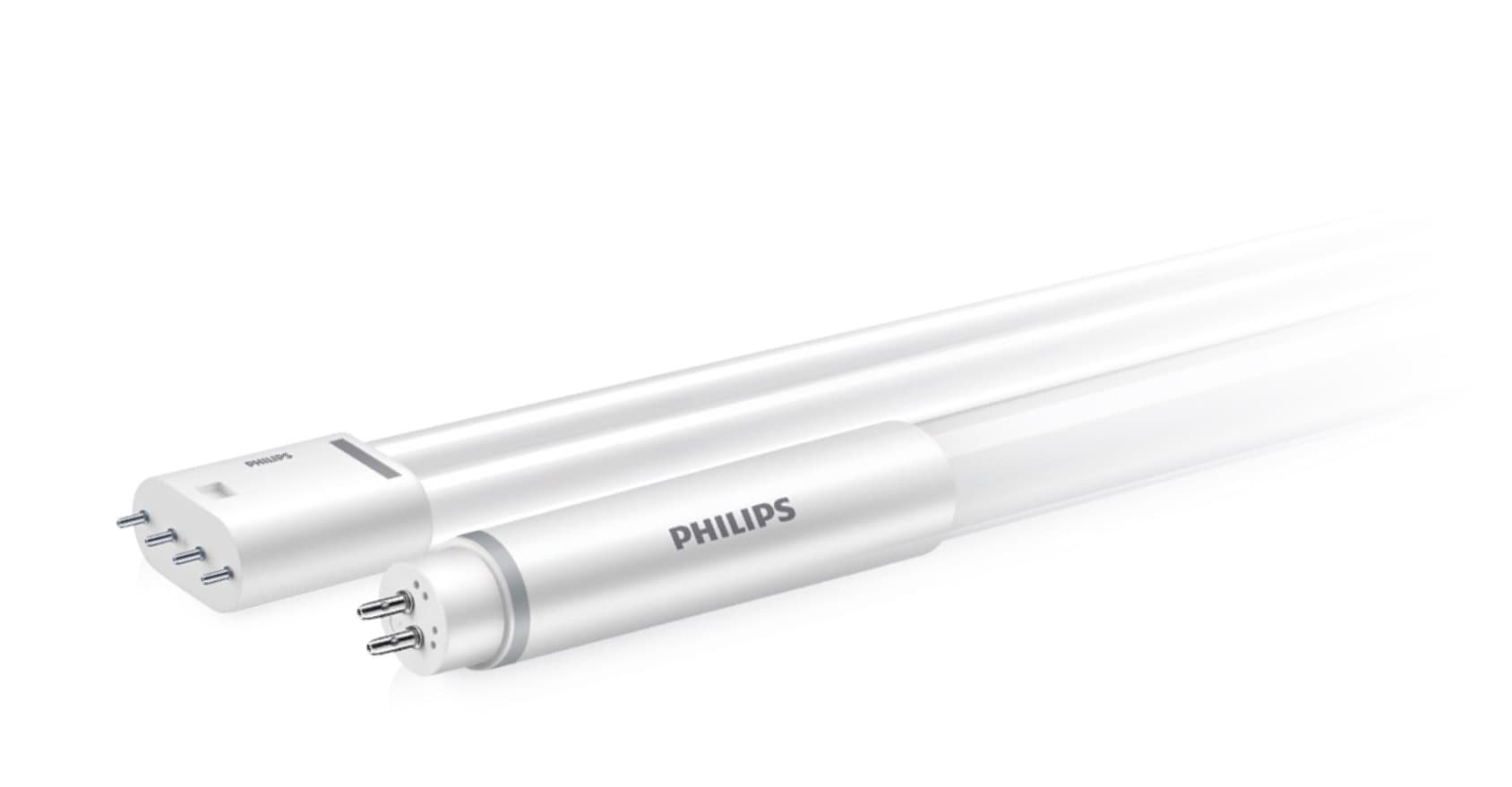
Minnesota's Fluorescent Lamp Ban Is Now Fully in Effect
For facility managers and building operators across the Greater Minneapolis metro — from downtown office towers and Bloomington retail centers to Saint Paul warehouses and suburban school campuses in Eden Prairie, Plymouth, or Maple Grove — the regulatory clock has run out on fluorescent lighting. Minnesota's Clean Lighting legislation enacted a two-phase ban that is now complete:
- Phase 1 (January 1, 2025): Prohibits the sale, offer for sale, or distribution of screw- or bayonet-based compact fluorescent lamps (CFLs).
- Phase 2 (January 1, 2026): Extends the ban to pin-based linear fluorescent lamps — including the T5, T8, and T12 tubes that have been the workhorse of commercial lighting for decades — as well as pin-based CFLs.
The intent of the legislation is straightforward: fluorescent lamps contain mercury, a hazardous material that poses disposal challenges and environmental risk. By eliminating them at the point of sale, Minnesota is reducing the volume of mercury entering landfills and waterways, lowering carbon emissions, and accelerating the shift to more energy-efficient technology. Facilities may continue operating existing lamps until they burn out, but restocking those lamps is no longer legally permitted.
For commercial operators in the Twin Cities region — where dense office parks, healthcare campuses, light industrial corridors, and large educational institutions all depend heavily on linear fluorescent fixtures — this is not a distant policy concern. It is an immediate operational reality.
What This Means for Your Facility Right Now
The practical implication of the ban is simple but significant: when your fluorescent tubes fail, there is no legal replacement available. Facilities that relied on a break-fix maintenance model — replacing lamps as they burn out — can no longer do so. Organizations that have not yet developed a transition plan are now operating on borrowed time.
This creates a different kind of urgency depending on who you are:
- Facility directors and operations managers overseeing large building portfolios — such as multi-tenant office complexes along the I-494 corridor, healthcare systems with campuses across Hennepin and Ramsey counties, or retail properties from Burnsville to Coon Rapids — face the risk of lighting outages with no quick fix. A systematic, planned LED conversion is far less disruptive than emergency replacements across dozens of fixtures.
- Business owners and tenants in commercial spaces throughout the metro need to understand whether their landlord or property management team has a plan in place — and if not, what their own exposure is to dark or flickering light in customer-facing environments.
- CFOs and financial decision-makers evaluating capital budgets should recognize that a proactive upgrade is not simply a compliance expense. The energy and maintenance savings associated with LED technology can generate meaningful returns that offset conversion costs, often within a few years.
- Public-sector administrators at Minnesota school districts, municipal buildings, county facilities, and state offices face the same compliance timeline — but have access to procurement pathways and utility rebate programs that can significantly reduce project costs (more on that below).
The Case for LED: Beyond Compliance
Compliance alone would justify the switch. But the business case for LED conversion in the Greater Minneapolis market goes well beyond checking a regulatory box.
Energy efficiency is the headline benefit. LED fixtures typically consume up to 50% less energy than equivalent fluorescent systems. For large commercial facilities — think a multi-story office building in the North Loop, a distribution center in Brooklyn Park, or a healthcare clinic in Edina — that reduction translates directly to lower utility costs month after month. Xcel Energy, the primary electric utility serving much of the Twin Cities metro, offers commercial rebate programs for qualifying LED upgrades, which can offset a meaningful portion of project costs and improve the economics further.
Maintenance savings are often underappreciated. Linear fluorescent lamps require periodic group relamping — scheduled replacement of entire banks of tubes before they fail — to keep lighting levels consistent and avoid the labor cost of individual spot replacements. LED fixtures last two to three times longer than fluorescent, and in many cases carry warranties measured in decades rather than years. Reducing the frequency and scope of lamp replacement work is a tangible operational benefit for any facility with high ceilings, hard-to-reach fixtures, or a lean maintenance staff.
Light quality is another dimension where LED technology has matured significantly. Modern LED products offer excellent color rendering, consistent lumen output over time, and a range of color temperatures to match different application environments — from the cool, high-intensity light appropriate for a warehouse or manufacturing floor to the warmer, more comfortable tones suited for an office, classroom, or patient care environment. Facilities that have deferred upgrades may be surprised by the visible improvement in their spaces.
Environmental alignment matters increasingly to Minnesota businesses and institutions. Mercury-free LED technology eliminates the hazardous waste disposal requirements associated with fluorescent tubes — a meaningful consideration for organizations with sustainability commitments, green building certifications, or environmental reporting obligations.
Navigating the Transition: What a Well-Planned Conversion Looks Like
A thoughtful LED conversion is not simply a one-for-one lamp swap. Done well, it is an opportunity to optimize a facility's entire lighting infrastructure — updating fixture types, integrating lighting controls, and aligning the project with available incentives. Done poorly, it can result in compatibility issues, inconsistent lighting quality, or missed savings opportunities.
Here is what a structured transition process typically involves:
- Lighting audit and inventory: Understanding what fixtures you have, where they are, what they consume, and what condition they are in is the essential starting point. A thorough audit creates the baseline from which all planning and savings calculations flow.
- Product selection and specification: Not all LED products are created equal. Selecting fixtures and retrofit kits with appropriate lumen output, color temperature, and dimming compatibility for each application type — and verifying that products qualify for available utility rebates — requires expertise.
- Incentive and rebate identification: Beyond Xcel Energy's commercial programs, Minnesota facilities may have access to additional rebates through other utilities or state energy programs. Identifying and properly documenting these incentives before the project begins is critical to capturing available savings.
- Phased or full-building execution: Larger facilities often benefit from a phased approach, addressing the most critical or highest-consumption areas first. Others prefer a comprehensive building-wide conversion to maximize economies of scale and eliminate the ongoing risk of fluorescent failures.
- Controls integration: LED lighting pairs naturally with occupancy sensors, daylight harvesting systems, and building automation platforms. Incorporating controls into a conversion project can add another layer of energy savings and improve occupant experience.
For public-sector facilities across Minnesota — school districts, counties, cities, and state agencies — VOSS holds an approved state contract in Minnesota, simplifying the procurement process and eliminating the need for a separate competitive bid on qualifying projects. Eligible organizations may also have access to cooperative purchasing programs including Sourcewell, TIPS, BuyBoard, AEPA, Omnia Partners, and others, which further streamline project delivery.
Greater Minneapolis in the Context of the Statewide Ban
The Twin Cities metro is home to a disproportionate share of Minnesota's commercial building stock. The region's concentration of corporate headquarters, healthcare systems, educational institutions, light industrial facilities, and mixed-use developments means that the fluorescent ban has its greatest aggregate impact here.
Communities throughout the metro — Minnetonka, Roseville, Lakeville, Eagan, Apple Valley, Woodbury, White Bear Lake, and dozens of others — all have substantial commercial and institutional building inventories where fluorescent fixtures remain the dominant light source. Many of these facilities have been deferring lighting upgrades for years, operating aging fluorescent systems that were already delivering diminishing returns. The ban has effectively ended that option.
There is also a regional workforce dimension worth noting. Minnesota's strong presence in healthcare, financial services, manufacturing, and higher education means that many of the state's largest employers maintain significant square footage of fluorescent-lit interior space. For HR and facilities teams already focused on workplace quality and employee experience, the lighting transition is an opportunity to improve environments that directly affect productivity and well-being.
For those exploring the broader landscape of LED incentives and upgrade strategies across the Twin Cities, the Minneapolis LED Lighting Rebates and Fluorescent Tube Bans and LED Lighting Rebates pages in this series offer additional detail on available financial programs and how to navigate them effectively.
Service Availability
While VOSS offers a comprehensive suite of national services, specific capabilities may vary by location. Please contact your local branch to confirm the current availability of specific services, technology solutions, or contracting capabilities in your immediate market.
Talk to a Local Lighting Expert in Minneapolis
The fluorescent lamp ban is now fully in effect, and the window for a planned, proactive transition is narrowing for facilities that have not yet acted. Whether you are managing a single commercial property or overseeing a portfolio of buildings across the Greater Minneapolis region, understanding your current fluorescent inventory and developing a credible conversion plan is the right next step.
VOSS's Minneapolis team works with commercial building operators, facility managers, public institutions, and business owners throughout the Twin Cities metro and surrounding communities. We are available to discuss your facility's specific situation, walk through available incentive programs, and help you build a transition strategy that makes sense for your budget and timeline.
VOSS — Minneapolis Branch Phone: (651) 697-1599 Toll-Free: (800) 776-8677