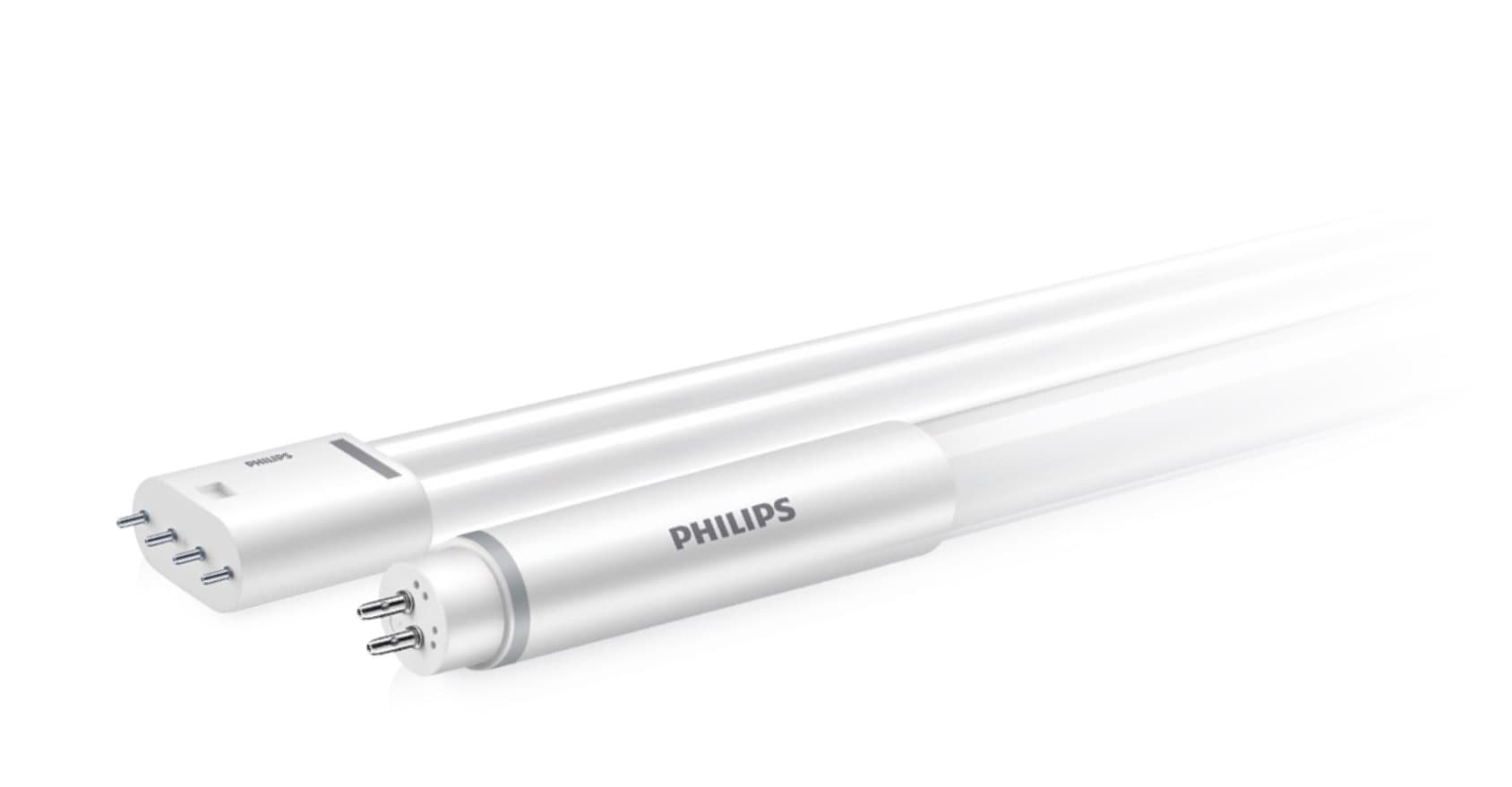
Minnesota's Fluorescent Lamp Ban Is Now Fully in Effect — Here's What It Means for Eagan Facilities
Minnesota's Clean Lighting legislation represents one of the most consequential shifts in commercial building management the state has seen in decades. As of January 1, 2026, the ban on pin-based linear fluorescent lamps — the T5, T8, and T12 tubes that light millions of square feet of office space, warehouses, retail floors, and classrooms across the Twin Cities metro — is fully in force. That means no new purchases, no restocking, and no simple workaround for facilities that have relied on fluorescent technology for years.
For Eagan's building operators, facility managers, and business owners, this isn't a distant policy concern — it's an immediate operational reality. Eagan is home to a dense commercial and corporate landscape stretching along the I-35E and Pilot Knob corridors, from the sprawling corporate campuses near Vikings Lake to the retail and light industrial tenants along Yankee Doodle Road and Diffley Road. Whether you manage a multi-tenant office building near the Eagan Town Center, a distribution facility off Highway 55, or a school or municipal property in the surrounding Dakota County communities of Apple Valley, Burnsville, or Lakeville, the lamp ban affects your maintenance budget, your compliance posture, and your long-term energy strategy.
Understanding the Two-Phase Ban — and Where Minnesota Stands Today
Minnesota's Clean Lighting law rolled out in two deliberate phases:
- Phase 1 (effective January 1, 2025): Banned the sale, offer for sale, or distribution of screw- or bayonet-based compact fluorescent lamps (CFLs).
- Phase 2 (effective January 1, 2026): Extended the ban to pin-based linear fluorescent lamps (T5, T8, T12 tubes) and pin-based CFLs — the most prevalent lamp types in commercial and institutional buildings.
The critical nuance for facility operators is that existing inventory may be used, but no new fluorescent lamps can be purchased or distributed after the effective dates. There are no broad commercial exemptions. This means the moment your current stock runs out, you are facing a forced transition — on an unplanned timeline, potentially during an inconvenient operational period.
The buildings most affected are those that haven't yet begun their LED retrofit planning: older office parks, warehouses, schools, and public facilities that have deferred upgrades in favor of familiar maintenance routines. In a market like Eagan — where many commercial properties were built during the city's rapid growth in the 1980s and 1990s — fluorescent lighting remains deeply embedded in the built environment.
The Business Case Goes Well Beyond Compliance
It would be a mistake to frame the LED transition solely as a regulatory obligation. For facility managers and operations leaders in Eagan and across the Greater Minneapolis metro, the economics of switching from fluorescent to LED are compelling in their own right.
Energy consumption and operating costs are the most immediate consideration. LED lighting typically consumes up to 50% less energy than equivalent fluorescent systems — a meaningful reduction for large commercial tenants or owner-operators managing significant square footage. In a metro area served by Xcel Energy, where commercial electricity rates and demand charges are a recurring budget line item, that efficiency directly translates to measurable cost savings month over month.
Maintenance frequency drops dramatically with LED. Fluorescent tubes have a rated lifespan of roughly 15,000–20,000 hours; quality commercial LED fixtures routinely reach 50,000 hours or more. For a facility with hundreds or thousands of lamp positions, that reduction in lamp change-outs represents real savings in labor, lift equipment, and operational disruption.
Light quality and occupant experience are factors increasingly prioritized by corporate tenants and HR-minded employers. LED systems offer superior color rendering, better uniformity, and dimming compatibility that fluorescent systems simply cannot match — advantages that matter in competitive Class A office markets and in schools where lighting quality affects student performance and well-being.
Mercury-free design is not incidental — it's the reason the ban exists. Fluorescent lamps contain mercury, a regulated hazardous material requiring special disposal procedures. Eliminating fluorescent lamps from your facility removes that liability entirely.
What Eagan Facility Operators and Public-Sector Organizations Should Do Now
The practical question for most building operators isn't whether to transition to LED — the law has resolved that — but how to do it strategically and cost-effectively. Here's how experienced facilities teams are approaching the transition:
Audit Your Current Lamp Inventory and Remaining Lifespan
Before investing in a full retrofit, understand the scope of your exposure. A lighting audit maps every fluorescent fixture in your facility, identifies lamp types, estimates remaining useful life, and surfaces opportunities for fixture consolidation or layout optimization. This is the foundation of a sound transition plan and helps prioritize which areas to address first.
Explore Utility Rebates and Incentive Programs
Xcel Energy offers commercial lighting rebates that can meaningfully offset the upfront cost of an LED retrofit — and Minnesota's regulatory environment has historically supported energy efficiency investment. Identifying and capturing available incentives before beginning a project is one of the highest-leverage actions a facility manager can take. Our Minneapolis LED Lighting Rebates page covers this topic in more depth for Twin Cities-area operators.
Consider Phased Implementation
For large facilities, a phased retrofit approach allows you to align capital expenditure with budget cycles, prioritize high-burn areas first, and use early-phase energy savings to help fund later phases. This is especially relevant for multi-building campuses, large retail properties, or school districts managing facilities across multiple sites in communities like Mendota Heights, Inver Grove Heights, or Rosemount.
Evaluate Controls and Smart Systems Integration
An LED retrofit is a natural inflection point to evaluate lighting controls — occupancy sensors, daylight harvesting, and networked lighting management systems that can further reduce energy consumption and give facilities teams real-time visibility into system performance. For Eagan's corporate and industrial tenants, these integrations align with broader smart building and sustainability goals. Our Commercial LED Lighting Fixtures and related pages explore fixture options in more detail.
Plan for Disposal of Existing Fluorescent Stock
As your remaining fluorescent lamps are used up, ensure you have a compliant disposal pathway. Fluorescent lamps are classified as universal waste under EPA regulations and require proper recycling — not landfill disposal. A planned transition gives you time to coordinate this responsibly.
A Note for Government, Schools, and Public-Sector Facilities in Dakota County
For Eagan's public-sector organizations — municipal buildings, Dakota County facilities, public school districts, and other government entities — the LED transition intersects with procurement requirements that add complexity to what might otherwise be a straightforward upgrade project.
VOSS holds an approved state contract in Minnesota, streamlining procurement for government agencies seeking compliant, auditable purchasing pathways. We also support eligible organizations through cooperative purchasing programs including Sourcewell, TIPS, BuyBoard, Omnia Partners, AEPA, PACE, and others — giving public-sector facility managers a faster, simplified route to the products and services they need without sacrificing competitive pricing or compliance.
If your organization is subject to public procurement requirements, ask us specifically about state contract and cooperative purchasing options when you reach out.
VOSS's Role in Minnesota's LED Transition
VOSS has served commercial and institutional clients across Minnesota and the broader Upper Midwest for decades. Our Minneapolis branch team brings direct experience with the Twin Cities market — its utility rebate programs, its contractor licensing requirements, and the specific needs of the industries and building types that define communities like Eagan, Burnsville, Apple Valley, and the surrounding Dakota County corridor.
We approach the fluorescent-to-LED transition as a planning discipline, not just a product swap. That means starting with a thorough understanding of your facility's current state, your operational constraints, your budget timeline, and your long-term energy goals — and building a transition strategy that serves all of them. For readers interested in the broader landscape of rebate navigation and energy incentives, our Energy Audits, Incentives, and Rebate Navigation for Businesses page offers additional perspective on maximizing return from efficiency investments.
Service Availability
While VOSS offers a comprehensive suite of national services, specific capabilities may vary by location. Please contact your local branch to confirm the current availability of specific services, technology solutions, or contracting capabilities in your immediate market.
Talk to Our Minneapolis Team About Your Eagan Facility
Minnesota's fluorescent lamp ban has changed the calculus for every commercial building operator in the state. Whether you're managing a single corporate office off Lone Oak Road, a portfolio of industrial properties in the Airport South Business Park, or a school district facility in Dakota County, we're here to help you understand your options, capture available incentives, and execute a transition that works for your organization.
VOSS — Minneapolis Branch
Phone: (651) 697-1599 Toll-Free: (800) 776-8677
Reach out to schedule a consultation with our local team. We'll help you assess where your facility stands, what the transition to LED means for your budget, and how to move forward with confidence.