Minnesota's Fluorescent Lamp Ban Is Here — And It Affects Every Commercial Building in Brooklyn Park
As of January 1, 2026, Minnesota's Clean Lighting legislation has entered full effect, completing a two-phase ban on mercury-containing fluorescent lamps. For facility managers, business owners, and operations leaders throughout Brooklyn Park and the broader Northwest Metro, this isn't a distant regulatory concern — it's an immediate operational reality.
The ban prohibits the sale, offer for sale, or distribution of covered fluorescent products. Building operators may continue using existing lamp inventory on hand, but once those lamps burn out, replacements are no longer legally available for purchase in Minnesota. There is no broad exemption, and stocking up is no longer a viable long-term strategy.
Understanding what's banned, what it means for your facility, and how to respond strategically is now essential for anyone responsible for keeping a commercial building lit and compliant.
What Exactly Is Prohibited — and When
Minnesota's Clean Lighting ban rolled out in two phases:
- Phase 1 (effective January 1, 2025): Prohibits screw-base and bayonet-base compact fluorescent lamps (CFLs) — the spiral or bulb-shaped fixtures found in offices, break rooms, and retail spaces.
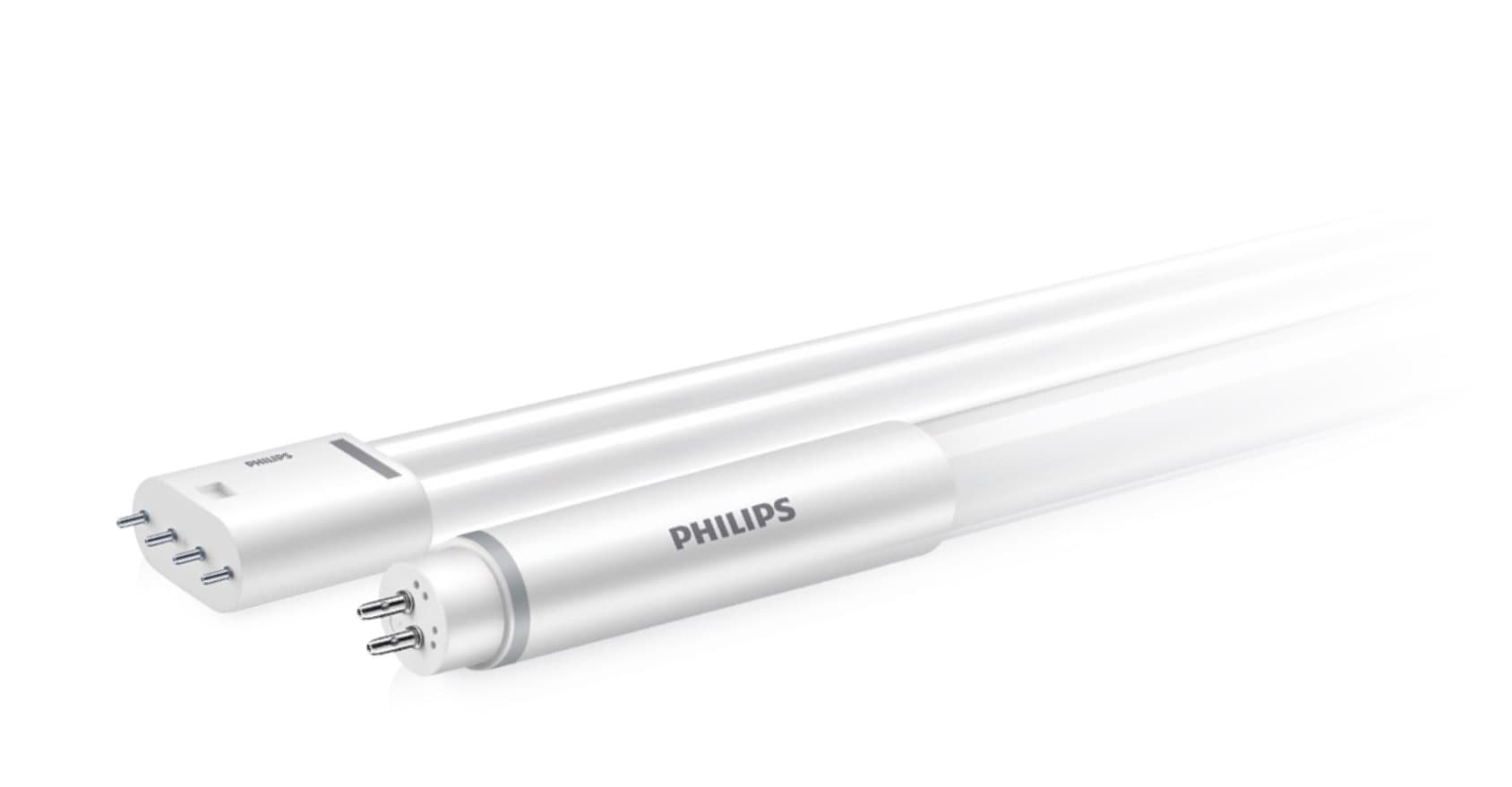
- Phase 2 (effective January 1, 2026): Prohibits pin-based linear fluorescent tubes — including T5, T8, and T12 lamps — as well as pin-based CFLs. These are the long tube fixtures found in drop-ceiling grids, industrial strip fixtures, and wraparound luminaires throughout warehouses, schools, medical offices, and retail environments.
For most commercial buildings in Brooklyn Park — a city of approximately 83,000 residents with a dense mix of industrial parks, corporate campuses, retail corridors, and public facilities — linear T8 and T5 fluorescent tubes are the backbone of interior lighting. Phase 2 is where the ban's impact is most broadly felt.
The underlying policy goal is environmental: fluorescent lamps contain mercury, a hazardous substance that poses serious waste disposal challenges and pollution risks. Minnesota's legislation aligns with a national momentum toward mercury-free, energy-efficient LED technology that is already well underway in forward-looking facilities across the state.
Why Brooklyn Park Operators Shouldn't Wait for Burnouts
A reactive approach to this ban — waiting for lamps to fail before acting — creates significant operational and financial risk. Here's why a proactive LED transition makes more sense for facilities in this market:
Supply chain certainty is gone for fluorescent. With manufacturing and distribution of covered lamps winding down nationally, lead times and availability for remaining inventory are increasingly unpredictable. Facilities that delay may face emergency lighting failures with no compliant replacement option on hand.
Energy costs compound over time. LED technology typically delivers up to 50% reduction in lighting energy consumption compared to fluorescent systems. For high-bay warehouses, large office campuses, or distribution facilities — common in Brooklyn Park's industrial corridors near Highway 169 and 610 — that efficiency gain represents measurable operating cost savings year over year.
Maintenance cycles are dramatically longer. Modern LED fixtures carry lifespans 2–3 times longer than fluorescent tubes. For facilities managers juggling multiple buildings or large square footage, fewer lamp replacements mean lower labor costs and less operational disruption.
Mercury-free means safer, simpler disposal. Fluorescent lamps require specialized recycling under EPA guidelines. LED fixtures eliminate that compliance burden entirely, simplifying facilities management workflows.
Light quality is visibly better. LED lighting offers superior color rendering, more consistent illumination, and dimming flexibility that fluorescent systems cannot match — factors that matter for retail environments, healthcare settings, and productivity-focused workplaces throughout the metro.
A Regional Shift Already Underway Across the Greater Minneapolis Area
Brooklyn Park sits within one of Minnesota's most commercially dynamic regions. The Northwest Metro — encompassing communities like Maple Grove, Plymouth, Osseo, and Champlin — has seen sustained commercial development across industrial, healthcare, retail, and education sectors. Facilities in these communities are subject to the same state ban, and many operators are already in various stages of fluorescent-to-LED transition planning.
For public sector organizations — schools, municipal buildings, county facilities — this moment carries additional urgency. LED upgrades represent a rare convergence of regulatory compliance, energy savings, and capital planning opportunity. Minnesota public agencies also have access to simplified procurement pathways that remove traditional barriers to getting projects moving.
VOSS holds an approved state contract in Minnesota, giving government agencies, school districts, and public institutions a compliant, streamlined path to sourcing LED lighting and electrical systems without navigating a full competitive bid process. Eligible organizations may also utilize cooperative purchasing programs including Sourcewell, TIPS, BuyBoard, Omnia Partners, AEPA, PACE, and others — all designed to accelerate procurement while maintaining public accountability.
For private-sector facilities, utility incentive programs available through regional providers can offset a significant portion of LED upgrade project costs, improving return on investment and shortening payback periods. Related resources on LED lighting rebates in Minneapolis and navigating utility incentive programs are available within the Latest Lighting section of the VOSS website.
What a Fluorescent-to-LED Transition Actually Looks Like
For building operators unfamiliar with LED retrofits, the process is more straightforward than it may appear — especially when guided by an experienced electrical contractor who understands both the technology and the regulatory context.
Assessment comes first. A qualified lighting professional will audit your existing fluorescent inventory — fixture types, lamp counts, wattages, and locations — to establish the full scope of transition needed. In a city like Brooklyn Park, where commercial facilities range from single-story retail strip centers to multi-floor office buildings and large-format industrial spaces, each property has a distinct lighting profile.
Retrofit vs. full fixture replacement is a key decision. In many applications, LED tube retrofits can be installed directly into existing fluorescent housings, minimizing installation cost and disruption. In other cases — particularly where fixtures are aging, inefficient, or poorly suited to LED — full fixture replacement delivers better long-term performance and aesthetics. An experienced contractor will guide you through the right approach for each space.
Controls integration unlocks additional savings. LED systems are inherently compatible with occupancy sensors, daylight harvesting controls, and networked lighting management platforms. For facilities looking to maximize energy performance, integrating lighting controls during a retrofit is far more cost-effective than adding them later. The Latest Lighting section on the VOSS website includes additional resources on commercial LED fixtures and controls systems for further reading.
Rebate and incentive capture requires documentation. Utility rebate programs typically require pre-approval, project documentation, and post-installation verification. Working with a contractor experienced in Minnesota's utility programs ensures that eligible savings are captured — not left on the table.
Service Availability
While VOSS offers a comprehensive suite of national services, specific capabilities may vary by location. Please contact your local branch to confirm the current availability of specific services, technology solutions, or contracting capabilities in your immediate market.
Talk to Your Local VOSS Team in Minneapolis
VOSS has served commercial, industrial, and public-sector clients across Minnesota for decades. Our Minneapolis branch team understands the regulatory landscape, the regional utility programs, and the operational priorities of building operators throughout Brooklyn Park and the greater Northwest Metro.
Whether you're managing a single facility or overseeing a portfolio of properties, we're here to help you navigate the fluorescent lamp ban with a practical, cost-effective LED transition strategy.
VOSS Minneapolis Branch Phone: (651) 697-1599 Toll-Free: (800) 776-8677
Contact us to schedule a complimentary lighting assessment and explore what a fluorescent-to-LED transition could look like for your facility.