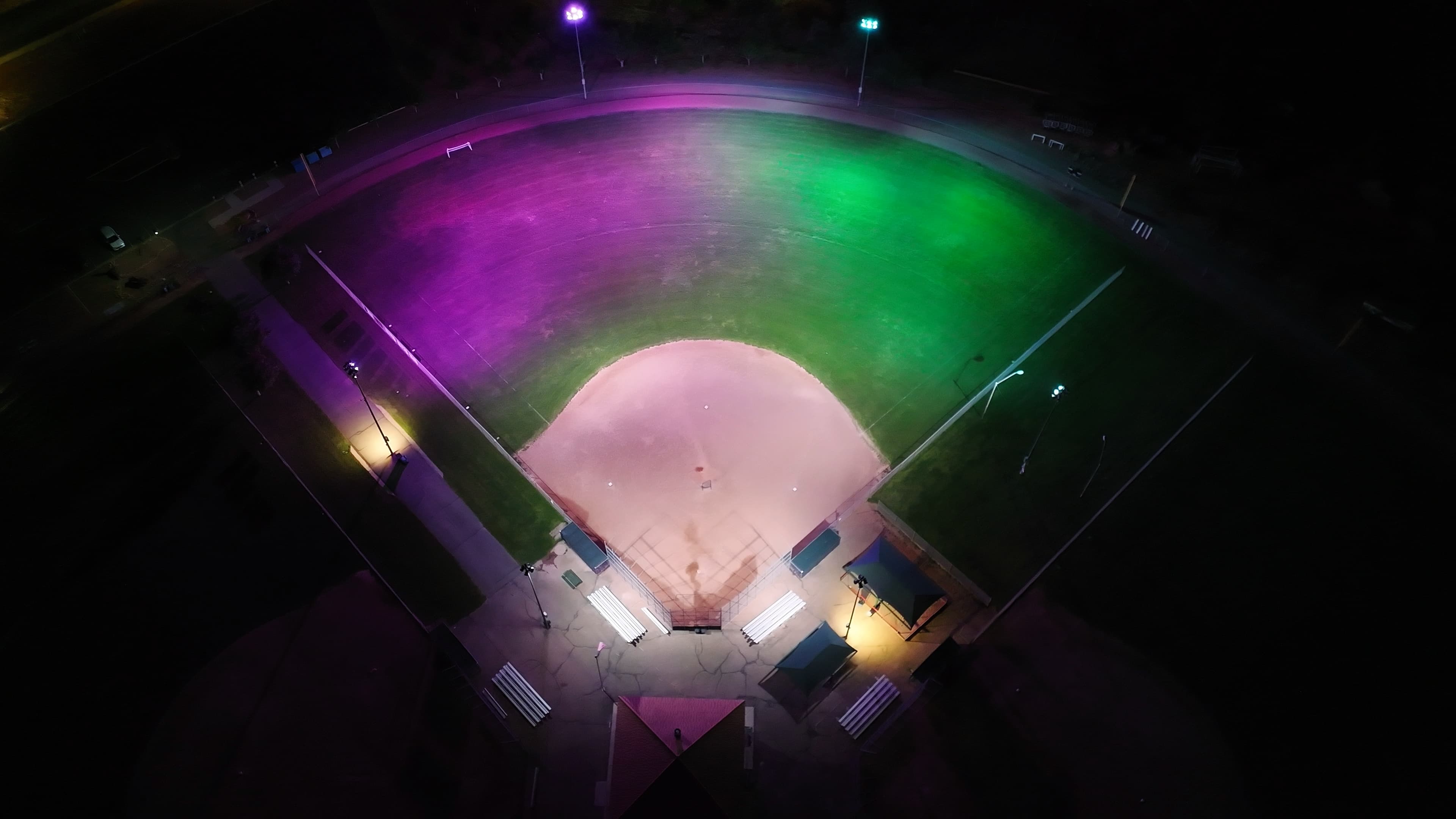
Why Baseball Field Lighting Is Having a Moment in Michigan
Across Michigan, athletic facilities are quietly undergoing a transformation — and it's happening one light pole at a time. From youth recreational leagues in Saline and Ypsilanti to competitive high school and collegiate venues throughout the Ann Arbor metro area, facility managers and athletic directors are confronting the same reality: aging metal halide and high-pressure sodium (HPS) lighting systems are failing, and the cost of doing nothing is growing.
In a community like Ann Arbor — home to the University of Michigan and a robust network of parks, schools, and athletic programs serving roughly 120,000 residents — the demand for high-quality, reliable sports lighting is significant. The broader Washtenaw County area, including communities like Dexter, Chelsea, and Pittsfield Township, hosts dozens of baseball and softball facilities that collectively log thousands of hours of use each season. When the lights underperform, fields go dark, games get canceled, and rental revenue disappears.
This article explores what modern LED lighting technology means for baseball and softball facilities in the Greater Detroit region, what drives the best outcomes on projects like these, and what facility stakeholders should know before planning an upgrade.
The Real Cost of Outdated Athletic Field Lighting
Traditional HID-based sports lighting — the metal halide or HPS systems that still illuminate many fields across Southeast Michigan — was the industry standard for decades. But those systems carry compounding costs that are increasingly difficult to justify.
Energy consumption is the most visible burden. Metal halide fixtures draw enormous amounts of power, and because athletic fields typically operate during peak evening hours, utility costs accumulate fast. LED systems consume significantly less energy for equivalent or superior light output, and for facilities in DTE Energy's service territory — which covers much of the Ann Arbor area — reduced consumption can translate directly into measurable savings on every monthly bill.
Maintenance and reliability are the hidden costs. HID lamps degrade over time, producing less and less light even before they fail outright. Relamping a multi-pole sports lighting system requires specialized equipment and labor, and outages — especially mid-season — can force cancellations that ripple through an entire schedule. The experience at North Hills Middle School in Bloomfield, Michigan illustrates this vividly: multiple lamp outages rendered their athletic field unusable for night games, costing the school field rental revenue and disrupting team schedules. VOSS replaced sixty-eight 1,500-watt HID fixtures with 750-watt Keystone Sports Lighter LED fixtures, cutting energy draw in half while delivering what the school's Director of Maintenance & Operations described as "brilliant and uniform illumination that dramatically enhances the field for both players and spectators."
Performance gaps matter too. Older systems often produce uneven light distribution — bright spots near poles, dim zones in the outfield corners, and harsh glare that affects batter visibility and broadcast quality. For competitive facilities serving high school, collegiate, or amateur league programs, these deficiencies aren't just inconveniences; they affect athlete performance and, increasingly, the ability to attract tournaments and showcase events.
What Makes Baseball Lighting Different — and Why It Requires Expert Design
Not all sports lighting projects are created equal, and baseball presents some of the most demanding optical challenges in the field. Unlike a rectangular court or football field, a baseball diamond's geometry requires lighting systems that serve dramatically different zones simultaneously: the tight geometry of the infield, the expansive arc of the outfield, and the foul territory and warning track in between.
Photometric precision is non-negotiable. A well-designed baseball lighting layout accounts for pole placement, mounting heights, fixture aiming angles, and spill light control to deliver uniform horizontal illuminance across all playing surfaces. Governing bodies — from Little League International to the NCAA and USA Baseball — publish specific footcandle requirements at different classification levels, and a design that falls short can disqualify a facility from hosting sanctioned play.
Key design considerations for baseball and softball LED lighting include:
- Pole placement and height — Optimized to minimize shadows and provide appropriate coverage angles without creating glare for batters or fielders looking into the sky
- Uniformity ratios — The ratio of maximum to minimum footcandles across the field surface; lower ratios mean more consistent light and better visibility
- Glare control — Shielding and precise aiming to protect players tracking fly balls and prevent broadcast camera wash-out
- Spill and obtrusive light — Critical for fields in residential neighborhoods, as is the case in many Ann Arbor parks and school campuses adjacent to housing
- Controls integration — Dimming, scheduling, and zone control capabilities that let operators manage lighting levels for practice versus game play, reduce energy use during non-peak periods, and respond instantly to weather delays
Modern LED systems address all of these factors simultaneously. Whereas legacy systems required compromises — trading off uniformity for cost, or glare control for coverage — today's LED optics deliver purpose-built performance at every level of play.
For facility operators evaluating an upgrade, the controls dimension deserves particular attention. Smart lighting controls allow fields to operate at reduced output during batting practice or early-season tryouts, then ramp to full game-level illumination when needed. Combined with automated scheduling and remote monitoring, these systems eliminate the "lights left on overnight" scenarios that quietly drain operating budgets season after season. VOSS's broader work in lighting controls — explored in more depth in our article on LED Football Stadium Lights and Sports Field Lighting Solutions — applies directly to baseball and softball contexts.
The Ann Arbor and Greater Detroit Market: A Strong Case for Investment
Ann Arbor's identity is inseparable from athletics at every level. The University of Michigan's Raymond A. Fisher Stadium seats thousands and hosts Big Ten softball competition. Huron High School, Pioneer High School, and Community High School all field varsity baseball and softball programs competing in the SEC. Dozens of youth travel baseball and softball clubs operate throughout Washtenaw County, many of them sharing municipal and school district facilities with general recreation programs.
The practical implication for facility managers is that Ann Arbor-area fields carry a higher utilization burden than those in many comparable markets. Multi-use facilities in Ann Arbor, Ypsilanti Township, Scio Township, and surrounding communities are regularly scheduled from early spring through late fall — and increasingly into winter for indoor practice under covered facilities or dome structures. Every hour of darkness is a lost opportunity.
For public-sector organizations — school districts, municipal parks departments, and recreational authorities — the financial case for LED upgrades is further strengthened by the availability of cooperative purchasing programs. Eligible organizations can access pre-negotiated contracts through programs such as Sourcewell, BuyBoard, TIPS, Omnia Partners, AEPA, and PACE, streamlining procurement and reducing the administrative burden of competitive bidding. For a parks and recreation department or athletic director managing a capital improvement project under a tight timeline, cooperative purchasing can be a significant practical advantage.
Energy incentive programs offered by Michigan utilities may also reduce the net cost of qualified LED upgrades. VOSS's team can help facilities identify and navigate available programs — a process covered in more depth in our article on Energy Audits, Incentives, and Rebate Navigation for Businesses.
Lessons from the Field: What Successful Projects Look Like
The best outcomes in sports lighting projects share a few common characteristics — and they're worth understanding before any facility in the Ann Arbor area begins the planning process.
Start with a lighting audit and photometric design. Before specifying any fixture or pole, a qualified engineer should assess the existing infrastructure, measure current light levels, and model the proposed system against the target footcandle requirements for the facility's intended use. This step prevents costly over- or under-specification and ensures the final design meets governing body standards.
Match the fixture to the application. Not every LED sports light is appropriate for every facility. Beam angles, mounting heights, and output levels must be matched to the geometry of the specific field. The North Hills Middle School project — with its precise pairing of Keystone Sports Lighter LED fixtures to a detailed photometric layout — is a strong example of how specification-driven design produces reliable, verifiable results.
Plan for the full project lifecycle. Pole condition, electrical infrastructure capacity, conduit routing, and panel capacity all influence the scope and cost of a lighting upgrade. A full-service contractor who can manage electrical as well as lighting work — from initial design through installation, commissioning, and ongoing support — reduces coordination complexity and accountability gaps.
Consider the community impact. In Ann Arbor, where neighborhoods and athletic facilities are often closely interwoven, light spill and neighbor relations matter. Properly aimed and shielded LED fixtures address this concern directly, and documenting compliance with any applicable municipal dark-sky or light-pollution ordinances can smooth the permitting process.
For facilities exploring adjacent opportunities — indoor gymnasiums, multi-sport complexes, or recreational courts — VOSS's related articles on LED Gymnasium Lighting Solutions, Pickleball LED Lighting Solutions, and Tennis Court Lighting and Energy Solutions offer parallel insight into sports lighting best practices across different venue types.
Service Availability
While VOSS offers a comprehensive suite of national services, specific capabilities may vary by location. Please contact your local branch to confirm the current availability of specific services, technology solutions, or contracting capabilities in your immediate market.
Talk to a Local Expert About Your Facility
Whether you manage a youth recreational complex in Pittsfield Township, a high school athletic program in the Ann Arbor Public Schools district, or a municipal parks system serving communities across Washtenaw County, VOSS's team is ready to help you think through your baseball or softball lighting project — from feasibility to final commissioning.
Our Grand Rapids branch serves the Ann Arbor market and the broader Greater Detroit region. Reach us at (616) 975-9914 or toll-free at (800) 706-8677 to schedule a consultation with one of our sports lighting specialists. There's no obligation — just an honest conversation about what your facility needs, what's possible, and what a well-executed project looks like from start to finish.