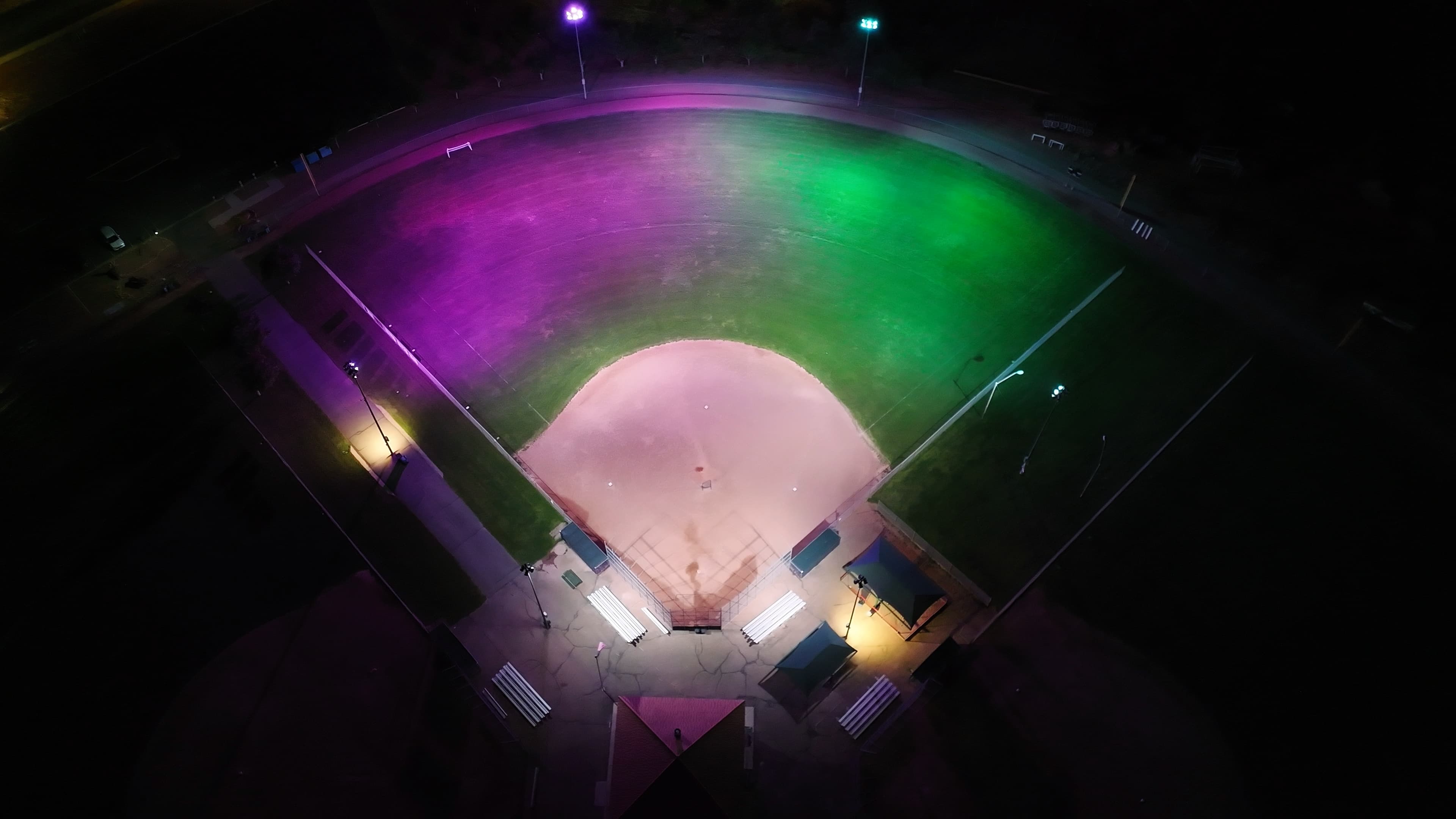
Why Baseball Lighting Is Having a Moment in North Texas
Across the Greater Dallas–Fort Worth metroplex, athletic facilities are in the middle of a quiet revolution. From Irving's established youth sports complexes to competitive travel ball facilities in Coppell, Grand Prairie, and Las Colinas, organizations are reevaluating their aging metal halide and high-pressure sodium lighting systems — and finding a compelling case for LED.
The shift isn't just about energy savings, though those are substantial. It's about the entire experience: how players see the ball off the bat, how umpires track a play at second base, how families in the stands feel on a Tuesday night game under well-designed light. For a city of 240,000 like Irving — home to a dense network of parks, recreational leagues, and competitive athletic programs — getting the lighting right matters for players and communities alike.
This article explores what's driving LED adoption in baseball and softball facilities, what facility operators and parks departments should understand before they upgrade, and how a thoughtfully designed lighting system can deliver value for decades.
The Technical Realities of Baseball Lighting — and Why They're Unforgiving
Baseball is one of the most technically demanding sports to illuminate correctly. Unlike a basketball court or tennis facility with a defined, contained footprint, a baseball diamond presents unique challenges: a wide infield, a deep outfield, a warning track that transitions lighting zones, and the need to minimize glare for players tracking a fly ball against a night sky.
Getting it wrong has real consequences. Poorly placed poles create shadow zones that compromise player safety. Uneven light levels across the field make depth perception unreliable for batters and outfielders alike. Excessive spill light frustrates neighboring residents and can violate local ordinances — a consideration that's particularly relevant in dense suburban communities throughout the Irving and Mid-Cities corridor.
What separates a professionally designed system from an off-the-shelf installation:
- Photometric modeling — Computer-generated light distribution analysis ensures that foot-candle levels meet league and governing body standards across the entire playing surface, not just at the plate
- Pole placement strategy — Fixture positioning is engineered to deliver uniform light while minimizing glare angles, particularly for players in the batter's box and outfielders tracking high fly balls
- Spill and glare control — Modern LED optics and house-side shields reduce light trespass beyond the field boundaries, an important factor for parks in residential areas
- Mounting height and aiming angles — These variables interact in complex ways; small errors compound across the field footprint
Industry standards from organizations such as the Illuminating Engineering Society (IES) and specific governing bodies — from Little League through NCAA and professional levels — define minimum foot-candle requirements that vary by competitive level. A recreational youth field has a different standard than a college or semi-professional facility, and a well-designed system is engineered precisely for its intended use.
LED vs. Metal Halide: What the Data Actually Shows
For decades, metal halide was the standard for sports field illumination. It's still in use across hundreds of fields throughout North Texas. But the gap between metal halide performance and modern LED technology has widened considerably — and the case for upgrading is now stronger than it's ever been.
Energy consumption is the most visible difference. LED fixtures typically consume 50–70% less energy than comparable metal halide systems. For a facility running evening games and practices four or five nights a week across a full spring and summer season, that reduction translates into meaningful operational savings over time.
Lamp life is equally significant. Metal halide lamps degrade noticeably over their lifespan — a process called lumen depreciation — meaning a system that performed adequately at installation may be delivering substandard light levels within a few years without obvious visual cues. LED systems maintain output far longer, and many carry rated lifespans exceeding 100,000 hours.
Instant-on performance matters operationally. Metal halide systems require a warm-up period of 15–20 minutes to reach full brightness, and a cool-down period before they can be restarted after a power interruption. LED systems reach full output immediately — a meaningful advantage for facilities managing rain delays, late-starting games, or broadcast schedules.
Controls integration opens additional possibilities. Modern LED systems can be paired with lighting controls platforms that allow scheduling, dimming, remote monitoring, and even zone-specific adjustments from a mobile device or centralized management interface. For parks and recreation departments managing multiple facilities across Irving, Euless, Bedford, and the surrounding Mid-Cities communities, centralized controls can reduce staff time spent on field-by-field management significantly.
A Proven Track Record: The Page, AZ Baseball Project
VOSS has delivered baseball and softball LED lighting solutions across a range of facility types and competitive levels. One notable example: a baseball field lighting project in Page, Arizona, where VOSS designed and installed a professional-grade LED system for a community baseball facility.
That project demonstrated what thoughtful engineering looks like in practice — proper photometric design, precise pole placement, and a system that met the facility's performance standards while delivering meaningful reductions in energy consumption compared to the prior conventional system. The Page project reflects the kind of project management and technical execution that VOSS brings to every engagement, regardless of facility size or competitive level.
For parks departments and facility operators in the Irving area exploring similar upgrades, this kind of real-world project experience matters. LED retrofits and new installations involve structural, electrical, and photometric work that benefits from a contractor with deep experience across the full project lifecycle — not just the fixture installation itself.
What Facility Operators and Parks Directors Should Know Before They Start
For facility managers, parks and recreation directors, and school district operations leaders evaluating a baseball or softball lighting upgrade in the Irving area, a few considerations deserve early attention.
Utility incentives can meaningfully offset project costs. The Dallas region's utility landscape includes programs from Oncor Electric Delivery that offer rebates for qualifying LED upgrades. Engaging a contractor familiar with rebate application processes — documentation requirements, pre-approval steps, equipment eligibility — can make the difference between capturing those incentives and leaving money on the table. For context on navigating utility rebate programs in the DFW area, the sibling article "Maximize ROI with Commercial LED Lighting Rebates in Dallas, TX" in the Latest Lighting section covers that topic in depth.
Structural and electrical assessments come first. Existing pole conditions, conduit infrastructure, transformer capacity, and service panel configurations all affect project scope and timeline. A thorough site assessment before design work begins prevents costly surprises during installation.
Governing body compliance is non-negotiable. For facilities hosting sanctioned league play — UIL-affiliated high school programs, NAIA or NCAA college events, or affiliated amateur leagues — lighting systems must meet specific standards. Compliance should be verified through photometric documentation, not assumed.
Public-sector and educational organizations have procurement options. Eligible entities — including Irving ISD, city parks departments, and other public agencies in the Dallas area — may be able to procure LED lighting projects through cooperative purchasing programs such as BuyBoard, TIPS, Sourcewell, or Omnia Partners. These programs can simplify the procurement process and help public-sector organizations meet their purchasing requirements while accessing competitive pricing.
Sports Lighting in Context: A Growing Infrastructure Priority in North Texas
The investment case for athletic facility lighting extends beyond the field itself. Research consistently links well-maintained, high-quality recreational facilities to community engagement, youth participation rates, and economic activity. For a city like Irving — positioned at the geographic heart of the DFW metroplex, with strong connections to communities from Carrollton and Farmers Branch to Arlington and Fort Worth — competitive, well-lit athletic infrastructure supports community identity and organizational pride.
Youth sports organizations, travel ball programs, and recreational leagues that operate in facilities with professional-grade lighting signal something important to players and families: that the experience of the game matters. That signal attracts participation, supports registration growth, and differentiates a facility from alternatives.
For those evaluating the broader landscape of sports facility lighting, the sibling articles "LED Gymnasium Lighting Solutions," "Pickleball LED Lighting Solutions," and "Tennis Court Lighting and Energy Solutions" in the Latest Lighting section explore parallel trends across other athletic environments. The article "LED Football Stadium Lights & Sports Field Lighting Solutions" addresses the larger-scale stadium context. Each of these topics shares common threads — precision design, energy performance, and controls integration — that apply across facility types.
Service Availability
While VOSS offers a comprehensive suite of national services, specific capabilities may vary by location. Please contact your local branch to confirm the current availability of specific services, technology solutions, or contracting capabilities in your immediate market.
Talk to a VOSS Lighting Expert in the Dallas Area
Whether you're planning a full LED system installation for a new facility, evaluating a retrofit of aging metal halide equipment, or simply exploring what modern baseball and softball lighting could look like for your organization, VOSS is ready to have that conversation.
Our Dallas branch serves Irving and the broader Greater Dallas region — including communities throughout Tarrant, Dallas, Denton, and Collin counties. We bring the full capabilities of a national full-service electrical contractor to every local project: photometric design, structural assessment, installation, commissioning, and long-term support.
VOSS — Dallas Branch
Phone: (972) 432-8367 Toll-Free: (800) 736-8677
Reach out to schedule a site consultation or to discuss how a professionally designed LED lighting system can transform your baseball or softball facility.